
Events & Personalities
Uptake on vultures
Diclofenac, the anti-inflammatory drug commonly prescribed to animals, but the residue of which in livestock carcasses was causing the death of vultures who fed on them, was to be phased out from India by September 2005, according to a directive issued by the Prime Minister of India Dr Manmohan Singh at a meeting of the National Wildlife Board six months earlier. Just in time came the news that Meloxicam, a substitute of Diclofenac, is safe for vultures. A joint team of researchers from the Vulture Captive Breeding and Research Centre at Pinjore, managed by the Bombay Natural History Society (BNHS) and the Indian Veterinary Research Institute conducted a series of high and low dose tests of Meloxicam on 15 vultures in July 2005 and found that the substitute drug neither affected the blood parameters nor endangered life, reported The Indian Express of August 18, 2005.
Three phases of the tests however remain to be conducted, the leader of the research team Dr D. Swarup was quoted by The Times of India of August 11, 2005. The new drug will have to be proved safe for other scavengers such as egrets, kites and crows too. Drug toxicity will have to be tested on animals, basically buffaloes and thirdly since vultures are believed to get their lethal Diclofenac diet from carcasses, a few animals will be treated with Diclofenac and their carcasses left for vultures to feed on. Awaiting clearance from the state chief wildlife warden and the Centre’s animal experiment clearance body before moving to the next phase, they were hopeful of obtaining the drug’s safety report card by the end of the year.
"Other drugs that act on the same enzyme system as does Diclofenac also kill vultures,” noted an article by Robert Risebrough, executive director of the Bodega Bay Institute in California, in Mistnet (July-December 2004), forwarded to Parsiana by Aspi Moddie. Risebrough adds, "A combination of two of these, ketoprofen and carprofen, killed an African White-backed Vulture Gyps africanus in the San Diego Zoo in early 2003. Known as NSAIDs (non-steroidal anti-inflammatory drugs) they are familiar human medicines (which) do not cure disease but offer relief from pain and discomfort.” This implies that human corpses too could contribute to the death of vultures.
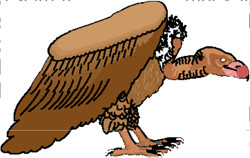
The four-page detailed article refers to the Current Indian Veterinary Index as listing 46 formulations of Diclofenac produced by 25 companies for use in India. "The pharmaceutical industry in India is largely unregulated with an estimated 20,000 companies fighting over three billion dollars in annual sales. Pharmacists rather than physicians prescribe medicines for the human population, with frequent disastrous consequences; drugs banned in other countries are freely available… With most farmers in India having little money to spend can we realistically assume that even if banned, Diclofenac use in India will stop before vultures are extinct in the wild? Diclofenac will be available and in use as long as it is substantially cheaper (Meloxicam is reportedly six times more expensive) than the alternatives,” believes Risebrough.
Between 2000-2003 the yearly mortality rates of vultures in northern India were estimated to be between 22-50 percent from censuses undertaken by the BNHS and the Tourism and Wildlife Society of India. Pakistan recorded even higher rates of decline. Referring to the disappearance of the scavenger birds as "a major ecological disaster,” Risebrough states the solution lies in capturing 150 vultures of each species while it is still possible to locate them (permission from the ministry of environment and forests was reportedly long awaited) and housing them in three separate locations for protection against disease and accidents. "Once they are safe from poisoning, the long-term survival of the three gene pools is assured and the other conservation measures can be vigorously continued until they are successful,” maintains Risebrough.
To phase out Diclofenac, the environment ministry was working on other ministries to get them to agree to the ban on the veterinary version and disincentivising any possibility of its misuse. "If all goes well, the vulture may be able to breathe easier in 2006,” mentions The Times of India report.
◆ ◆ ◆
From the archive