
Sports
"A zest for life"
Despite a crippling disability Shernaz Poonekar went on to win sporting and moral laurels
Efforts to assuage the orthodox demands for a racially based international Zoroastrian body may not go far enough to win their approval.
Speaking to representatives of the North Zone anjumans of the Federation of Parsi Zoroastrian Anjumans of India on July 31, 2005 its joint honorary secrtary Keki Gandhi said the Group of 10 (G-10) had agreed that only Parsi Irani Zoroastrians would be office bearers on the board of the International Zoroastrian Organization (IZO) and the World Zoroastrian Organization of Federations (WZOF) but with a proviso: the person can have either paternal or maternal lineage.
For the other wing of the IZO, namely the World Zoroastrian Organization of Individuals (WZOI) any Zoroastrian can be an office bearer. The WZOF, will be headquartered in Bombay, it was clarified at the one day meeting convened by the Delhi Parsi Anjuman (DPA) president and a member of the National Commission for Minorities, Lt Gen (Retd) Adi Sethna at the Bhiwandiwalla Hall of the DPA’s Mengusi Dharamshala complex. The orthodox had been insisting the world body be headquartered in Bombay.
The world organization would not be ‘a religious body’ but one which focuses on social, economic and political issues. Gandhi said membership to the WZOF would be restricted to the 10 areas of the world where Parsi Zoroastrians reside. Other areas like South America or Eurasia could only join if all the 10 regions unanimously agree to accept them as members.
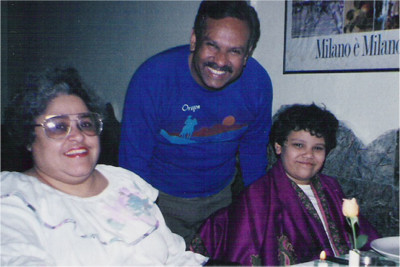
(From left) Shernaz, Pradip and Karishma Poonekar: forging ahead
Voting weightage would give India 35 percent of the votes, thus blocking any major change without India’s consent (75 percent is required to pass any special resolutions namely expelling a member or amending the constitution).
With this chunk of votes if India combines with any other area such as Iran or North America they would have over 51 percent of the votes.
Even assuming an ordinary resolution is passed which one sector does not approve of, there is no obligation for that sector to observe it, as each sector has autonomy.
The responsibilities of both the WZOI and WZOF have been defined and each "will work in its own area,” Gandhi emphasized. The IZO would be a recommendatory "umbrella body” with no power to enforce resolutions.
The G-10 which comprises members from India (Minoo Shroff, Dinshaw Tamboly and Keki Gandhi), Europe (Dorab Mistry and Malcolm Deboo), North America (Firdosh Mehta, Rohinton Rivetna and Behram Pastakia), and the WZO (Rustom Dubash and Sam Bhiwandiwalla) has been extended to 12 with two Iranians co-opted into the group.
The compromise solutions were arrived at in the aftermath of the Memorandum of Disagreement drawn up by dissenting anjuman members at the Federation meeting in Ahmedabad last December. The orthodox lobby’s prime demand was that the world body comprise only Parsi/Irani Zoroastrians, that is those born of a Parsi/Irani Zoroastrian father.
While the orthodox camp will in all probability oppose the compromise proposals as they did at the Eighth World Zoroastrian Congress held in London this June, the liberal elements also will take offence at some of the clauses.
As Delhi resident Maja Daruwala noted, "pure blooded, half mad Parsis” are sitting in judgment on the international Zoroastrian community and treating converts as second class Zoroastrians. She decried the proposal whereby all the regions would have to agree for granting membership to countries like Brazil and Tajikistan. This was blatant discrimination. She also noted there was no reservation for women on the IZO, WZOF and WZOI even though women outnumbered men in the community.
Sethna commiserated with the lack of gender sensitivity. He explained the barriers against extending rights to converts stemmed from the orthodox group’s "fear psychosis” that the neo-Zoroastrians "apri milkat lai jasé (will take away our property).”
Sethna requested noted communications professional Navroze Dhondy to recount his experience at Bombay’s Doongerwadi when he asked why non-Parsis should not be allowed to sit in the bunglis during the funeral prayers as is the custom in Delhi. "Short of slapping me,” he said the priest roundly castigated him noting, "People like you will oversee the loss of our property… say it again and I will hit you. People like you are the cause of the problem. You’re too liberal. This property is worth thousands of crores. All are eyeing it.”
Sethna noted the Delhi Mengusi Dharamshala now offered six rooms (12 beds) to non-Parsis at double the tariff for Parsis. Ninety beds are still reserved for Zoroastrians. "Why should any Parsi not get a place?” he replied when asked if a Parsi would be turned away on account of lack of rooms.
Six of the Dharamshala rooms have been air-conditioned explained DPA trustee Adil Nargolwala, the tariff for which is around Rs 800 a night/day. This Dharamshala is run by Dhun Bagli whose son Cavas is the priest at the Kaikhushru Pallonji Katrak Dar-e-Meher and an amateur wildlife photographer.
Sethna warned that "the next target of attack” at the Federation meeting in Bombay (September 3 and 4) would be the Delhi Anjuman.
"Serious problem”
Concerned about the declining population figures of Parsis, Sethna invited Prof Ashish Bose to address the gathering on the 2001 census findings on Parsis. Bose, an authority on demography, had spoken earlier at the seminar organized by the National Commission for Minorities in Bombay last December (see "An unpleasant truth,” Parsiana, March 2005).
After that talk "everyone believed we had a serious problem except one person Khojeste Mistree,” said Sethna quoting the latter’s statement from Outlook magazine (June 13, 2005): "This fake insecurity of extinction can’t be used as a bogey to open our doors and take more people or selectively convert.”
Bose said he was "not concerned about” the World Christian Encyclopedia (WCE) whose figures Mistree has been quoting to buttress his claims of millions of converts converging on Bombay to usurp community assets.
"I am concerned about 150 years of census data” which show the community declining in numerical strength, said Bose adding, "We should be proud of our Indian census.” Stressing that the census data was accurate, Bose said the former census commissioner J. K. Banthia "went out of his way” to prepare a report on the Parsis. "Even if you say the census figures are bogus, they can’t all be wrong.”
As regards conversion, Bose noted the census figures showed a high increase in the number of Buddhists which was due to conversion. Conversion amongst Zoroastrians in India was "absent… If it were there, it would have been reported.”
As for migration being the cause of the depleting Parsi numbers, the demographer said it was "not true” for Parsis. It was "true of Anglo-Indians who went to Australia, the UK” and so on. "Even if you (Parsis) are migrating,” Bose added, "you are still dying out.”
Noting that the community had the highest literacy rate (98 percent) and the highest ratio of females to males (1,050 females to 1,000 males), Bose added that in the marriageable age group men outnumbered women. It was only after the age of 55 that women start to outnumber men. This means that perforce some men would have to marry outside the community or remain single.
Bose spoke of "genetic sterility” as being one reason for the dwindling numbers and noted that "modern techniques make it possible to overcome genetic problems.”
Dr Shernaz Cama, the moving spirit behind Parzor, noted that "Ninety percent of infertility cases are treatable (though as someone jokingly added, the remaining 10 percent are amongst the Parsis!). We need peer support and financial support for infertility treatment.” Sterility was "highest amongst Parsis,” noted educationist Dr Sanaya Nariman of Delhi.
Rusi Daruwalla, a Delhi resident, asked if the WCE figures cited by Mistree were authentic. Bose replied he was concerned with the Government of India census figures, "not some Christian Encyclopedia.”
Sethna interjected, "How can there be 3,00,000 Zoroastrians in Afghanistan… this is bogus information that has been floated.”
"We do not take note of all theories. Our reference is India,” said Bose.
"Let Mistree explain where the 2,00,000 Parsis cited in the WCE are in India,” said Sethna.
Rusi Billimoria, noted management consultant said there was a system to authenticate data and inquired if any such system had been used to verify the WCE data before accepting it.
Maja Daruwala noted the population in Western Europe was dying. In 400 years the indigenous Japanese population would die out. Spain, Italy were also facing declining populations. America was "saved by immigrants who by definition are young,” she noted.
Cama pointed out that Japan was already considering what steps to take to tackle a problem that was 400 years away while "we’re just fighting.”
Referring to the fear of the Bombay Parsis that converts would usurp their properties, Zarine B. Viccajee, president of the Lucknow Parsi Anjuman, noted that with the community numbers declining (there are around 80 Parsis in Lucknow) "where will the Parsis be to inherit these properties? Why do we treat them (non-Parsis) as lepers?”
As Nariman noted, "In north India we have so many properties and no Parsis. This is the reality in India.”
Prof Kavas Kapadia of the School of Planning led a group discussion on the economic factors affecting the community. The discussion focussed on defunct anjuman properties with DPA vice president Dadi Mistry inquiring from Gandhi how much success the Federation has had in salvaging such properties. Gandhi noted that in three areas the Federation had initiated proceedings but it was a long, time consuming and expensive process. Aramgah land for instance could not be sold or developed according to the lease terms.
According to Rustom Gandhi of the Allahabad Parsi Zoroastrian Anjuman, 21 Parsis reside there. In Agra, Porus Debara put the figure at 18 of which eight will move out in the next three years; and in Mhow Dr Behram Masani stated there were 60 Parsis as versus 2,500 in the 1980s. There are no Parsis left in Srinagar, Saharanpur, Ambala, Hatras and Mussoorie, noted Cama and Nariman. As former joint secretary in the law ministry Rustom Gae added, "eight out of 10 Hindus don’t know who Parsis are.”
The results of a brief questionnaire prepared and circulated to all attendees by Nariman revealed that eight people out of 37 live in the same place they were born, while 29 have moved out. Eleven were born in Bombay, the others in Poona, Surat, Srinagar, Jodhpur, Bilimora, Navsari, Jhansi, Calcutta, Ahmedabad, Quetta (now in Pakistan) and Jabalpur. They had 240 first cousins of whom 80 were abroad.
The need for a world body was, therefore, "a very real phenomenon. We need to network and hold people together,” said Nariman.
◆ ◆ ◆
From the archive