
Readers' Forum
Petigara’s centenary
September 15, 2004 marks the 100th birth anniversary of Noshirwan Kavasji Petigara, one of India’s most famous lawyers. He was born in Surat on September 15, 1904 and was educated at St Xavier’s School and College at Bombay. He was the son of Khan Bahadur Kavasji Jamshedji Petigara, who eventually became the first Indian deputy commissioner of police in British India, and, Avanbai of the illustrious Taleyarkhan family of Surat.
He had a brilliant academic career and, as was reported in the Indian National Herald of Sunday June 26, 1927, stood first in the University of Bombay in his second LLB examination, winning the Judge Spencer Prize and numerous other awards, before also passing the solicitors examination with flying colors.
In 1935 he became a partner in India’s leading firm of solicitors, Mulla and Mulla (now Mulla and Mulla and Craigie, Blunt and Caroe). Within a year he was also appointed as a professor at the Government Law College, Bombay.
Petigara was the first Indian to be appointed as public prosecutor in pre-Independence India, a post which he held with distinction for 14 years.
During his tenure as public prosecutor he appeared in a number of important cases, the most notable being the court martial trial of the Pir of Pagaro at Hyderabad (Sind) which was one of the longest military trials in India and a landmark case in Indian legal history.
His pre-eminence as India’s leading solicitor was acknowledged, when in 1949, for the most important criminal trial in Indian history, the Mahatma Gandhi murder trial, the Government of India appointed him special prosecutor.
In subsequent years, he turned from criminal law to corporate law, insurance and banking and served as a director on the boards of many leading public limited companies.
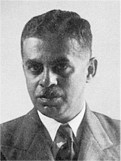
Petigara: high standards
Insurance and banking were of particular interest to him. As a director of the New India Assurance and also the Life Insurance Corporation of India, he was instrumental in the formation of the Indian Reinsurance Corporation Limited, now known as the General Insurance Corporation of India. As a director of the Bank of India, his advocacy of women’s rights resulted in the extensive recruitment and promotion of women to the officer’s cadre.
The law was his life, but this did not prevent him from getting deeply involved in numerous civic, social and philanthropic causes. He took a deep interest in the Parsi community and was chairman of the reception committee of the First Parsi Youth Conference held in Bombay in December 1939. As chairman of the Bombay State Branch of the Indian Red Cross, he hosted the International Red Cross Conference in Bombay where representatives of 85 countries participated. As a keen member of the Rotary Club of Bombay he was involved in a number of social and philanthropic activities. He was always an ardent and vocal advocate of women’s rights and the equality of women in all spheres of life. To his colleagues in the legal profession and his vast circle of acquaintances he was a kind and loyal friend. Last but not the least, he was a devoted and loving husband and father, adored by his wife, three daughters and son.
Petigara was a man who set himself exceptionally high standards and applied them to everything he touched, but always with kindness and good humor. His outstanding record as a lawyer and in service in the public cause, was matched only by his innate modesty and disdain of publicity. At the time of his passing away on December 31, 1967, people from all walks of society came forward to describe the help, assistance and guidance he had given them, of which he had not told anyone.
KAVAS N. PETIGARA
◆ ◆ ◆
From the archive