
Observation
Egging on Parsis
The Parsis’ reputed love for eggs prompted the author to write an ‘eggulogy’
Sometime back, I took a lift from Fali, a Parsi friend of mine. I noticed he had six trays of eggs piled up in his Ambassador, next to the driver. "Jara haloo haloo chalaojé. Baida nai tootnaa mangtaa hai (drive slowly, the eggs shouldn’t break),” Fali instructed his driver in his own brand of Gujarati-Hindi.
"Six dozen eggs? Are you having a party?” I asked him.
"No party-farty. These eggs are just for me and my Coomi,” replied Fali and added, "We Parsis eat eggs with everything. Bheeda par eeda (eggs on ladies fingers), tambota par eeda (eggs on tomatoes) not to forget bharuchi akoori (special scrambled eggs) and bhéja no poro (brain-omelet). Tu jojé (just see), six dozen eedas (eggs) will disappear in a few days.”
"Fala, haven’t you heard of cholesterol levels?” I argued.
Replied Fali: "You’ll find that most Parsis live to a ripe old age. My Rata kaki (paternal aunt) lived to 96, and ate an egg every day of her life!”
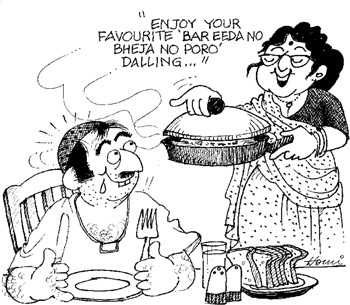
Cannot argue with that kind of Parsi logic!
All this egg talk brought back memories of my uncle who began and ended his meals with a Parsi omelet. When I met him later on his 80th birthday, I reminded him of his omelet diet. He laughed and said, "I don’t eat omelets anymore.”
"Aa haa... doctors orders, kèm (right)?”
"No silly, I now prefer scrambled eggs, easier on my batreesi (dentures)!”
Then he insisted that I join him in the kitchen to see him make his version of the scrambled eggs, which he called "Charvéloo Cheezegg special!”
"If you haven’t ever cajoled an egg into this process, or tried it made by some indulgent aunt, you cannot qualify for your Parsi Punchayet benefits!”
CHARVELOO CHEEZEGG
SPECIAL
Dési (country) eggs (6 — whipped till foamy)
Malai (fresh cream — 2 tbsp)
Full-fat buffalo milk (½ cup)
Salted butter (1 tsp)
Small onion (½ — finely chopped)
Green chilly (1 — finely chopped)
For garnishing
Green chilly (1 — finely chopped)
Tomato (half — thickly chopped)
Non-processed Cheddar cheese (1 tbsp — grated)
Coriander leaves (10 stems)
Black pepper powder (1 pinch — freshly ground)
Salt (to taste)
Mix all ingredients except the salt, pepper, cheese and tomato. Pour the mixture into a heavy bottomed non-stick frying pan and cook on slow fire with a wooden spoon. This should take approximately 10 full minutes, but you keep on stirring and scraping the bottom. Do not allow the mixture to dry up or get flaky. Under no circumstances add the salt or tomatoes as this will make it watery and the creamy texture will be lost. As soon as you get the creamy consistency, remove the pan from the fire.
Garnish with salt, pepper, cheese, tomato wedges, green chillies and a few coriander leaves. Eat straight out of the frying pan with hot, crusty, generously buttered brunpao (toast being a sad option). With each bite you will shudder with ecstasy!
Try this recipe in the rainy season or cooler times. Remember... it is important to use dési (country) eggs. They are smaller, browner, more expensive, but far tastier than péla (those) English saféd (white) poultry eedas (best from Johnny’s chicks in fertile Auroville!). Never buy dési in summer. Most of them will be bad, sometimes there will even be an unborn chicken inside.
The quality and freshness of the ingredients has a lot to do with the brilliance of the Cheezegg; as in most recipes. The coriander should be of the aromatic variety, its stems should be juicy enough to pinch. The cream and the milk is best at Princess Street’s Parsi Dairy Farm; the unprocessed Cheddar cheese (well, I still dream of the blue Kraft Cheese cans we grew up with, which my cousins in California remember as "soap cheese!”). Even the two chillies essential for the recipe should be fresh and radiant green. Please don’t kill it all by scooping this into a plate. This is gastronomy, for heaven’s sake. Not your architecture-school’s final presentation!
Jamvaa chaloji (Come, let’s eat)...
After 11 years in the field of interior refurbishing and architecture in Bombay, Adil B. Writer studied ceramics in Pondicherry and is a "full-time potter” at Mandala Pottery in Auroville, doing his balancing act between production and studio pottery.
◆ ◆ ◆
From the archive