
Books
The Godrej genius
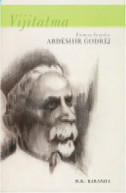
Vijitatma: Pioneer-Founder Ardeshir Godrej by B. K. Karanjia. Published in 2004 in Viking by Penguin Books India (Private) Limited, 11, Community Centre, Panchsheel Park, New Delhi 110017. Pp: xl + 218. Price: Rs 350.
"Ye asses and donkeys, ye foolish children of India, what have you done for the motherland, what have you done for the Swadeshi industries? If you see your mother bleeding in so many parts of her body, will you leave her alone and continue enjoying your lives at her cost? Do you realize Mother India has been bled white by foreign exploiters who have made us slaves of their tastes and goods?”
This is how Ardeshir Godrej, then 59, greeted a reporter of the Indian National Herald as noted its editor who prefaced the front-paged story on April 27, 1927 with the explanation: "You might think he is a ‘crank,’ yes he was and he has been all these 35 years of his life. In regard to Swadeshi enterprises, our friend’s heart has been burning so furiously that he cannot check his somewhat brutal frankness and intolerance with his fellow-compatriots. He has been carrying out tests into scent bottles, with which he was experimenting at that time for the last 10 years and his genuine feeling for Swadeshi can be well imagined when we remember that he started this experiment at an age when, in India at any rate, people retire from active life and take to more or less leisurely pursuits, such as hunting after titles, etc. Having spent over 25 years struggling almost single-handed to promote Swadeshi industries, Godrej’s words were ringing with sincerity and honesty of purpose.”
Using primary sources, notably letters, documents, etc that have come to light after the death of Sohrab Godrej, biographer Burjor Karanjia has pieced together family hearsay and Sohrab’s "total recall” of his uncle which he had shared with the author, to shed light on a "riddle of a man.” Karanjia goes on to substantiate his statement that "Eccentricity, whimsicality, single-minded and self-centered pursuits, even a certain disregard and insensitivity to the feelings of others, are often the attributes of that indefinable, inscrutable phenomenon known as genius.”
Fired by the mission to restore India’s self-respect by making her economically self-reliant, loath to accept any money which he had not earned by his own exertion, revolted by the idea of twisting truth even the littlest bit, seared by the sudden and horrific death of his young wife, goaded by a compulsion to revive his community grown effete from a culture of protection and doles, Ardeshir whipped his mind and body to perform to the end of his days. "As a known conformist individual, he was subject to internal stresses and strains that have been known to unhinge such conformist temperaments,” writes Karanjia, comparing him to the satirist Jonathan Swift. It was only young Sohrab who among the family was close enough to the venerable Parsi who "looked like a fiery prophet from Biblical times,” to earn a few confidences. Sohrab himself is said to have felt closer to Ardeshir than his father Pirojsha.
The eldest in a family of four brothers and two sisters, Ardeshir was in a hurry to divest himself of the inheritance that came his way. His father Burjor, also a principled man, had innately known the futility of Ardeshir’s choice of law as a career. On his first case as a barrister in Zanzibar, Ardeshir refused to make a crucial assumption on the basis of circumstantial evidence alone: "he believed that in a court of law, like witnesses, lawyers too should consider themselves on oath.” That one experience in Zanzibar was enough for Ardeshir to give up law altogether.
Three years earlier his young wife Bachubai had leapt to her death from the Rajabai Tower along with her cousin Pirojbai Sohrabji Kamdin. Panicking from the two assailants who had followed the girls up the Tower, they had jumped off what was then the highest building in Bombay. Bachubai was only 19 and much younger to Ardeshir. Yet she was one individual with whom he could commune. Even his brother Pirojsha — the youngest in the family — was then only nine years old. To Bachubai Ardeshir had conveyed Dadabhai Naoroji’s analysis of the systematic drain of India’s wealth by the British rulers. He grieved in silence and refused to wed again.
When Bachubai died, Ardeshir sublimated his love by devoting his energies to the economic revival of India even as friend Mohandas Gandhi pursued the country’s political independence. In Merwanji Cama, the man who established the M. F. Cama Athornan Institute in memory of his father Muncherji at the urging of Sir Jivanji Modi, he found emotional and financial support for his mission of reviving Indian industry. He sought Rs 3,000 from Cama as a loan to make surgical instruments. When Cama wondered if there would be demand for indigenously made surgical instruments Ardeshir replied, "What I’m trying to prove, Uncle, is that even such highly sophisticated instruments can be made by Indians in India. I’m making a point. I’ve come to you to help me make this point. Once it’s made and our reputation established, we will go on to manufacture items in greater popular demand.”
Ardeshir’s instruments proved to be so good, the chemists with whom he was working were more than willing to market them — under a British name! Ardeshir’s retort minced no words and though he wasn’t dismissed, his self-respect demanded that he resign from his job.
Ruminating on an alternative item to manufacture he settled on the lowly lock because the boom town that was Bombay was in need of greater security against robbers and burglars. Karanjia traces Ardeshir’s journey from idea to production of locks, safes and safe deposit vaults. Each invention was duly patented — not by Ardeshir whose inventive genius was chasing the next idea but by Pirojsha who pursued the mundane requirements of industry.
Security equipment was followed by research into and patenting of vegetable oil based toilet soaps and when Godrej became a household word in India, its products replacing foreign ones, Ardeshir opted out in pursuit of the Gandhian dream of agrarian India’s development on scientific lines. He also saw it as the best way of reviving the Zoroastrian community.
"In a census taken in the city in 1864, it was found that there was not a single Parsi beggar. In Ardeshir’s time, 50 years later, senior members of about 1,000 poor and destitute Parsi families used to regularly queue up with outstretched hands at the several charity institutions of the city. Was this not beggary, condemned by the Bombay Parsi Punchayet (BPP) itself, as ‘an antiquated and pernicious method of charity that only tended to increase the number of paupers every year?’” Karanjia traces Ardeshir’s thought process. Ardeshir noted in his will, "I intend to start in India preferably near Bombay an agricultural and horticultural institution for the purpose of imparting practical education in agricultural and horticultural farming and in allied industries such as fruit-canning, dairy farming and manufacturing dairy products, such as cheese, condensed milk, etc and also the manufacture of jams, pickles, provisions, etc and also poultry farming. If I have not started such an institution in my life, then I direct my executors and trustees to start the same as soon as possible after my death...
"To settle in the residential quarters poor Parsi families who are willing to work at the said institution for the purpose of being trained... I direct my executors to make a beginning with five such families...”
It was a project he visualized but did not implement. Nor was his urbanized family or the BPP representatives who were charged with running of the farm capable of doing so. As Karanjia observes, "there were no soldiers, no general to lead them to battle.”
Vijitatma (the self-disciplined man) is not merely a catalog of Ardeshir’s achievements. The acrimonious letters that he and Pirojsha exchanged, even though they lived in the same house, reveal the emotional distance between them. And yet, "For all the bitterness in their correspondence, the wild accusations hurled, the two brothers complemented each other wonderfully well for their own, their industries’ and the country’s greater good,” notes Karanjia.
In vigorous couplets grand nephew Nadir Godrej provides a succinct preview and summation titled "Victorious Soul.”
"Ardeshir’s focus was invention/His single-minded intention/Was to prove that we could do it./It could be done and he knew it... Why did our founders not agree?/Things were approached differently... Do I feel sad the brothers fought?/They didn’t do all that they ought... We must accept what was done./Their combination has truly won./Each of them had his role/Together they achieved the goal.”
The book also provides sidelights on the political and economic ideas that informed public debate in the late 19th and early 20th centuries as much as the evolution of Bombay as a city. Eight appendices, a bibliography and an index support Karanjia’s research. Pencil sketches by Jenny Bhatt enliven the text.
Though focused on a single individual, Vijitatma perhaps embraces a wider canvas than any of Karanjia’s other books on the Godrej saga — a worthy read.
A. S. M.
◆ ◆ ◆
From the archive