
In Memoriam
'A rare combination'
Died: Dr Shirinbanoo Sohrabji Kutar, 89, founder chairman of the World Zoroastrian Organisation (WZO), former president of the Zoroastrian Trust Funds of Europe (ZTFE) and its committee member for more than 30 years, in London on April 30, 2003.
Kutar led the WZO for 11 years and "by her grace and mild manners brought dignity and decorum to that office, in addition to honesty, integrity and service to the community. (She) donated generously to numerous Zoroastrian and non-Zoroastrian charities. One such charity was to set up a fund with WZO in India, the income from which is being used to pay all expenses for a holiday for poor widowed Zoroastrians with young children, as she was deeply concerned for disadvantaged women and children,” notes the condolence resolution of the WZO, London.
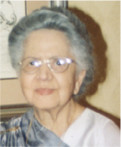
Kutar: grace and decorum
"The names of Dasturji Sohrabji Hormusji Kutar and Dr Shirinbanoo Kutar will be written in letters of gold in the history of our community in the UK. The Kutars pioneered Zoroastrian worship in the UK by formally organizing muktad prayers, regular jashans and finally by establishing the Setayesh Gah in the Zoroastrian House. Dr Shirinbanoo led the ZTFE with flair and distinction and placed the association on a sound footing during her tenure. She helped innumerable young Zoroastrian arrivals in the UK to find their feet and to establish themselves. Her kindness and her generosity extended way beyond the Association and touched most people she came in touch with.” The tribute from ZTFE president Dorab Mistry followed the masiso prayers at Zoroastrian House on May 29, 2003.
The first Zoroastrian, if not the first Indian lady to start her own general practice in London in 1958 along with her doctor husband Sohrabji who became the first dastur of the Zoroastrians in UK and Europe, the famed Kutar hospitality nurtured many a Zoroastrian student in their own home, finding them jobs after they were qualified. "They helped Zoroastrians in their field of medicine, including those from overseas,” noted former WZO chairman and ZTFE president Shahpur Captain in his eulogy on the occasion. Captain’s speech is the source of much of this article.
The fifth child of Aaimai and Bomanshah Gamat of Bombay, Shirinbanoo was brought up by her eldest sister Soonamai (Dehnugara) and maternal grandmother Avabai Patel from the age of three when Aaimai died. The traditional Zoroastrian upbringing inculcated honesty, integrity and hard work along with honor and dignity, daily prayers and agiary attendance, "charity of mind and of purse.”
When Shirinbanoo topped her Wilson College batch in chemistry at the inter science exam, Soonamai who had herself foregone education to look after her younger siblings suggested a career in medicine. Shirinbanoo not only acquired her professional qualifications from Grant Medical College (in 1939) but also met there Sohrabji Kutar whom she married in 1943. The outbreak of World War II which dashed Sohrabji’s hope of becoming a Fellow of the Royal College of Surgeons, instead made him a hero in the celebrated Eighth Army commanded by Field Marshal Montgomery in North Africa. He worked "along with other medics in the searing heat of the desert during the day and in bitter cold at night... exercising his professional skill with a prayer on his lips” to piece together mangled soldiers. At one stage he was even a prisoner of war. His distinguished services were recognized by Montgomery personally with the award of the Star of Africa. His faith, tested under such gruelling conditions, eventually enveloped the UK community and evoked endearing and enduring respect after he was demobbed and settled with Shirinbanoo and their first born, Perin, in London in 1946. The distress caused by the loss of their second daughter Zarin at the age of 16 months was mitigated by the arrival of Shernaz three years later. Then and in the years ahead, the Kutars remained a loving, affectionate family.
Their service to the community led the Parsi Association of Europe (as ZTFE was then known) to urge Sohrabji to join the managing committee at the AGM held on October 15, 1953. When Sohrabji declined, Shirinbanoo’s name was proposed and she was elected, recalled Captain. In 1962 she was elected vice president and continued so until 1970 when she was elected president. She voluntarily stepped down in 1977 but continued as committee member almost to the end of the 1980s. Inspired by a radio program, Shirinbanoo, as president of the Parsi Association, was the moving spirit behind the establishment of the Young Zoroastrians (YZ) Committee, personally financing their functions in the early years.
The Kutars were among the founder members of the WZO, Shirinbanoo assuming chairmanship of the nascent body — a job she fulfilled for the next 11 years. She was also chairman (and later, trustee) of The World Zarathushtrian Trust Fund.
At a special function on December 3, 1983 the Kutars were honored by a grateful community unveiling their portrait in Zoroastrian House. Five months later Sohrabji was no more and Shirinbanoo honored his memory by founding the Dasturji Sohrabji Hormusji Kutar Benevolent Fund with a substantial capital and continued to oversee its working as chairman.
The Kutar generosity, beginning with Sohrabji’s refusal to accept any money for religious ceremonies performed by him (any ashodad he received was added to Zoroastrian House funds, according to Captain) and the setting up of the Setayesh Gah at Zoroastrian House completely at their expense has been compounded by Shirinbanoo’s numerous donations which include a fund at SOAS (School for Oriental and African Studies at London University) for an annual memorial lecture on the Zoroastrian religion on or around Sohrabji’s death anniversary and a fund with BMA (British Medical Association), London, income from which is to be used to help the widows and children of deceased doctors. She worked voluntarily two days each week at the Greenwich and Bexley Cottage Hospice during her retirement and donated substantially to it. Finally, she was a patient there and passed away peacefully in the early morning of April 30, 2003.
The sudden death of her younger sister Mani in a road accident and the passing away of her brother Homi, both in Bombay, had affected her badly. She was even more shaken when her nephew Adil Dehnugara lost his wife Roshan four years ago.
Nonetheless "she brought to bear upon matters concerning the community a rare combination of years of experience, charm, concern for fellow Zoroastrians, sharp intellect, guts and determination which belied her mild manner and soft speech. Her wise counsel, cool judgement, her lofty ideals and moral fibre were much appreciated and respected by all those who came in contact with her. Another good quality of hers was that she knew her limitations and was never shy or afraid to obtain advice from those who knew about these matters and whom she respected,” said Captain.
Shirinbanoo is survived by her daughters Perin Perrihuges and Shernaz Patel.
◆ ◆ ◆
From the archive