
Zoroastrians Abroad
Jijina: structurally sound
Cowsie Jijina, a principal in New York’s prominent structural engineering firm Severud Associates, and his four colleagues were among the hundreds of engineers who responded to the Structural Engineers Association of New York’s call for volunteers to help guide debris removal and inspect damaged buildings around the site of the World Trade Center (WTC) disaster in September 2001.
Firefighters, rescue teams and cleanup contractors were demanding snap judgements. For the safety of these workers the engineers had to advise on questions like which beam could be moved, whether heavy equipment could be driven over certain areas, notes an article in The Trend in Engineering, a publication of the University of Washington (UW).
Five teams at a time, each comprising five engineers — two with at least 20 years’ experience who were principals of a firm, two with at least 15 years’ experience plus one additional engineer — worked 12-hour shifts. Each team concentrated on its quadrant of the devastated site. The fifth team floated to where help was required. The teams received their assignments in a dimly lit classroom at P.S. 89 — the makeshift command center where Jijina, his company associates plus 20 others worked sitting in kindergarten chairs or on the floor. Here, at the end of each shift, the replacing teams got their briefing from those who had worked the previous 12 hours.
Though enormous cranes were on hand to clear the rubble, the engineers were required to determine whether specific areas of the site could bear their weight. Collapsed subways and train tunnels under the WTC had to be inspected and shored up before such equipment could be allowed to function.
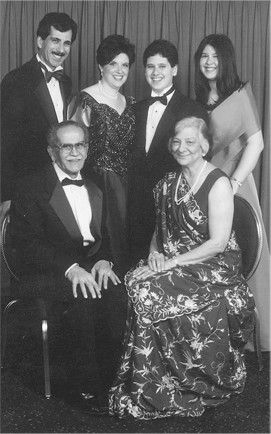
Standing (from left): Jijina, Janice, Marc and Lauren. Sitting: Jiji and Shireen Photo: Glenn Edwards
"Going below ground was extremely disorienting,” the article quotes Jijina. "It was pitch dark, water dripping all over, beams creaking and crunching and you were walking on top of collapsed ceilings and toppled bookcases. Nothing was level.” Team members used cell phones to keep in contact with colleagues above ground and when lost, asked them to shine a flashlight down a hole or bang on a steel beam. Once Jijina stumbled on something soft which mercifully turned out to be a mannequin.
There were professional surprises for Jijina and his fellow engineers. There were no chunks of concrete left. It had been pulverized into dust. Structural steel connecting plates, 1.5’ thick, had been "ripped like a perforated writing pad even though the nuts and bolts were intact. Welded connections did not rip and earned his new respect,” notes the article. While inspecting a neighboring building Jijina found on its 12th floor setback a column approximately 25 feet long and weighing about five tons. "It looked like someone had thrown it there as if it were a little dart,” Jijina told The Trend reporter.
That the buildings continued to stand for an hour in one case and an hour and a half in the other was attributed to its innovative tube design which allowed time for nearly 25,000 occupants to escape with their lives. Nor would the buildings have collapsed by the impact of the planes alone, states the article. The fatal blow was dealt by the burning jet fuel which ignited the interiors into "uncontrollable infernos.” The intense heat "weakened and deformed the steel structural frames to the point of collapse,” as was noted by the investigating team of the American Society of Civil Engineers in their report published by the Federal Emergency Management Administration.
The son of Shireen and former Indian Airlines regional director Jiji Jijina grew up with three generations of engineers on both sides of the family, notes the article. His maternal grandfather Munchershaw Ghasvala was a civil engineer who had worked as an overseer at the construction of Bombay’s Taj Mahal Hotel in 1903, adds his uncle Pashang Ghasvala. Cowsie’s brother Darius, who chose to qualify as an ENT surgeon, was the odd man out.
After schooling at St Xavier’s in Vile Parle he joined the Vile Parle College before graduating from the Indian Institute of Technology in New Delhi. Cowsie continued his education at the UW, Seattle, acquiring his masters in civil and structural engineering. There he met his future wife Janice, an oceanography student. Degrees in hand, the young Jijinas moved to New York in 1979; Cowsie securing a job with Severud Associates. There he was "thrown into projects. If I didn’t know how to do something, they would direct me to a book and expect me to learn it,” Jijina recalled in The Trend article. He attributed his continued success at his various tasks to the excellent theoretical grounding he had received at the UW.
The Neuroscience Institute in La Jolla, California, Universal Studios and Geffen’s office buildings in Beverley Hills and The High Museum of Art in Atlanta are career landmarks. He likes working in earthquake prone California because of the challenge of its seismic code requirements. Also, its local building department demands peer review of a project design before granting approval.
The La Jolla Project — a building shaped differently from floor to floor with not a single column extending down more than one floor and yet meeting seismic zone four regulations — was a professionally gratifying achievement, notes the article.
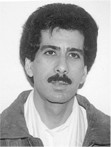
Jijina: "thrown into projects”
Among his various assignments Jijina plans the rigging for concerts at Madison Square Garden where sound, light and laser systems for groups such as Metallica and a suspended party barge holding dancers for a Britney Spears show had to be hung from the Garden’s cable supported roof. Such equipment can exceed 100,000 pounds in weight. Though now done on computers with special software to determine and position the loads for optimum effect and safety, "it used to be a nail-biting experience to calculate the loads by hand. Concert deadlines are tight, people are sitting under all this equipment and you must do it right the first time,” Jijina provides a peek at the tension involved in the job.
Apart from engineering Jijina is a prolific reader and enjoys listening to western classical music. Janice played the French horn in her college orchestra and their daughter Lauren, 17, a "whiz kid in maths” also plays the French horn. She is currently the youngest member of the New York Philharmonic Youth Orchestra which was recently on a world tour, Ghasvala provides glimpses on the Jijinas’ domestic lives. Lauren and her brother Marc, 15, study at the Kennedy High School and are the only competing fencers to represent the Bellmore Merrick Central High School District of Long Island, New York where the family resides.
After 23 years of learning by doing, Jijina is waiting to construct his ‘perfect building.’ I can’t describe what it would be like, but I’ll know it when I see it,” he says.
◆ ◆ ◆
From the archive