
Politics and Policy
A gallant loser
A seasoned politician, Rustom Tirandaz sees an electoral defeat as part of the game
"That I’m going to stand again I’ve announced on the day of the results. A lot depends on the configuration... I don’t want to run away from a hit campaign against me for (what) reason I’m not able to comprehend,” defeated trustee Rus-tom Tirandaz told Parsiana on November 7, 2002.
It was a subdued and quieter individual than his public persona who responded to Parsiana’s request for an interview — and a disillusioned one. "In retrospect I’m learning to play my cards close to my chest. I had felt I should be open with fellow Zoroastrians but it’s been misconstrued,” he noted.
He believes he scored a first on three major counts during his seven-year trusteeship of the Bombay Parsi Punchayet (BPP). He says he was the first Irani Zoroastrian ever to be inducted on that hallowed board, that he was the first to have taken a proper perspective of the trustee’s role, as not just a manager of the Punchayet’s funds and properties but as the community’s leader: "I came with an agenda for the community.” The third count, he said, is his penchant "to call a spade a shovel.” (Tirandaz’s propensity to do so has been amply documented in these pages over the past seven years).
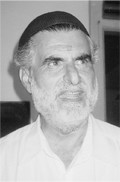
Tirandaz: "aggresive at times”
Noting that he had tried to "improve on what (he) saw at the Punchayet,” Tirandaz admits, "(It is) true, I was aggressive at times but only when the poor and needy were sought to be steam-rollered under rules, regulations and precedents. I was forceful in (expressing) my point of view but not in one instance was anything done by majority (vote)... I never imposed my views,” he claims, noting that all seven trustees had accepted his view that Parsis should be allowed to encash their tenancy goodwill by sharing 40 percent of the sale price of the flat with the BPP, as is permitted by the state government, the housing board and the Bombay Municipal Corporation (BMC).
Referring to the blinkered attitudes of the community, Tirandaz says he was the first BPP trustee to identify with and to participate in the activities of suburban Zoroastrians like the Borivli and Suburban Zoroastrian Association. There he says he met Boman Irani of Keystone Realtors — "the Shapoorji Pallonji of the western suburbs,” — a man in his early 30s who has established a "world class school.” He also regularly visits the doughty Iranis of Palgar. "We don’t realize the potential of the community. We are the controllers of (its) ethos, in which direction it would go.”
As for the community’s "cocooned” youth, he says that it was only over the past three years or so that at his instance participants in the long-running and popular Holiday Programme for Youth have been taken to the Bombay docks to see firsthand the size and scale of modern industrialized life. Similarly he had organized a public speaking course for Gamadia Colony hostelites.
When Parsiana had interviewed him in February 1996, a couple of months after he assumed the responsibilities of office, Tirandaz had regretted that the community had not availed of the contribution of outstanding Parsis like the late Rohinton Aga and Russi Mody. He had noted then that "The community’s affairs have become self-perpetuating since persons in power remain in power till they die or fade away. Therefore the community is not able to get the best people during their prime (see "I’m a man in a hurry,” Parsiana, February-March 1996).” In this context he now stated that the had nudged his fellow trustees to set up a building committee of outstanding builders to help direct the Punchayet’s construction program. To the doongerwadi committee which used to meet once or twice a month he introduced redoubtable social worker Mithoo Jesia which prompted others to add Noshir Dadrawala and Khojeste Mistree leading to energy and verve in the maintenance of the estate. He added that the Doongerwadi Awareness Day he had organized on March 3, 1996 (see "Awareness at Doongerwadi,” Parsiana, February-March 1996), when the community was taken by trustees Silloo Kavarana, Dadi Engineer, Dinshaw Mehta and himself through the grounds and made aware of several encroachments, had eventually led to all five encroaching kharwas being removed through a combination of legal action, physical presence, political influence and public relations including payment of a few lakhs each to enable them to find shelter elsewhere.
In line with his earlier agenda to help Parsis find their own accommodation without being at the Punchayet’s mercy he says he has been negotiating with the HDFC and ICICI Banks to enable couples earning decent salaries to acquire the 60-65 ownership flats constructed at Panthaky Baug with bank loans. His concept is that a 20-lakh rupee flat can be acquired by a salaried couple having only five lakhs for initial payment by getting a loan from these banks. To persuade the banks to provide the loans on reduced interest rates Tirandaz would have the Punchayet deposit the loaned amount with the originating bank. "I do the spade work,” he says, adding, "It’s very difficult for me to bring things to fruition.”
Irrespective of whether he is in or out of the Punchayet, Tirandaz is keen to promote a group medical insurance scheme for the community on the lines of those being offered to the employees of large companies and their families by the new insurance companies that have entered India. He says, "I would like to see the geriatric ward of the B. D. Petit Parsee General Hospital, the J. J. Hospital’s Parsi Ward, the Parukh Dharamshalla and others being supported by such a scheme.”
As for the Parsi Lying-in Hospital, he says he would like to enlarge the scope of this venerable institution with a cy-prés petition to enable the establishment of "a world-class institution of advanced learning giving postgraduate diplomas in various faculties of human endeavor under the auspices of the BPP.” The 50 percent reservation under the Indian government’s reservation policy for minority run educational institutions would enable young Parsis to see "the fulfillment of their dreams.”
The donors of the mini-morgue at Doongerwadi had initially approached Tirandaz with their offer, he noted. Though he claimed to be "supremely indifferent whether I get credit or not,” the BPP Review had credited him with the development that enables the community to maintain the body in optimum condition if and when required to do so. It is unlikely that Tirandaz could have anticipated the strafing the concept received from his erstwhile champions, the high priests, on this count in their letter, published in Jam-e-Jamshed Weekly (November 10, 2002). Quoting chapter and verse from the Vendidad, Dasturs Kaikhusroo JamaspAsa, Hormazdyar Mirza, Firoze Kotwal and Peshotan Mirza note, "We wish to make it abundantly clear that such a cold storage for two dead bodies, is totally against the cardinal tenets, doctrines and practices of the Zoroastrian religion.”
Through it all Tirandaz’s wife Ar-maity, a qualified physiotherapist with "a strong commitment to life,” in her husband’s words, has stood by him. "I’m lucky to be married to her; I don’t deserve her at all,” he notes with genuine emotion.Of their two sons, the elder Faredoon looks after Armaity’s travel agency business while Darayus is a software consultant. Their eldest son Behram succumbed to rabies nine years ago.
"Today there is a conflict in the community on everything... we are not being proactive... twice (co-trustees) Minoo Shroff and Dinshaw Tamboly had (opted to) resign,” he says. Asked for details Tirandaz counters, "I like to forget unsavory things.”
Zarthostipanu, as he defines it is "not just prayers, but also that, not just dakhmenashini, but also that (plus a long list which this reporter was unable to note)... Zarthostipanu is the sum total of every aspect of our being. You can’t isolate even one part of it and expect to survive into the next millennium. I’m the first trustee to proclaim against intercaste marriage (the late Jal Vi-madalal, the late Maneck Hodiwala, former chairman Eruch Desai and others would question that), the first to proclaim not to modernize to the extent of ending Zoroastrianism... The community needs leaders who can give direction fearless of consequences...
"Everything I did was exclusively for the community. I was not preparing myself for a popularity contest. I didn’t know this hate campaign was going on against me,” he notes, brooding over Jame’s prolonged hostility.
Trying to rationalize the kaleidoscope of hope, support, censure, setback that has dogged him, the former BMC councilor and university boxer says, "My failing is that I’ve been very predictable. I don’t want to be predictable any more.”
◆ ◆ ◆
From the archive