
Cover Story
Cobra’s cheer
Karan Bilimoria’s Cobra beer is among Britain’s fastest growing 100 companies
"My mother’s grand-father, Dinshaw Dadabhoy Italia, had started a desi (country) liquor brewery in Varangal. He had enamel and porcelain factories, cinemas... and was a member of the Rajya Sabha. Nobody had a word to say against him. Though now hardly anything is left of the business, his motto — ‘To aspire and achieve’ — fell into place as my vision at Cranfield (University’s Business Growth Programme) when I added ‘To aspire and achieve against all odds.’”
In Cobra Beer’s sparse conference room at London’s Fulham, its founder and chief executive Karan Bilimoria recounted to Parsiana the steps leading to Cobra winning the gold medal for each of the two years (2001 and 2002) that it entered the contest at the Brussels based Le Monde Selection for Quality. Tailored by master brewer Dr Cariapa of the Bangalore based Pals Beer to suit Bilimoria’s precise taste, Cobra was designed to add to the gastromonic delights of "curry” — the holdall term for Indian food that has conquered the British palate.
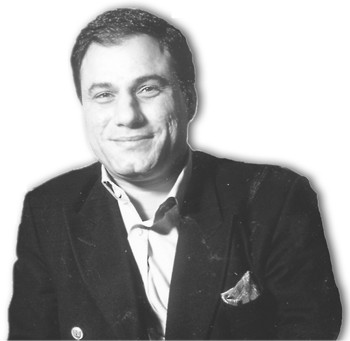
Growing up in army cantonments as the son of officer Faridoon Bilimoria (who retired with the rank of lieutenant general commander-in-chief of India’s Central Army) Bilimoria savored his fondness for beer since "the young man” was first allowed to drink. But Bilimoria, who says, "I love Indian food, eat it at least twice a week,” found the standard European lagers with their gassiness "bloating me up, ruining my eating experience.” A friend introduced him to ale "which has lots of variety and is non-gassy. But ale and Indian food don’t go together!”
Since the British market at the time was divided down the middle between lager and ale, Bilimoria set out to produce a drink that had "all the refreshing qualitites of ale but was not gassy and not so bitter as ale” which would appeal to both segments in combination with Indian food.
Pals Beer had been supplied to the Indian Army for years. Bilimoria described the firm as the largest independent, family-owned brewery in India. Its brew master Cariapa, who had spent six years in Prague, home of Pilsner Beer, "had the technical expertise. I knew in my mind what taste I wanted. (Pals’ owner) K. P. Balasubramaniam trusted me, had faith in me. I was clear about my mission — to evolve the finest Indian beer and make it world known,” says Bilimoria.
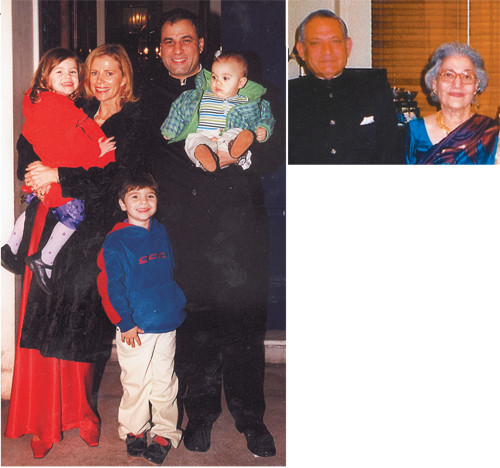
Left: Heather and Karan with Zara, Kai and Josh Above: Lt Gen F. N. Bilimoria & wife Yasmin
Like stereotypical Parsi parents the senior Bilimorias were not enthused. "They told me, I had all the odds stacked against me. In England anyone can start supplying beer. It’s a highly competitive field. Most well-known beer brands are several hundred years old and are well entrenched. (Even the Indian) Kingfisher had an eight-year headstart.” But their chartered accountant son, who had a masters degree in law from Cambridge and had captained its polo team, was not daunted. "I knew I could produce this product that was better and from day one I priced Cobra higher than any imported Indian beer and one of the most expensive beers as such — slightly more expensive than Carlsberg or other premium beers!”
Bilimoria, who had sharpened his sales technique in door-to-door campaigning to become vice president of the students’ union at Cambridge, had to think of ways to repay scholarship loans totalling £ 20,000 by the time he left the University and came to India in 1988 to play a polo match. Indian polo stick manufacturers suggested he sell their product in England. Writes David Summer Smith in the ‘Enterprise network’ feature of The Sunday Times, London (October 29, 2000), "Bilimoria began to buy polo sticks in India for £ 2 apiece, having discovered he could sell them for £ 15 to retailers such as Harrods and Lillywhites where they would retail at £ 30... (He) sold £ 50,000 of polo sticks in nine months to repay his debts...”
A year later Bilimoria was sales and marketing director for the European Accounting Focus magazine — a stint he describes as "incredibly successful.”
Four generations of family friendship led to an equal business partnership with Arjun Reddy. As "an Indian educated in England, at home in England and India,” the primary question in Bilimoria’s mind was, "Where can I add value?” Sensing that the Indian economy was getting ready "to open up and liberalize,” the boys initially wanted to be a bridge between the two countries, importing high fashion garments, leather and silk goods, hitting some business deadends in the process. When Cobra, brewed to their specification in Bangalore, was launched in 1989, "the boys (Bilimoria was then 27) used to go from from restaurant to restaurant in their old Citroen car, selling beer to Bangladeshi proprietors,” recalls a senior Zoroastrian in London.
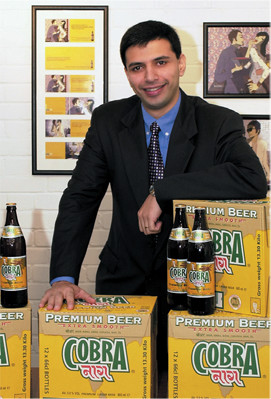
Dynshaw Italia, Cobra’s finance director
One example of Bilimoria’s ability to "turn threats and objections into opportunities” was Cobra’s Indian packaging in large 600 ml bottles in a market that has traditionally used small bottles or draught. "But big bottles mean sharing, twice the amount sold... The original objection became an advantage,” he notes. He also found that there was no publication catering to the Indian food industry. So he started (and remains the publishing director of) Tandoori, a quarterly magazine (and the www.tandoorimagazine.com website) providing information for and communication between the Indian restaurateurs and the ancillaries who service them. It remains "the most respected publication on Indian food and drink in the UK,” he claims. His bio data also lists him as founder of curryzone.com and founder and chairman of Cobrabyte Technologies.
Cobra’s higher alcohol content (five percent as compared to Carlsberg’s 3.8 percent) and hence higher tax and higher price led to the development of Swift, a lighter bodied lager to compete with Carlsberg, notes Smith. Both Cobra and Swift are available in draught. Cobra Beer also joined the ranks of the smaller 330 ml bottles.
With a Gallup survey establishing that "we are a nation of curryholics... Everybody eats Indian food, regardless of the level of affluence. Children are now being brought up on curry,” Cobra is available at all supermarket chains, starting with Harrods, says Bilimoria.
When Reddy left the business to go to the US for personal reasons in 1995 Bilimoria sold a part of the 97 percent of the company that he owned to raise money. When Pals sold out to South African brewers Cobra commenced production under licence with Charles Wells, a 125-year-old family run brewery in Bedford, UK, in 1997.
With the increasing popularity of wines in the UK, Bilimoria’s research revealed that more than 50 percent of wine consumed is house wine. He defines house wine as "good value wine at the lowest price,” as against table wines which, he says, are "among the lowest quality wines.”
Deciding to produce premium house wine, "we sourced the world,” zoning in on five varieties of red and white wine from France and in November 1999 Bilimoria saluted his father with the launch of General Bilimoria Wine. The "phenomenal success” of the two initial products — a Merlot and Terret-Sauvingnon — led Bilimoria to expand the portfolio with three more wines from the same region and at the time of the interview was in the process of adding three more from South Africa. Like Cobra Beer, General Bilimoria Wine is sold by most Indian restaurants including the two Michelin Star winners Zaika and Tamarind.
Though currently less than five percent of Cobra Beer goes into export Bilimoria has an eye on India (he expects to start brewing here in two years’ time) and the US. Cobra is already on the list of 100 fastest growing companies in Britain and is one of the fastest growing beer brands in the country, he notes, adding, "We never tell restaurants they can only sell Cobra. We know and have confidence that we can do better.” He is unstinting in getting the best advertising agencies and the best financial advisers, and basks in the international atmosphere of his establishment with co-workers from South Africa, India, Pakistan and England. "We have a very relaxed atmosphere with very few rules, so long as people don’t drink during working hours. We have no dress code except for important meetings,” says Bilimoria.
He considers himself fortunate to have a clutch of dependable managers on his team including relatives. His marketing and finance director is first cousin Dyn-shaw Italia, an ex KPMG man currently working on the modalities of floating Cobra on the stock market; market manager Hoshang Chenoy got his masters degree in marketing from Leeds University after his first spell with Cobra; Zubin Bhedwar came in as an intern and proved to be "so good, we asked him to stay on” as an executive in the marketing department; cousin Perses Bilimoria looks after Cobra interests in Bombay.
Bilimoria is among those advising the British government on ways to get unemployed people back into the workforce. The letters DL after his name signify that he is one of London’s 50 deputy lieutenants — the youngest and the only Indian among them. Every county has a Lord Lieutenant who represents the Queen, gives awards on her behalf, accompanies the royal family on business visits. "It is a lifetime appointment and a great honor, though it will be some time before I’m asked to fulfil any duties. Somebody has to nominate you and feel you can fulfil the duties,” he explains.
Bilimoria supports charities and charity events with donation of Cobra and wines almost on a daily basis "to put back into the wider community as well as your own.” A couple of years ago he had cochaired the committee for restoration of St Ethalberga’s Church in the City of London with Bishop of London Rev Richard Charteris. They had succeeded in raising about £ 3 million to repair the edifice damaged in IRA bombing in 1992/93, Ervad Rusi Bhedwar of the Zoroastrian Trust Funds of Europe (ZTFE) had informed Parsiana. Bilimoria had also appeared on the well-known BBC program Question Time with David Dimbleby, leading to conjectures in the local Zoroastrian community about Bilimoria’s political ambitions.
Born in Hyderabad, schooled in Ooty, Bilimoria initially graduated from Osmania University’s commerce stream before proceeding with his British education. Married to Heather (née Walker), a South African of Scottish descent who teaches Latin, they have two sons Kai (5) and Josh (1) and a daughter Zara (3). Bilimoria is proud of his Parsi hearitage, particularly the community’s "reputation for being honest, decent, straightforward and fair minded — so many values we take for granted as youngsters and appreciate as we grow older.”
He would however, prefer to be able to pray not by rote but with understanding and appreciates Piloo Nanavutty’s presentation of the Gathas. Marvelling how 3,000-year-old wisdom can continue to be so relevant, Bilimoria considers it illogical to link it to one race of people. He also questions the ban on non-Parsis entering fire-temples. "The Indian Army realized Indian secularism at its best. Every community’s functions were celebrated. I’ve been brought up to worship God anywhere... A fire-temple is a holy place. It should be open to anyone,” says Bilimoria, adding, "We need to progress for the good of the community. As individual or company, community or religion, we need to reach out, look outward, not inward.”
Recalling his early years the strapping, sociable entrepreneur noted in an interview with Richard Johnson published in The Sunday Times magazine (June 2, 2002), "We experienced everything with the Gurkhas:” the first shelling on a firing range, the goat sacrifice in front of the whole battalion at Dusshera, a public boxing match at the age of eight... Life with father also included swimming in the pool with Rajiv and Sanjay Gandhi at the Raj Bhavan when Faridoon Bilimoria was aide-de-camp to President Dr Rajendra Prasad. "Part of me still wishes that I had joined the army. But I was always going to be following in my father’s footsteps,” he notes, shying away from the inevitable comparison, though he is nostalgic of the Bilimorias’ long lineage in the services. His great-grandfather had been in the police; his grandfather had been a colonel at the time of Partition. He may be the odd one out if Kai pursues his childhood dream of wanting to be a Field Marshal.
◆ ◆ ◆
From the archive