
In Memoriam
Savior for the scourge
Died: Dr Jal Minocher Mehta, 74, honorary president of the Poona District Leprosy Committee (PDLC) which ran the Dr Bandorawalla Leprosy Hospital, Kondhwa, on October 13, 2001, two days after he collapsed in the bathroom and slipped into a coma. He was rushed to the K.E.M. Hospital in Poona but was declared brain dead by the neurosurgeons.
"He lived for them and died for them,” summed up an editorial by Farida Master in the Pune Times of India of October 15, 2001, referring to Mehta’s commitment to the cause of leprosy patients, thousands of whom he must have nursed and nurtured at the Hospital until the socially ostracized victims became self-supporting individuals. When the government aid to the Hospital gradually stopped, the crusader continued with his mission by using his contacts in Germany, Switzerland and other places as also with industrialists and businessmen in India to fund this institution. But when the inmates too pressed for demands, the disillusioned Mehta had resolved to submit his resignation on October 15, a decision those close to him felt was taking its toll on his mental and physical well-being. Mehta himself never sought any remuneration when working for those afflicted with leprosy and in fact even when rehabilitating them he would often spend from his own pocket, reported the Afternoon Despatch and Courier of September 21, 1987.
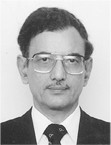
Mehta: relentless crusader
Although the government had discontinued its aid to the Leprosy Hospital, it had in 1982 honored Mehta with the Padma Bhushan, and in 1993 bestowed upon PDLC the National Award for the Welfare of the Handicapped "in public recognition of outstanding performance in the field of handicapped welfare.” The following year he was conferred the Manav Mitra Award but more than these honors "Jal’s biggest achievement was that he removed the taboo associated with leprosy. Jal worked hard to break down all the misconceptions surrounding this disease,” his wife Dr Mehru, a cancer surgeon, was quoted in the Pune Times. "Today... a woman afflicted with leprosy gets married to a normal man... that’s the highest form of acceptance that Jal helped achieve,” Mehru stated.
Having served on the National Leprosy Advisory Committee as also the Maharashtra State Leprosy Advisory Board and the leprosy working group of the Planning Commission, Mehta had also shared his experience with the rehabilitation committee of the 10th international leprosy congress at Bergen. In coordination with the cured patients he was instrumental in establishing viable cooperative industrial units to produce items for the automobile and hospital sectors. According to his Mehta Co-operative Rehabilitation Model a sizable amount of the earnings from these societies would be recycled to the PDLC so that other leprosy patients could be treated, cured and given a new meaning to life. When the Mehtas’ only son Dr Minoo died in an avalanche in the Himalayas in 1986 as a lasting tribute to his memory was established the Dr Minoo Mehta Apangodhar Sahakari Udyogik Utpadak Sanstha Maryadit, the first cooperative society managed by cured leprosy patients (see "Lightening the load of leprosy,” Parsiana, July 1993).
To Dr Jal Mehta too goes the credit of establishing a unit for the fabrication of lower limbs not only for leprosy amputees but also other handicapped patients. "Science still reigns supreme in my mental make-up and it was this scientific enquiry that led me to the study of leprosy in later life,” Mehta had acknowledged in his interview with Parsiana. After completing his schooling from St Mary’s and his MBBS from Seth Gordhandas Soonderdas Medical College in Bombay, Mehta specialized in surgery. He was then involved in the science and technology of sera and vaccine preparation, working at the Serum Institute of India as vice chairperson and director.
His association with the PDLC began in 1956 when it took over the running of the Kondhwa Leprosy Hospital (which was subsequently renamed the Dr Bandorawalla Leprosy Hospital in memory of its founder president and Mehta’s father-in-law Dr Nowroji J. Bandorawalla). Along with Dr Noshir Antia and other surgeons he had established the reconstructive and plastic surgery unit at the Hospital which previously was functioning from a barrack structure in Kondhwa where the inmates were given a measured quota of rice and vegetables, along with some firewood to cook their own meals. Even while a policeman stood guard at the entrance some of the inmates would escape and beg on the streets. With Mehta’s arrival the scenario changed drastically and instead of the barracks came a sprawling hospital and rehabilitation center that became a home to leprosy victims until they were cured. It had a capacity to treat around 350 resident patients in addition to 1,000 patients each month. The humble doctor believed that the credit for the good work should go to his father-in-law who took over the neglected home from the State Government in 1956, socialist Aruna Asaf Ali who inspired him to take on this responsibility, renowned leprologist Dr Robert Cochrane and to his wife Mehru.
As reported by his wife, Jal had no time for the luxury of hobbies. "He was always on the telephone about things connected with either the Leprosy Hospital or the Serum Institute...but he loved having pets — a terrier Echo and the parrot Tappy... Lately he would talk about Buddha’s Middle Path. But he wasn’t overtly religious. His work was his religion.”
The dedicated samaritan is survived by his wife Dr Mehru.
◆ ◆ ◆
From the archive