
In Memoriam
Disawalla's distinctions
Died: Dr Manchi Darabsha Disawalla, 81, a popular medical practitioner in Mudis and Bangalore who questioned the archaic rituals and customs within the community, on February 25, 2006 at the Bhagwan Mahaveer Jain Hospital, Bangalore following renal failure caused by cancer of the prostate.
"To us, Bhagwan Mahaveer Jain Hospital has been synonymous with Dr Disawalla,” the consultants had expressed their sentiments through a citation when Disawalla had retired as medical director of the Hospital in 1997: "Your character and conduct in your personal and professional life will always serve as a role model to all of us…In your role as administrator of Jain Hospital you have often had to walk a tight rope but you have done so with great skill. You have endeared yourself to us with your ever-smiling face and keen sense of humor…It is always amazing how your spirit gets younger as you grow older in years… mastering new skills in areas as diverse as playing the flute to punching the keyboard of your personal computer.”
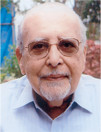
Disawalla: devoted care
Another medical institution which Disawalla had served with equal commitment was the P. D. Hinduja Sindhi Hospital where during his tenure as medical superintendent for 12 years "he was most dedicated to the cause of providing health care to the common man. As a member of the board of management his immense contribution for the progress of the Hospital is highly appreciated and acknowledged,” noted their condolence resolution. "He was instrumental in designing the hospital construction and contributed to establish multispecialty services with meticulous planning,” wrote the president of the Sindhi Youth Association R. G. Ahuja. Till the end Disawalla continued his association with this Hospital as advisor and coordinator.
His patients and colleagues were as appreciative of the medical practitioner. "He was…an excellent doctor of medicine, calm, understanding and devoted to his patients,” wrote Coomi Modi professing her "great affection and respect for him and dear Gool (Disawalla’s late wife, also a doctor). They gave us the best devoted medical care specially when my son Rustom was a baby who survived due to them.” Modi was referring to their years in Mudis in Coimbatore where for 21 years Disawalla was chief medical officer of the Mudis Garden Hospital.
Marveling at "his constant quest for knowledge and his zest for life which put us youngsters to shame,” Xerxes Master appreciated how Disawalla "even challenged the so-called keepers of our faith when he felt something was going wrong. He waged a lone battle despite all the brickbats and insults but held firm to his beliefs and convictions. Such qualities are rare to find in today’s life.” Delara Damania acknowledged how he had been "one of the big influences of my childhood and therefore my life… I have grown hearing his rational clear thoughts. I am glad for what he did for our community which few have been able to…”
In 2001 Disawalla’s life membership of The Bangalore Parsee Zoroastrian Anjuman was terminated on the grounds that he refused to subscribe to the archaic rule which makes it mandatory for a member to believe only in dakhmenashini as a mode of final disposal of dead Parsis. With his medical background Disawalla was convinced that in the absence of vultures, corpses remain in a high state of decomposition in a dakhma emitting a foul smell and polluting the environment. As Disawalla had then expressed, "I have been an uncompromising critic for the way the Anjuman’s affairs are being handled, in several matters also by uncalled for interference from the clergy.”
Former law secretary to the Government of India Rustom Gae who considered Disawalla a "genuine friend,” wrote, "He leaves us with a tremendous feeling of awe and wonder that such a good person worked with us in close proximity and did his best to improve the lot of Parsis and others in Bangalore…He fought many matters for the benefit of poor Parsis successfully exposing at the same time misdeeds, misappropriation of funds and breach of trust…”
Regardless of what the trustees opined, Disawalla was a devout Zoroastrian who would never miss out on his daily prayers and always wore the sudreh-kusti. He must have performed scores of obsequial prayers for those who opted for burial or cremation in Bangalore, Mysore and Coonoor, mentioned his son Ronnie and daughter-in-law Yasmin: "Freewill, devoid of coercion and community pressure is what he championed till the end.” Whether it was institutions in Bangalore or poor Parsis in the Navsari region, Disawalla believed in donating generously and anonymously.
Fond of music, for three decades he served as managing committee member of the International Music and Arts Society, Bangalore of which he was a founder member. A consummate traveler he is known to have acquired a vast collection of photographs. His niece Makku Narielvala who viewed the good doctor as her "hero and best friend” recalls how she would look forward to his visits when he would "bring a breath of fresh air into our mundane lives.” That was the time when he was studying medicine at the G. S. Medical College, Bombay after which he did his MD in obstetrics and gynecology from the Nowrosjee Wadia Maternity Hospital. Over the years he had opportunities to further his knowledge of medicine at the Hammersmith Hospital and Chelsea Hospital, London and at the Macgill’s University and Epworth Hospital in Melbourne. In later life he studied genetics with a passion.
"To honor and salute him for what he and his life have stood for,” the Bangalore assembly of "friends, admirers, well-wishers and those whose lives he has touched with the wand of compassion, care, concern and the human spirit” had convened a function in March 2002 to present a memento and scroll to "the shining beacon…the caring angel.”
The committed crusader is survived by his son Ronnie.
Parinaz M. Gandhi
◆ ◆ ◆
From the archive