
Observation
Mehta's medicine
Dr Ruzbeh Mehta belonged to that breed of medical practitioners who cared more for their patients than their money
The infant Ruzbeh Adarji Mehta, born during the First World War, grew up to experience the larger Second World War as a young doctor. He faced daily bombings by the Japanese, as a member of the Indian Medical Service (IMS) stationed at the Burma front. He treated wounded and sick soldiers in intense tropical heat and humidity amidst incoming enemy gunfire. In this mosquito infested environment, he served with distinction in the Malaria Unit. He yet managed to find time to enhance his literary interests. He obtained books in parcels sent out to him through headquarters, to destinations which were secret.
His correspondence with his best friend Homi Seervai (later advocate general of Maharashtra), and with his brother’s sister-in-law (later the wife of Seervai), often focused on books he had read, when not treating the sick and wounded. It was not permissible to talk or write about what actually was happening in the war zones.
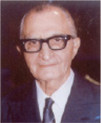
Mehta: doctor in demand
Mehta’s reputation as a first class doctor led to his appointment as a medical officer on the panels of doctors at the airport for consultation by the staff of Air India and British Airways. His sincerity, single-minded attention to patients, his medical expertise and importantly, his empathy and sympathy for patients, made him a doctor in tremendous demand. Innumerable families in Bandra and even elsewhere, regarded him as their friend, philosopher and guide as did the inmates of three institutes. He rendered honorary service at the Shirinbai Cama Convalescent Homes for Parsi women and for Parsi men, as well as the Avabai Petit School for Parsi Girls.
His waiting room in Bandra would be overflowing with patients at all times, until late at night. His Fiat car was a well recognized and welcome sight as he filled his hours with home visits. He charged small fees or none at all, in appropriate cases. He was brusque, with a no-nonsense mode of dealing with people. Yet, he was greatly and widely loved by his patients and his large number of doting nieces and nephews. His swift response and thinking on his feet resulted in many a lifesaving action. He was present at the emergency surgery for a lung condition of the five-week son of his close friends, the Seervais, when the child collapsed on the operation table. Mehta had the presence of mind and the skill to revive the infant’s heart by timely massage.
Following the untimely demise of his father Adarji who was in charge of treasury in the Nairobi Government Service, his mother Dhunmai relocated to India where with the loving and substantial support of her brothers Hormasji and Nusserwanji Cama, she managed to bring up her six children with small means, yet with commendable bravery and ability. There were two boys, Porus and Ruzbeh, and their four elder sisters, Dowlat (Talati), Nergesh (Mistry), Pilloo (Mehta) and Banoo (Cama).
She sent her sons to the Bharda New High School near the Victoria Terminus. They matriculated with academic distinction, and went on to pursue higher studies at the Elphinstone College. Both at school and at college, the boys were always winners of first prizes. The family took great pride in Ruzbeh’s gold medal at elocution contests, and for proficiency in school subjects. Porus later qualified as a lawyer, becoming a well respected advocate practicing before the Bombay High Court. In the ’40s, Porus moved to Delhi where he was a legal expert for many years with the Ministry of Law. He later rejoined the Bombay Bar.
Ruzbeh pursued medical studies at the Grant Medical College where his favorite guru was Dr Minocher Mody. Ruzbeh served under him during his earliest years at the B. D. Petit Parsee General Hospital; both doctors working in an honorary capacity. Drs Mody and Rustom Bilimoria were always his most honored and admired seniors in the profession.
When he came back to civilian life, after the war, he re-ignited his successful medical career, and his thoughts turned to marriage. He tied the knot with the beautiful Nergish Nanavati, who had been his college mate at the Grant Medical College. Surprisingly, he did not really know Nergish while at College. They made a happy home, she practising medicine near J. J. Hospital among the needy people of Bhendi Bazar and he building up a busy family practice in Bandra. Very remarkably, this couple, who could have minted money being in great demand as doctors, worked in a humanitarian spirit. They each charged moderately or not at all, not caring to become millionaires, as they may well have become.
A doctor friend tells us that it was remarkable, that even half of Sunday was a working day for him. Never, but never, whatever the circumstances, would he take any other day off, except each Sunday afternoon. Later, when he was persuaded to take the whole of Sunday off, it was his great happiness to organize picnics, where everyone from the extended family, especially his dear mother into very old age (after the children grew up she devoted her spare time to voluntary social service among families more in need than herself), joined the fun. Great games of baseball and cricket were orchestrated by him, and he was the foremost player.
Mehta was not only academically oriented, he was very actively involved with sports. At the age of 70 he played squash regularly, and could beat his much younger opponents on the court. Riding was a passion, which he passed on to his daughters Farida Mickey Mahava and Joy Dan Steinbrocker, and niece Shanoor (Forbes). He would take them all to Mahalaxmi or to the Amateur Riders Club very early in the morning. With regular exercise he kept himself absolutely fit, even tough, and was able to devote himself to the strenuous calls of a very busy family practice.
Mehta’s death occurred on September 12, 2005, in Los Angeles, with all his loved ones around him, at the home of his younger daughter, Joy, a physician. She had spent over a year giving him personal, loving, home care.
His uthamna and 10th day prayers were arranged by relatives at the Tata Agiary in Bandra. There his grieving family and friends, most of them his former patients, recipients of his many benefactions, gathered to pray for his soul and to reminisce fondly and gratefully about him.
His imprint on our lives shall never disappear.
Contributed by Feroza Seervai, Dan Steinbrocker and Reshad Forbes.
◆ ◆ ◆
From the archive