
Events & Personalities
Campaigner and crusader
Described as "an epitome of courage under adverse circumstances and a relentless campaigner for the rights of women and the oppressed,” Alice Garg was among the two recipients selected for the prestigious Neerja Bhanot Award 2000. The award which carries an inscribed silver salver and citation as also a cash prize of Rs 1,50,000 was presented to her last month by Gen Jacob (Retd), lieutenant governor of Chandigarh, and governor, Punjab and Haryana, in memory of the brave airhostess who died trying to save the lives of other passengers on the Pan Am flight hijacked in Karachi in 1986.
Garg’s spirited attempts in 1997-98 to book well-placed criminals involved in rape, gang rape and molestation whom the government was allegedly trying to shield resulted in "my co-workers, my family and I (undergoing) a very severe and sustained victimization campaign launched at the behest of the powers that be...It is only after going through the due process of the law...that we have recently succeeded in coming out unscathed and unblemished,” explained Garg in response to Parsiana’s queries.
As honorary founder secretary of Bal Rashmi, an organization founded in Jaipur on Children’s Day, 1972 which has for its motto — Save Children, Save Generation — Garg started out looking after the welfare of four children. Over the years the numbers have crossed 1,000. Their experience with these destitute children made them realize that until the welfare of the family as a unit, especially the empowerment of the girl child and women is pursued, children’s welfare would remain a distant dream. They therefore have been implementing programs in 184 villages in the districts of Jaipur, Dausa, Tonk and Sawai Madhopur in Rajasthan, covering formal/non-formal education, awareness against injurious social practices, constitutional and human rights, micro-credit financing, plus community development programs like electrification of villages and hamlets, safe drinking water, harvesting of run-off rain water, rural health and economic development, according to an introduction to the organization.
"Zoroastrian women have not been well treated either by the Zoroastrian society itself or by others,” maintains Garg. While many studies attribute higher education and economic emancipation as the main reasons for late or non marriage of Zoroastrian women, Garg believes the prevailing dowry system is a contributing factor. "Most families just cannot afford such expenses and hence the girls in the Parsi families must remain unmarried...” She was also unhappy about "the rigidity of the community against recognizing a Parsi marrying out of his/her religion... The community must show more courage and not only (accept) the Parsi women and their children born of an interreligious marriage but also show magnanimity to recognize the non-Parsi spouses as Parsis if they so wish... The more the community mixes with others (it does not necessarily mean marriage) the more confidence it will develop in itself and the more interest others will show in the survival of this great culture.”
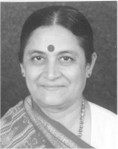
Garg: empowering women
Married to Krishna B. Garg who retired as professor of physics from the University of Rajasthan in 1995 but continues with his research projects, the couple have two daughters. Vatsala who is self-employed, markets ophthalmic equipment while her husband Anil Khurana runs a steel furniture factory. The younger daughter Vandana who obtained her masters degree in public health from the University of Carolina now assists the Rashmi Organization with her program on the girl child and community development while her husband Tarun Mishra is a medical practitioner involved with Rashmi’s rural health program.
Born in Nasirabad (Ajmer district) where her father Khan Bahadur Rustomji Kaka looked after the ancestral Framji family business and officiated as honorary magistrate until his untimely demise in a car accident at a very young age, Alice was educated and brought up by her mother and grandmother in Jaipur. To commemorate the father’s memory the family has set up the Rustomji Foundation to which Garg donated her Bhanot Award money. The immediate aim of the Rustomji Foundation is the setting up of the first museum of seashells in India, collecting seashells being a long-standing hobby of Alice who already has about 2,000 in her custody.
For eight years Alice was a teacher before she opted to become a voluntary social worker in which capacity she has worked on innumerable district and state level advisory committees on health and hospitals, women and children’s welfare, literacy, education and research... Since 1994 when she was conferred the Indira Gandhi Priyadarshini Award, she had been winning recognition almost every year, adds the bio data.
◆ ◆ ◆
From the archive