
Politics and Policy
Mehtas’ municipal mission
The voters from Ward 20 were determined to have a member of the Mehta family continue to represent them at the Bombay Municipality
"Most people would get thinner with the tension of elections but I am happily putting on weight,” laughs Anahita Rusi Mehta, the newly elected corporator of the Brihan Mumbai Municipal Corporation (Bombay Municipality). Although victory was expected for this Congress (I) candidate, the fact that she won 8,370 votes as against her nearest rival from the Bharatiya Janata Party who got 1,686 has been a continuous cause for celebration. During the course of the Parsiana interview on February 24, 2002, a fortnight after the polls, she must have received at least three reminders to inform her that her presence was being anxiously awaited at the felicitation function in the nearby B.I.T. Chawl.
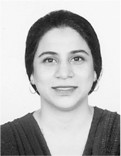
Anahita Mehta: concerned corporator
When campaigning at her Ward 20 which covers Central Bombay’s notorious Foras Road, Shuklaji Street, Bharatnagar, Khetwadi Back Road, Mehta recalls the overwhelming support she got from her electorate who kept reiterating that there was no need for her to be canvassing from door to door. They assured her that being obligated to her late father Rusi Mehta who as corporator for 20 years was responsible for many of the improvements in this neglected area, their loyalties lay only with the Mehta family. And accompanied as she invariably was by her brother Noshir, who until this year had adopted their father’s mantle as corporator and continued with his good work, was another plus point in her favor. "Had I not had such a hectic schedule and had I noted down the many instances they related of help proffered by my father, I would have had a diary full,” she states. "I was barely given a chance to say anything except ‘thank you, thank you,’” she adds.
The fact that she speaks fluent Marathi and Hindi, ("even better than Gujarati,” she confides) helped the voters identify her as "aamchi pori (our daughter),” she observes. In fact, one of the senior-most and faithful Congress (I) party workers, 90-year-old Prabhavati, popularly addressed as "aai” by the juniors, continues till this day to give 32-year-old Anahita a chocolate every time she meets her, a practice the senior lady had introduced over two decades ago for Rusi Mehta’s third child.
What made Anahita stand for the election? "It was thrust upon me,” she declares matter-of-factly. "I was left with no other choice.” When the Municipality announced its 30 percent reservation for ladies, the wards selected through a lottery system had to compulsorily field women candidates. As luck would have it, Ward 20 (or Ward 23 as it was referred to earlier where her father had served for four terms until his assassination on Anahita’s 18th birthday in 1987, his seat being then occupied by Noshir) was one of those earmarked for ladies. Realizing the responsibilities involved in accepting this challenge, Anahita initially showed her reluctance. But with the encouragement and support of senior Congress officials like Murli Deora, the confidence reposed by the residents of the area and guidance assured by Noshir who insisted that "public demand chhè; tané karvuch parsé (you will have to bow down to public pressure),” she took the plunge. Younger sister Pari was excused as she was then tied down with her infant’s asthmatic attack. Anahita though was expected to march on with the support of her husband Izhar and mother-in-law although she too has a little son Jaser, not yet three years old. Even after marriage she continues to retain her maiden name on the rationale that the electoral register and identity card reads "Anahita Rusi Mehta.”
While she had yet to receive her first exposure of a Corporation meeting scheduled for March 5, Anahita was familiarizing herself with the facts and figures concerning her constituency: There are 35,500 registered voters in her constituency of whom barely 35 percent (12,220) came to cast their vote. Fifty-five percent of her constituency members must be Muslims, she believes, the Parsi component numbering approximately 150, mainly from the Khetwadi Back Road locality. In her father’s time Balaram Street where many Parsis reside was also included in the same constituency, but not any more.
"See the population 50 years ago and today. But nothing has modernized here. We are still stuck with the British drainage system and storm pipes which cause repeated flooding in the monsoons,” she relates. Since hygiene and cleanliness are not priorities with the people here she finds "pipes and drains are choked, house gullies are perpetually dirty, gutters are overflowing.” And it becomes a vicious circle, observes Anahita, when some of the municipal workers feel it is futile fighting against this filth. The attitude assumed is: "ghaan chhè, ghaan rèhsé, marwaa déni.”
Initially in the Gol Darwaza locality the women would go and stand in a queue every morning at 4 a.m. to get water from the tap outside. Thanks to her father’s intervention and persistence each of the rooms now has a tap and the early morning ordeals are over for which they are perennially grateful to the Mehtas.
Presently Noshir is guiding her every step of the way and if Anahita is required to be in two places at the same time, the brother holds the fort at one place while she takes care of another emergency. She has had many occasions to interact with the populace of the area in the course of her involvement with the welfare center started by her father. The center comes to the aid of those with medical problems and educational difficulties, she says.
Anahita’s education was at the St Agnes High School, Clare Road, after which she graduated in science, specializing in life sciences and biochemistry from Bombay’s Sophia College. Preoccupied for eight months with her mother’s major illness the year she graduated Anahita says she neither opted for postgraduate studies nor a vocation in science thereafter. Presently she is the owner of the flour mill in the Rusi Mehta Compound and although her daily presence there is not mandatory as elder brother Dinshaw supervises the business, she is aware of the processes involved in the factory.
"Born and brought up in the area,” notes the publicity pamphlet distributed at the time of her elections listing her other assets as "honest, hardworking, dedicated, non-corrupt, loyal Congress worker from a family who has sacrificed for the people of the area.” The unpretentious office in the Rusi Mehta Compound housing a wooden desk, a couple of chairs and cupboards serves as her base. With her residence in the same modest building on a floor above, she smiles, "the people know where to contact me.”
Anahita may be frank and forthright on most subjects but try eliciting her views on the controversies plaguing the Parsi community and she will give guarded replies, "that, Dinshaw (being a trustee of the Bombay Parsi Punchayet) can handle... Dinshaw is very capable.”
She may be the only Parsi corporator presently in the Bombay Municipality. She may be the first Parsi lady corporator to serve the city. But rather than dwell on suppositions Anahita would prefer to concentrate on the tasks in hand such that "the basic necessities of good shelter, water, cleanliness can be assured to all the residents.” Once the Corporation sits for its first session and the committees are formed, she would be expected to contribute to the tasks delegated to her whilst ensuring that the ruling Shiv Sena party is performing its duty.
Would she encourage other Parsis to become corporators? The willingness and ability to put in "hard work is important,” she qualifies, be that person "a Parsi or anyone else.” Knowing that so many people from your constituency are illiterate, lacking in facilities many urbanites take for granted, your responsibility and obligation to do something for them increases, she explains.
Anahita may have joined the Municipality but she refuses to consider contesting Lok Sabha elections. "This is not politics. We are here to serve the people,” she declares. "With his reputation and hard work my father had a lot of chance of winning as a MP (Member of Parliament) but he was content to put in four consecutive terms as a corporator.”
Stirred by "the amount of love and trust” the electorate has reposed in the Mehtas, Anahita says she can now understand why she was prevailed upon to contest the elections: "If not in the interests of the family, the party, then for the sake of the people.”
◆ ◆ ◆
From the archive