
Drama
Virtually versatile
Meher Pestonji subtly presents a grim reality in a gentle and effective manner
A year ago, it would have been impossible to conceive of the staging of a play where the cast sat at home and rehearsed on their laptops over Zoom and never met in person. This was exactly what happened on September 5, 2021 when the director of the play, one of the actors and a technician were in Calcutta, two actors were located in Bangalore, two more in Bombay (along with the playwright), the production manager was in Madras, the musician in Bhubaneswar and another technician in Varanasi.
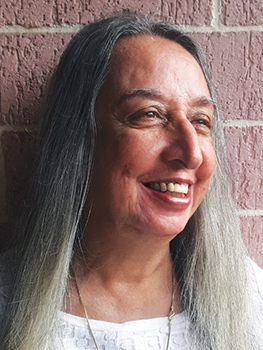 To mark International Spinal Cord Injury Day, The Red Curtain, a Calcutta-based theater group, and the Association of Spine Surgeons of India presented a virtual performance of a 75-minute play in English, Turning Point, written by Meher Pestonji (pictured). A woman of many talents, Pestonji has several interests. She is a social worker, journalist, novelist and playwright. In Turning Point, she turns her attention to a very important and crucial issue: the devastating condition which could be caused to an individual by injury to the spinal column that could arise from an inadvertent and even insignificant accident.
Darius, a young man, has always enjoyed swimming till he met with an accident in a swimming pool which has left him a tetraplegic (paralysis of all four limbs from neck downwards). Restricted to a wheelchair, confined to a flat, he has become bitter, antisocial and resentful. His mother is worried about who will take care of him after her lifetime and chooses her friend Soonamai’s granddaughter Rhoda, from a poor family, to marry/care for him. The young girl confides in Darius that she already has a boyfriend which Darius accepts initially till sparks of jealousy later emerge. A play, which could easily become preachy, grim and melodramatic, is subtly handled by Pestonji. There is the right amount of tension, humor, emotion and the "message” is delivered in a gentle and effective manner. The script is crisp and the repartees are swift. There is no awkwardness and the dialog moves in a natural manner as would suit a domestic household. Pestonji draws a parallel between the unfair social treatment meted out to Darius as well as Rhoda who is forced to marry for pecuniary reasons.
To mark International Spinal Cord Injury Day, The Red Curtain, a Calcutta-based theater group, and the Association of Spine Surgeons of India presented a virtual performance of a 75-minute play in English, Turning Point, written by Meher Pestonji (pictured). A woman of many talents, Pestonji has several interests. She is a social worker, journalist, novelist and playwright. In Turning Point, she turns her attention to a very important and crucial issue: the devastating condition which could be caused to an individual by injury to the spinal column that could arise from an inadvertent and even insignificant accident.Darius, a young man, has always enjoyed swimming till he met with an accident in a swimming pool which has left him a tetraplegic (paralysis of all four limbs from neck downwards). Restricted to a wheelchair, confined to a flat, he has become bitter, antisocial and resentful. His mother is worried about who will take care of him after her lifetime and chooses her friend Soonamai’s granddaughter Rhoda, from a poor family, to marry/care for him. The young girl confides in Darius that she already has a boyfriend which Darius accepts initially till sparks of jealousy later emerge. A play, which could easily become preachy, grim and melodramatic, is subtly handled by Pestonji. There is the right amount of tension, humor, emotion and the "message” is delivered in a gentle and effective manner. The script is crisp and the repartees are swift. There is no awkwardness and the dialog moves in a natural manner as would suit a domestic household. Pestonji draws a parallel between the unfair social treatment meted out to Darius as well as Rhoda who is forced to marry for pecuniary reasons.
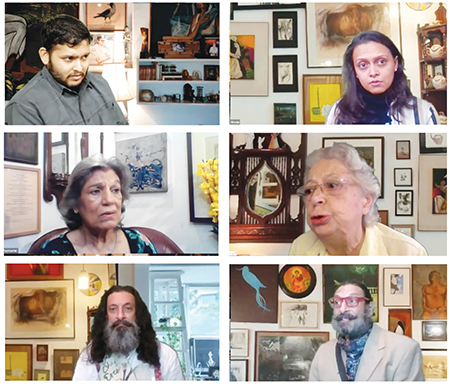
From l, top row: Aswin Varrier and Tanvee Ravi; middle row: Dolly Thakore and
Deena Ardeshir; bottom row: Faredoon Bhujwala (playing two roles)
The play is superbly acted by all the characters. Dolly Thakore plays the role of Ms Paymaster, the wealthy, worldly mother of Darius who firmly believes that money can buy everything whether it is the happiness of her son or the kidney required for Rhoda’s father. Living in a cocoon, she is appalled when she learns that money may not buy a kidney and the donor should belong to the family. Pestonji makes a gentle suggestion that the mother may be looking for a carer for Darius not only out of altruistic reasons; there is also a possibility that this will enable her to rejoin her interrupted social life. Once again Pestonji provides a slight ambiguity in Paymaster’s character: that she is over-protective of her son is obvious, but we are never clear whether this arises from concern for Darius or the embarrassment of having to display a tetraplegic son. Thakore is a consummate actress and performs her role with great elan. Sometimes she tends to look at the audience (screen) instead of the character she is in conversation with.
Faredoon Bhujwala plays three roles, one of the domestic help, the second of Mr Mathur who comes to motivate and encourage Darius to realize that life does not necessarily have to begin and end within the four walls of a room. Mathur cites several examples of handicapped people who enjoy their lives and achieve fame and satisfaction despite their disabilities. Bhujwala not only changes his appearance but also his body language and especially his voice, as he moves from the humble servant to the urbane and confident Mathur. His third role is a brief voice over the telephone as Michael, but once again he succeeds in transforming his accent to suit the character.
Pestonji makes the class distinction between Soonamai’s family and the Paymasters amply clear from the very beginning, looking askance at Rhoda’s affection for popular music and her inability to appreciate Western classical music. Rhoda is played by Tanvee Ravi who acts the part well, in a loud and strident tone as becoming her status but can equally show grief when she causes trouble in the Paymaster family. She brings a streak of joy and light into the household with her corny jokes and her genuine affection for Darius thereby providing him with a new existence. Deena Ardeshir is wonderfully caring and soft-spoken as Soonamai, kind, thoughtful and sympathetic, not at all representative of her social status.
However, the pièce de résistance of the play is Aswin Varrier’s portrayal of Darius. He is a versatile actor who one hopes will go far in the performing arts. He wields the wheelchair with anger when provoked and his expression changes with every emotion whether it is disgust, anger, affection, happiness or lust. The expression on his face when he asks his wife to show him her breasts is exceptional. His eagerness to go out of the house and enjoy life is touching. He shows determination and firmness when he comes into his own at the end of the play by making a critical decision.
There were a few jarring moments during the screening: at one point where Rhoda is supposed to be feeding Darius through a straw, the scene went a bit awry. The screen is divided into four sections and Darius is at a lower level as against Rhoda. But such mishaps are bound to happen in a production of this magnitude which was on the whole brave and otherwise flawless.
FIRDAUS GANDAVIA
◆ ◆ ◆
From the archive