
In Memoriam
Genial and generous
Died: Nariman Faramroz Mogrelia, 82, former president of the Madras Parsi Zarthosti Anjuman (MPZA) and Madras Parsi Association (MPA), erstwhile chairman of the Apparel Exports Promotion Council and founder of the Zoro Group of Companies; on August 31, 2020 at his residence in Madras following cardiac arrest.
"Nariman was a larger-than-life character with a booming voice and an infectious laugh, and held the welfare of the community close to his heart,” remarked the current president of the MPZA Darius Bahadurji. Serving the community "in varied roles and at all levels for many years… openly sharing both his time and his money,” in 2006 he was officially made a "patron” of the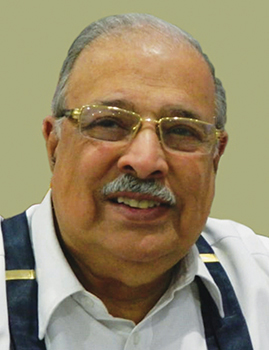 Anjuman. "He was the one who introduced a system of monthly get-togethers in Madras which knitted the community and which we still follow,” mentioned Bahadurji. "When I first came here, people like Nariman took care of me,” a grateful Bahadurji had earlier recalled the days when as a 25-year-old newlywed he felt reassured that Mogrelia took a genuine interest in his welfare and "opened his house to us.”
Mogrelia had first come to Madras in 1972 and took over as president of the MPA in 1985 and as president of the MPZA in 1991. "I am there to bridge the gap between the young and the old — sometimes I get praise, and at other times joothas (criticism),” Mogrelia had expressed in an interview with Parsiana (see "Exporting in style,” March 1986).
The statistics and data cited by the census commissioner of India, J. K. Banthia at the executive council meeting of the Federation of the Parsi Zoroastrian Anjumans of India (FPZAI) in November 2003 to show that Parsis are "an aging and very fast dwindling community” convinced Mogrelia to initiate some action. Then Federation vice president of the South Zone, Mogrelia "felt it is time for our small community to face this problem instead of (shying) away from the same, even if there is criticism from the orthodox lobby.” To find a consensus on the contentious issue of accepting children of Parsi women married out of the community, the Anjuman approached the local community.
The simple four-question poll required "no historical background and deep knowledge of religion...only sound and rational thinking in the present-day context,” Mogrelia had specified (see "Fads or figures?” Events and Personalities, Parsiana, May 2004). "This was not out of a sense of fair play alone towards Parsi ladies married outside the community but also not to lose any Parsis by shutting out those marrying outside the community and their progeny. This is in no way to encourage Parsi girls to marry outside the community,” stated the circular winning approval from 86% of the community in Madras who opined that children of Parsi mothers and non-Parsi fathers should be initiated and permitted into the fire temple.
"Nariman was a larger-than-life character with a booming voice and an infectious laugh, and held the welfare of the community close to his heart,” remarked the current president of the MPZA Darius Bahadurji. Serving the community "in varied roles and at all levels for many years… openly sharing both his time and his money,” in 2006 he was officially made a "patron” of the
Anjuman. "He was the one who introduced a system of monthly get-togethers in Madras which knitted the community and which we still follow,” mentioned Bahadurji. "When I first came here, people like Nariman took care of me,” a grateful Bahadurji had earlier recalled the days when as a 25-year-old newlywed he felt reassured that Mogrelia took a genuine interest in his welfare and "opened his house to us.” Mogrelia had first come to Madras in 1972 and took over as president of the MPA in 1985 and as president of the MPZA in 1991. "I am there to bridge the gap between the young and the old — sometimes I get praise, and at other times joothas (criticism),” Mogrelia had expressed in an interview with Parsiana (see "Exporting in style,” March 1986).
The statistics and data cited by the census commissioner of India, J. K. Banthia at the executive council meeting of the Federation of the Parsi Zoroastrian Anjumans of India (FPZAI) in November 2003 to show that Parsis are "an aging and very fast dwindling community” convinced Mogrelia to initiate some action. Then Federation vice president of the South Zone, Mogrelia "felt it is time for our small community to face this problem instead of (shying) away from the same, even if there is criticism from the orthodox lobby.” To find a consensus on the contentious issue of accepting children of Parsi women married out of the community, the Anjuman approached the local community.
The simple four-question poll required "no historical background and deep knowledge of religion...only sound and rational thinking in the present-day context,” Mogrelia had specified (see "Fads or figures?” Events and Personalities, Parsiana, May 2004). "This was not out of a sense of fair play alone towards Parsi ladies married outside the community but also not to lose any Parsis by shutting out those marrying outside the community and their progeny. This is in no way to encourage Parsi girls to marry outside the community,” stated the circular winning approval from 86% of the community in Madras who opined that children of Parsi mothers and non-Parsi fathers should be initiated and permitted into the fire temple.
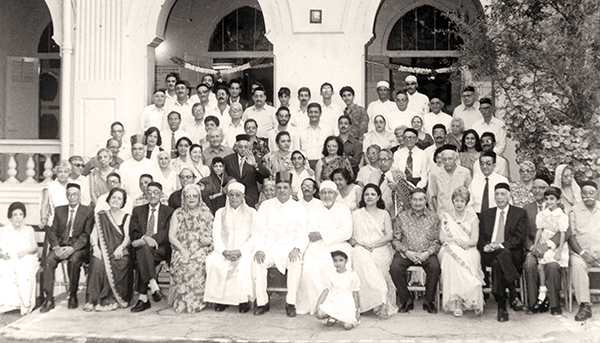
Top and above, seated front row, center in pugree:
Nariman Mogrelia with community members in Madras in 1995
The same year, Mogrelia had unwittingly raised the ire of the orthodox once again when at an executive council meeting of the Federation in Ahmedabad in December 2004 he was reporting on a Madras Anjuman project for a new hall that could be used for community functions and also hired to others. His innocuous statement, "You can also have Federation meetings there Inshallah (an Arabic phrase meaning ‘God willing,’ used by Muslims and others, including Zoroastrians)” had so incited the rowdy orthodox observers that they threatened to remove his sudreh-kusti and set him afire (see "Fascism at the Federation,” Parsiana, January 2005).
As chairman of the Phil and Mary Clubwala Jadhav Trust, in 2018, he had approached ex-Madrasite Feroza Jassawala to raise funds for the charitable organization based in Madras and she recalled: "I couldn’t refuse this wonderful opportunity to serve such a prestigious institution in my hometown. I was honored to receive his guidance and motivation, directly once again, after so many years.” Her earliest memories of Nariman and his wife Mahbanu "go back to the 1980s and 90s when his sparkling parties with laughter and merriment on the lawns of his bungalow dominated our social life.” When Jassawala was writing for the Apparel Export Promotion Council (AEPC) and representing Zoro Garments at Trade Fairs, she remembered Nariman striding "like a giant Colossus in the garment export industry. He had an unmatched charisma of grandeur, success and great respect. He always advised me to look at the larger picture, reach out for the stars, persevere…”
Having additionally served as chairman of the Apparel and Handloom Exporters Association, South India, over the years his contributions were recognized with the Niryat Rattan Award from the Indian Council for Small and Medium Exporters, the Shiromani Vikas Award and the Ambattur Industrial Estate — Outstanding Export Performance Award presented by former President of India R. Venkataraman.
Attributing his success with the Zoro Group of Companies to "systematic hard work, Khuda ni maherbani (God’s grace) and correct timing,” Mogrelia had previously revealed to Parsiana that he had launched his business with his entire savings of Rs 25,000 and borrowed capital of Rs 25,000 to buy a closed down readymade garment factory in 1972. "When starting a business, an entrepreneur should be capable of finding his own financial resources, without feeling the need to turn to family funds,” he had counseled. He continued to note in a lighthearted manner that Parsis should learn from another prosperous community: "Loko naa paisé dhandha karta avarvu joié; aapraa paisé to dikraao bhi dhandha kari saké (a person should be able to conduct a business with public funds as anybody can launch a business with parental wealth).”
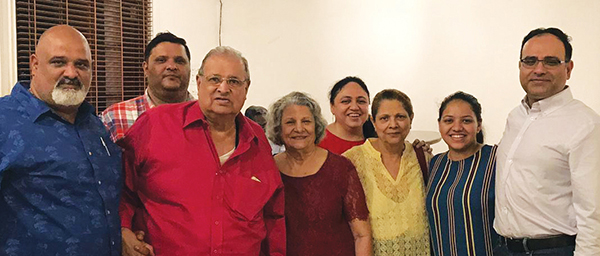
From l: Shazad, Polad and Nariman Mogrelia, Roshan Battiwalla,
Nazneen, Mahbanu and Deah Mogrelia, Dr Minoo Battiwalla
An alumnus of the Maharaja Sayajirao University in Baroda from where he had earned his MCom degree, Nariman had started his career as an officer with Bank of India. This was followed by one year stints as finance officer of India United Group of Mills in Bombay, manager of C. Ramon and Company, London, general manager of Coromandel Garments Ltd, a subsidiary of Tata Textiles in Madras before launching Zoro Garments. He was visiting professor in marketing and sales management at a number of institutes in Bombay and Madras.
Known for his "passion to test his fortune at the casinos of London” where he entertained his friends and acquaintances, a communication from ZTFE (Zoroastrian Trust Funds of Europe) past presidents Rusi Dalal and Dorab Mistry described Nariman and Mahbanu as "very faithful friends of ZTFE… During the 1990s when we were struggling with the New Premises Project, they would support and encourage us. We can never forget their goodwill, friendship and benevolence. They handsomely supported the Second World Zoroastrian Youth Congress hosted by the ZTFE in London in 1997. They had donated several gifts including polo shirts printed with Zoroastrian motifs and logos for the Congress delegates as well as for sale to the Zoroastrian public.”
"He had an extremely large, forgiving heart and firmly believed in caring and sharing, whether with his employees, family or friends,” appreciated Mahbanu. Sons Shazad and Polad who considered him "a wonderful father,” referred to his "exuberant personality that helped build a fellowship spirit.” The gregarious businessman valued his membership on the all-male Wednesday Club comprising a group of close friends from all walks of life who met every Wednesday afternoon for lunch with the purpose of providing lifelong friendship and companionship.
The popular president is survived by his wife Mahbanu, sons Shazad and Polad, and sister Roshan Battiwalla.
◆ ◆ ◆
From the archive