
History
A farewell to the hills
Sixth generation owners of Nowrojee & Son took a pragmatic though painful decision to sell their ancestral landmark property
It does hurt to let go....But one must see the larger picture... I know my late parents (Nauzer and Mani) will be very happy with our decision” to sell the property, Parvez Nowrojee told Parsiana on September 12, 2020. With his elder brother Kurush, Delhi-based Parvez wound up their 160-year-old store Nowrojee & Son, General Merchants in McLeodganj, Himachal Pradesh (HP) earlier that month. It was "especially painful” for Parvez to see the signboard being removed from the store front. However, "our parents would be happy we got barkat (prosperity) from the property,” he said. He had recently completed "sorting old records, documents, antiques, handling movers and packers with heavy mist and rain spoiling our day to day activities.” The store had been in the family for six generations and at its peak had "five branches all over the Punjab and employed 70 people.” The business was set up a dozen years after the first British cantonment came up in1849 in that area. A suburb of the hill town of Dharamshala in the Dhauladhar range of the Himalayas, McLeodganj is often known as "Little Lhasa.” The Tibetan government in exile is headquartered there. Parvez commented that it would be "too premature” to say what use the buyer would put the property to.
While winding up operations, Parvez says he found a letter from a postal department official from the early 1900s asking his grandfather Nadirshah if he would like to run a post office in the town. "That explained the pigeon holes in the store (to sort letters)... I did not know why they were there.” The family manufactured aerated drinks and mineral water and sold wine, grocery, bakery products, toiletries, and even arms and ammunition, he narrated. Besides selling newspapers, magazines, confectionery, the Hindustan Times (HT) of August 24, 2020 stated that it also "(exhibited) relics from a bygone era like a Petromax (pressurized paraffin lamp), cases of cigarette brands and posters for toffees.” Nadirshah served as a supervisor for the 1921 census, noted a commendation letter from "Superintendent, Census Operations, Punjab” that Parvez shared with us. "We really supplied everything from a pin to an elephant,” albeit with a smidgeon of exaggeration, he added. However, historian Dr Dinyar Patel told Parsiana that in the course of his research into Parsi aerated water manufacturers of yore, he came across an advertisement from The Tribune of May 19, 1917 that the firm was looking to sell a leopard cub!
While winding up operations, Parvez says he found a letter from a postal department official from the early 1900s asking his grandfather Nadirshah if he would like to run a post office in the town. "That explained the pigeon holes in the store (to sort letters)... I did not know why they were there.” The family manufactured aerated drinks and mineral water and sold wine, grocery, bakery products, toiletries, and even arms and ammunition, he narrated. Besides selling newspapers, magazines, confectionery, the Hindustan Times (HT) of August 24, 2020 stated that it also "(exhibited) relics from a bygone era like a Petromax (pressurized paraffin lamp), cases of cigarette brands and posters for toffees.” Nadirshah served as a supervisor for the 1921 census, noted a commendation letter from "Superintendent, Census Operations, Punjab” that Parvez shared with us. "We really supplied everything from a pin to an elephant,” albeit with a smidgeon of exaggeration, he added. However, historian Dr Dinyar Patel told Parsiana that in the course of his research into Parsi aerated water manufacturers of yore, he came across an advertisement from The Tribune of May 19, 1917 that the firm was looking to sell a leopard cub!
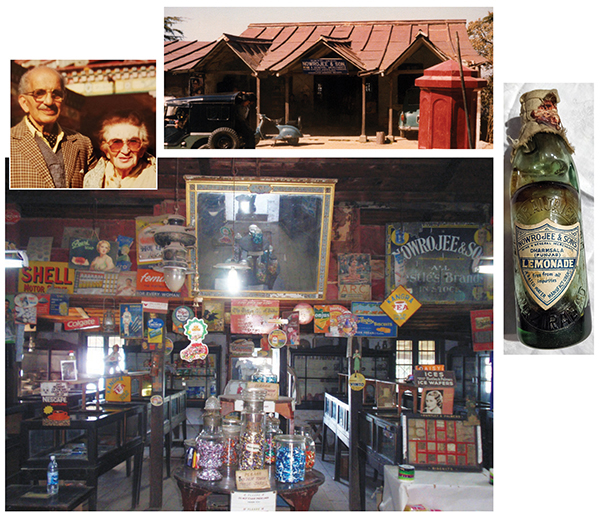
Clockwise from top center: Nowrojee & Son, General Merchants, established 1860;
memorabilia from 1952; view of the store’s interior; inset: Nauzer and Mani Nowrojee
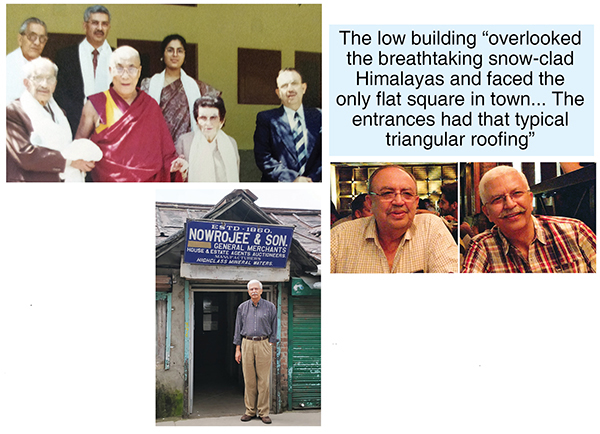
Top, front row, from l: Nauzer, the Dalai Lama, Mani, Kurush Nowrojee,
rear row, from l: Uncle Jemmy, Parvez, Keity
Nowrojee; above and ext r: Parvez, at the storefront; center: Kurush
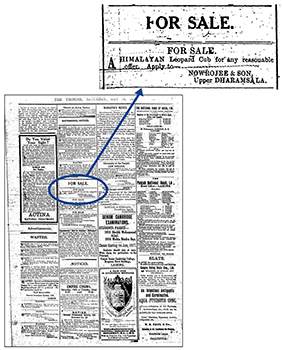
Advertisement for the sale of a Himalayan leopard cub
in The Tribune, May 19, 1917 Courtesy: Dr Dinyar Patel
The 65-year-old Parvez stated that "a mountain boy is more aware and respectful of the surroundings.” He schooled in Chandigarh. His parents did not wish Kurush and him to "to be tied down” to McLeodganj in their growing up years. Living in Delhi since 1986, with wife Keity and son Yaosh, Parvez is a trustee of the Delhi Parsi Anjuman (DPA). Kurush is based in Calcutta having worked in the tea industry. "I wanted to go back to the mountains after retirement,” Parvez said. When he did retire from service in Pest Control India a few years ago, "it was probably too late... I had lived most of my life away from McLeodganj... It would not have been easy to adjust to life there again... anyway, many local markets had sprung up, run by the Tibetans,” he stated.
When the iconic store closed, California based reader Rusi Sorabji shared his memories. Living in Delhi and a frequent trekker in the mountains in the 1960s and 70s, he said that the building "overlooked the breathtaking snow-clad Himalayas and faced the only flat square in town... The entrances to this low building had that typical triangular roofing. Below one of which was the signboard with the Parsi name.”
On one of his treks, "we forever-hungry Parsis decided to take a peek in, but we agreed not to converse in Gujarati... We were 30-plus somethings, (acting) as if still in our teens… The girls (were) wearing salwar kameez, Kangra (local) jewelry and Nepali caps...Parsipanu had to take a back seat to prevent orthodox tongues a-wagging.” The game was up when an "absent-minded baffaat-master (one who gives away secrets)” friend called out Rusi’s name, suggesting they collect a quarter bottle of whiskey for the night. On confirming to the gentleman at the counter that they were Parsis, the group was offered two bonus items for the dozen pastries/patties they bought! "A lady wearing a Parsi sari (came) into the shop from the rear informing that the patties were baked that morning,” recalled Sorabji. "We had a feeling that those extras he put in the box were especially for us,” he wrote.
"My late father was instrumental in having the Dalai Lama settle down in the hill town properly... They were friends for many years,” Parvez mentioned. When the union government was looking for a safe place for the spiritual leader’s permanent residence in India in the late 1950s, Nauzer had lobbied for McLeodganj as a possible location. "The town had become dull after the departure of the British so he thought this might help things bounce back,” he noted. As children, Kurush and Parvez were regular visitors to the Tibetan leader’s residence. "We always got candies from him....I must have, without any exaggeration, met him 50 times at least,” Parvez recalled. The Dalai Lama was present at Nauzer and Mani’s 50th wedding anniversary celebrations in April 1996. "We last met about six or 10 years ago,” he said. "He has influenced me in the same way he has influenced everyone else in the world.... He is not the kind to impose his views on anyone,” Parvez said about the spiritual leader of the Tibetans.
After Nauzer passed away in 2000, one individual allegedly "forged land documents and laid claim to the property... he even managed to defend himself in court.... His appeal was dismissed finally in 2016 in the state high court.” Parvez and Kurush "lost 16 years in litigation... the building had started to come apart...Regular trips up to the mountains were required to make sure there were no encroachments.” The store was "partially running” during this period. It stood at the edge of a cliff on a ridge and was "at road level...Our residence was at the lower level,” said Parvez. Further down was the soda bottling factory. "The kitchen was in a separate building... The workers’ quarters were down the valley,” he remarked. Mani passed away in Delhi in 2008.
The Nowrojees were one of about 10 Parsi families in the erstwhile undivided state of Punjab. When the state of HP was carved out in 1971, "ours was the only Parsi family” permanently living there, stated Parvez. He had "happy memories” of going to Bombay "to learn about our Parsi connections.” Mani was from a railway family and had grown up in Agra, Poona, Jhansi and Bombay. Parvez said his ancestors were based in the erstwhile princely state of Kapurthala (in the Punjab) before moving to McLeodganj. "I don’t know why or how they landed there... I believe they were looking after the royal finances,” he stated.
Nadirshah was "awarded a jagir in Kot Radha Kishan,” in what is now Pakistan, for the relief work undertaken by him when the town and its surroundings were destroyed by an earthquake in 1905. He shared a copy of the letter of appreciation written to the senior gentleman from the office of the lieutenant governor of the Punjab for the "valuable assistance” and "special services” for "relief of sufferers” of the calamity. Writing in Dipanjali magazine of the DPA in 2011, Parvez noted that Nadirshah "was a member of the jury” for Dharamshala district. They were the first family in the hill town to own a car in 1922, the vehicle being used to ferry patients from town to the nearest medical center. In addition to looking after the family store, Nauzer served as a civil warden of a nearby camp of Italian prisoners of war during World War II. Mani volunteered with the Red Cross, he stated.
"My parents were much loved for their honesty and their helpful nature... Our family was much respected,” stated Parvez. "One of only four families on our hill,” when he and Kurush were growing up, "we were kings...After four we were not allowed to go out for danger of encountering wild animals... We lived in the midst of nature... We were very privileged to have grown up in the mountains.”
Sorabji surmised, "Soon this heritage building and the view would be gone... Another hill station without a Parsi entity or family.”
◆ ◆ ◆
From the archive