
Housing and health
Persistence while researching the Parsi community pays dividends
"Research is fundamental to understanding health and diseases patterns, cause, treatment, and cure,” writes Dr Hitakshi Sehgal narrating her experiences on collecting data on blood pressure findings in the Parsi community. She wants to investigate whether there is a correlation between the readings and the residential environment. Her study is titled "Single Ethnicity Study on High blood pressure and Local Neighborhoods (SESHLoNe).”
"The role of the environment in health and disease of populations is most significant and yet underplayed. Our environment is not just to air, water, and soil. It is everything around us, including the social and cultural influences in our lives. Populations share environments, which define the lifestyle of the people,” she wrote.
Sehgal cites the example of Finland where "after over two decades of rigorous public health research — planning and implementation, monitoring and evaluation, follow-up research — the country was able to decrease the prevalence of heart disease in the population.” Other studies conclude that lifestyle factors such as diet and physical activity are affected by neighborhood infrastructure. Body mass index has also been found to be affected to the built environment. These studies have looked at whether neighborhood built-environment supports walking, has good transportation, and access to food. While some research results can be applied to other populations, each population has peculiar factors leading to different health and disease patterns. Thus, research is a fundamental requirement for understanding and affecting subsequent changes for better health of people.”
The Parsi population in India is a "Founder population.” Briefly explained, it means that the Parsis have less genetic variation and more genetic repetition. Simply put, there is a certainty about the genetics of the community. In such a population, it becomes relatively simpler to understand the impact of environment on health because we assume the genetic influence is a constant. So, to study the relation, if any, of the environment on blood pressure, the study maintains a few constants: ethnicity, age (18-52 years), and city of residence.
The other reason for doing the study in the Parsi community is that many Parsis live in exclusive housing, baugs and colonies, within the city of Bombay. Several also live in cosmopolitan neighborhoods. This allowed me to create comparable local neighborhoods within the city. Thus, the three groups for comparing local neighborhoods in the city are:
Baugs with amenities: Must have an open playground and a clubhouse of sorts for people to sit and play/ socialize;
Parsi apartments, either stand-alone or in a congregation but without the amenities of a playground/clubhouse;
Cosmopolitan housing.
As I started collecting data, I realized that there are more nuances to these categories, especially for the baugs and Parsi apartments. For example, the Mancherji Joshi Dadar Parsi Colony is not a baug but has the amenities and is a large congregation. It is also a neighborhood very relevant to the study.
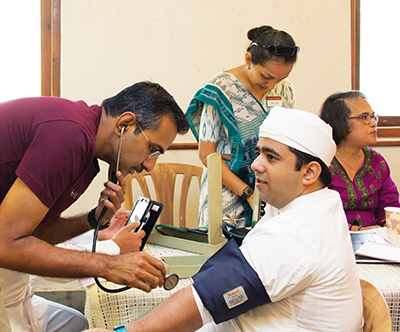
For a study like this, the ideal way is to create a random sample of people in the age group. I had hoped to randomly select people from the Bombay Parsi Punchayet (BPP) voter database and ask people for their consent to participate in the study. However, the BPP database did not list age and the contact information was not updated.
Thus, the task of networking and engaging people became the biggest challenge. It took me nine months to complete data collection. This was done by networking within the community. Personal networking and my team’s presence was the most successful method of ensuring participation. In the last year, my network in the community increased manifold! Over 1,500 people participated in my study, but I met and interacted with many more than that. My guess is about 2,500.
I used pamphlets and notice boards to inform Parsis of my presence but people did not respond to them.
The number of participants is based on the population to be studied. Population density in Bombay is high but density within Parsi colonies and baugs is low. The sample size of 1,500 is a fair representation of neighborhoods that most Parsis live in.
Over 10 months, 1,529 Parsis participated in the study. They were asked questions regarding their lifestyle and neighborhood infrastructure, we took their blood pressure, measured their height and weight. Based on their addresses and postal pincodes, I will use geographic information systems (GIS) mapping to assess the resources in each neighborhood. The data will be analyzed for any relation of neighborhoods with blood pressures.
I connected with a research group that in 2000 had done a study of over 2,000 Parsis. The researcher warned me that I was setting myself up for an unimagined challenge, especially if I had a deadline. They took over two years to get the data and it was arduous. I found that technology gave my efforts an edge. WhatsApp was the most important tool that I found because:
Most people in the age group of this study use WhatsApp;
I did not directly intrude. A phone call or a knock on the door are often considered rude;
It gave me an opportunity to send people a brief about my study and many people assented once they understood what I was asking for;
People could read it at their convenience;
I could send reminders, schedule and reschedule without disturbing them.
Even while collecting data, I constantly heard that I am aiming for the impossible because there are no young Parsis. Some said it seriously, others as a joke. Most Parsis I met had a great sense of humor and could crack and also laugh at a joke even on themselves! Fortunately, the humor was not lost on me! I have Parsi friends and colleagues. I had done basic research before starting. I knew that there are roughly 10,000 Parsis in Bombay in the age group for my study (courtesy my interaction with Jehangir Patel of Parsiana).
Simultaneously, I was helped by many who raised no concerns about how many Parsis are in Bombay but networked for me. I would be failing many if I start to list those who made data collection possible. That said, a few people really gave me time and made extra efforts to connect me to more people. It is because of them that I was able to complete data collection.
One of the main concerns of the ethics committee at the University of Minnesota was that I would not be able to enroll enough women in the study. Socio-cultural demographics of the country indicate that women are introverted and may not speak with me. Contrary to that concern, more women have participated in my study. They deserve special mention here because in my networking efforts, more women helped me not just by networking but also with administrative work and volunteering. Women in the community are ardently enthusiastic and take on a lot of responsibility.
Children were attracted to the apparatus I brought along with me and helped me with chairs, tables, water and networking! My inspiration was those who had questions about the research. One child even filled out the questionnaire and is my brand ambassador! We owe them healthy environments.
Last but not the least, this arduous task was sustainable because of the warm and hospitable nature of the community! People were welcoming and hospitable. It kept me hopeful.
I am working on analysis of the data. Preliminary results cannot be shared as they can be misleading. The study will be complete by May 2019 after which results will be shared.
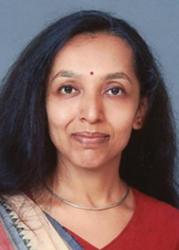 Holding a masters degree in public health, homeopathic physician Dr Hitakshi Sehgal practices at the Masina Hospital. She is currently pursuing her doctoral studies at the Division of Environmental Health at the University of Minnesota.