
A hand held sport
Romaana Sabzeh has excelled at the underrated game of handball
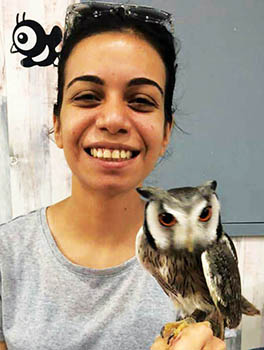
Romaana Sabzeh
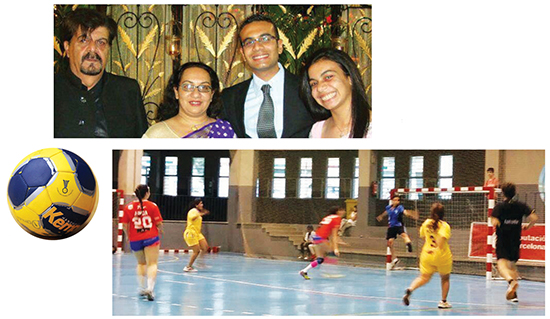
Sabzeh used to train five to six hours a day even during her summer vacation. She says, "The training would start at 6 a.m. and end by lunch time. I wouldn’t say training is difficult, but you need to work hard to achieve certain goals. My diet would be home cooked meals but I would have a cheat day every Sunday, which was when I got to eat fast food.”
The sportswoman is currently recovering her form after multiple fractures in an accident while playing a game of handball in August last year. "I had a bad fall on the court during a game just a month before leaving to play league matches. I was hospitalized for a couple of days and I found out that I had a fractured knee, a fractured ankle and a broken elbow. This incident was absolutely heartbreaking. There was both physical and emotional pain. The timing was very bad and I had to back out of a tournament. I still have difficulty running and doing other activities. I would love to plan a comeback but my body is just not ready for it. But I firmly believe in miracles.”
The Sabzeh family has been very supportive of her sporting career. She says, "I’m grateful to have understanding and accepting parents. They knew that I was never going to accept being a mediocre child and I had to do something that would bring out the best in me. As long as I maintained a good balance between my education and playing, my parents did not (object).”
Sabzeh’s father Behrooz, a Zoroastrian Irani who used to run Irani cafes in Deolali and Hyderabad is now retired. His parents were immigrants from Iran. Her mother Veera (née Maneksha), who is originally from Bombay, works at the British Library in Hyderabad. Romaana was born and brought up in Hyderabad but alternated between living in Bombay and Hyderabad. She completed her schooling from Nasr School in Hyderabad and graduated in economics from St Francis College, Hyderabad. She now works for Uber as an operations specialist in brand safety. Elder brother Cheraag is presently studying for his MS degree in Australia.
A proud Zoroastrian, Romaana terms the Hyderabad and Secunderabad community, as "very close-knit. I have been encouraged and felicitated for my achievements by the Zoroastrian Club. Despite our shrinking numbers worldwide, Parsis have always made a mark wherever they go and I still think that Zoroastrianism is undergoing a revival which means that we have a bright future.”
Origins
Handball is played by two teams consisting of seven players each, including a goalkeeper. There are two referees, one for the court and one for the goal. A leather ball is used and the game lasts one hour with a break of 10 minutes in between the two halves. The players can handle and throw the ball with their hands but must not touch it with their feet. The team that scores more goals wins the match. The court usually measures 20 x 40 meters (131 x 66 feet) with a goal in the middle of each end.
There is evidence of Ancient Roman women plaing a version of handball and records of handball games in medieval France, states Wikipedia. The game was codified at the end of 19th century in Denmark. The first set of modern rules were published in Germany in 1917. The game has been played at the Olympics since 1936 with women’s teams being added in 1976. The sport is most popular in Europe.