
Land, largesse and legacy
From the Zarathushti Heritage and Cultural Center to the upcoming atash kadeh in Houston, property developer Feroze Bhandara’s charities have supported many causes
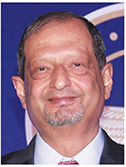 The next day, in an interview with Parsiana, he recounted his foray into the realty business four decades ago that has seen his finances soar and sink at different times but has emboldened him to continue and use his wealth for the community in Houston by contributing to the foundation of the Zoroastrian Heritage and Cultural Center (ZHCC) 20 years ago and the atash kadeh that is expected to be ready by the end of this year. Through the Feroze and Shernaz Bhandara Charitable Trust he has been supporting other causes too.
"The discipline to work for 15-20 hours a day, work ethics, the ability and knowhow to solve problems and difficulties” 65-year-old Bhandara considers as important as "cash flow” to ensure the success of a business. The Ardenwood Group encompasses several business divisions including Mazda Construction that has developed Ardenwood Homes where over 300 residences have been built in the Houston area and a further 205 acres are being developed with plans to add 400 home sites and 50 acres of commercial development. Yet another division, Feroze Bhandara Interests manages 10 commercial and real estate projects in Houston whilst Regency Crossing oversees a 432-unit apartment complex. They have commercial office space available on Richmond Avenue, right outside of the Galleria Area, and in Houston Medical Center, besides retail and industrial space on Harwin, Richmond, as notes their website detailing the floor area available for different suites, the parking amenities and a map of each location.
His latest entry is into banking, having joined a group that bought Noble Bank in the north of Dallas. In the process of obtaining a transferring license to operate in Houston, he mentions that the Bank will be located in one of Ardenwood’s new buildings. "We have raised $ 25 million from the public,” says the Bank director who hopes Parsis will work within the system to avail of loans from this Bank.
His future projects include 200-acre Land Development in Katy, Texas, more Class A commercial/multi-family projects and joint ventures for strategic redevelopment.
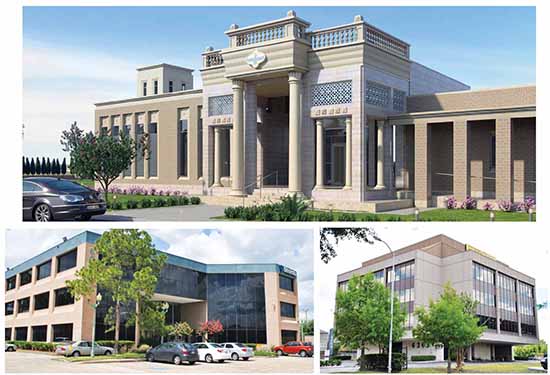
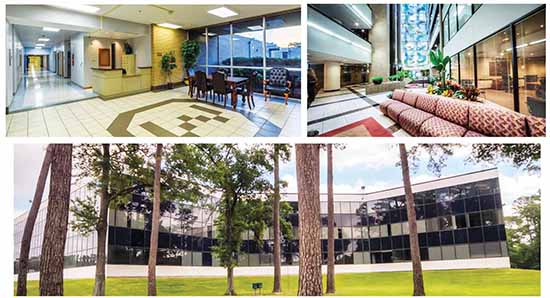
He is also considering running for public office, convinced that "any type of election is a matter of luck.” In fact he is also encouraging his son Berzin who has joined him in business to develop a political profile. While he is involved with TIRZ-20 (Tax Increment Reinvestment Zone), Berzin is active in TIRZ-1. TIRZs are special zones created by the city council to attract new investment in an area by helping with finance costs of redevelopment and encouraging development. The TIRZ develops infrastructure projects like roads and drainage to improve the value of an area. This involvement has given him insights into "how America works.”
After 47 years in the US, "I’m still a foreigner. To break into the upper circle is very difficult,” he observes. Lahore born Bhandara had studied at the Aitchison College in the city which was reputed to be "a tolerant and enlightened” institution. The only Parsi student during the 12 years he spent at the school (his elder brother Minoo being 17 years his senior had already passed out from the institution before Feroze joined), he reveals that even though "I didn’t try to hide my identity I was forced to keep a low profile. I had to form my own alliances with the Punjabis to stand up against the Pathans who did not favor any non-Muslims… I can speak perfect Urdu and Punjabi.”
He was in the 12th grade when ahead of the Indo-Pakistan War of 1970-71, there was compulsory induction for the military training program. He was even sent for a military medical check-up "but I was able to side-step the induction,” he mentions. He applied to universities in the US and got admission in Oklahoma State University. After his graduation in engineering, he did his masters in business administration from the University of Wisconsin and a Stanford University honors program four years later. He has fond memories of his maternal cousin Kawas Nanavati, older than him by 30 years, who had taken up residence in Canada, hosting him on summer holidays when he was a student in the US. Although aware of the scandal and the court case in Bombay where Nanavati was convicted of murder and pardoned, to Feroze his cousin had "a magnetic personality and was a big role model.”
When Feroze returned to Pakistan in 1978, business for the Murree Brewery that his father Peshotan owned was slack because of prohibition and he was advised to seek his fortunes elsewhere. He first took up residence in the San Francisco Bay Area working for The Ford Motor Company. In charge of the bodyline assembly, he would start work at 5 in the morning and return at around 8 at night. He was later appointed senior engineer at Ford Aerospace at Palo Alto where he became a program manager and worked on military programs and technical satellite projects which take four to five years to complete.
That was the time in the late 1970s when he started buying and selling houses in the San Francisco area, acquiring 10 houses within 10 years. The prices of houses had increased four-fold by then. "I had become a multimillionaire,” he exults. He chose to "take his money to the next level.” Following the oil bust of the 80s, with 100 houses in Houston being available at the cost of one house in California, he invested in housing projects in Houston — office buildings, shopping centers, empty plots. He would fly back and forth between California and Houston every week. "I was doing too much. I had a major heart attack in January 1991 at the age of 37 years that forced me into depression.” He now makes it a point to exercise daily by either going for a walk or to the gym or playing raquetball. "If you don’t have health, you have nothing. You have to take charge of your own body,” Feroze has learnt.
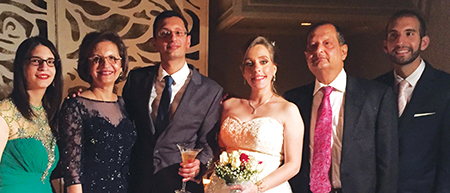
From l: Zareen, Shernaz, Zubin, Eloisa, Feroze and Berzin Bhandara
He realized he needed to focus clearly on what he wanted to do. He convinced wife Shernaz to relocate with him to Houston and took the management of his properties in his own hands. He had invested in "77 empty plots of land on the assumption that someone would buy from me.” But when the area was classified as flood plain, he was left without buyers. He had to spend three years to get it re-classified as non flood plain.
He started selling sub-divisions of these plots to other builders, a couple of whom absconded after taking money from innocent buyers. "This forced me to become a home builder.” On the advice of a consultant and by hiring superintendents, he "learnt from scratch and within three months built my first house.” He also learnt that "what matters is not how many assets you have but cash flow.” Faced with a cash crunch, he sold his model house and built three/four more houses. He was finally able to develop and sell all 77 plots. He was "flushed with success and found it super profitable to be in the home business.”
Over the next 15 years he learnt to manage effectively after easing out a partner who was allegedly cheating on him. He even invested in a depressed housing area, known to be a hotbed for criminals and vagrants, and turned it around with the support of the city council and police. "You have to learn to help yourself. The beauty of America is that civilians can demand action from the police.” He got a Federal grant of $ 10.5 million (Rs 70.17 crores) "to renovate the apartments and extend their useful life for 50 years.” He got rid of the balconies and chimneys and introduced amenities like washing machines and stoves. These apartments became the best in the area. After-school activities were introduced for the residents and a mosque and a church were built for their convenience.
"I know how to get money from the city and government administration… Having something is better than not having anything.” Every year he makes a contribution of $ 40,000-50,000 (Rs 26.73 lakhs to 33.41 lakhs) to the Republican/Democrat Party realizing that they control millions of discretionary funds that can be accessed.
Contributing to the community
"To serve my community gives me great satisfaction… as also leaving a legacy for the community at large,” Feroze had noted in his acceptance speech on being conferred the award in Bangalore (see "A journey and a destination,” Parsiana, February 7, 2018). With a corpus of nearly four million USD (Rs 26.5 crores) the couple founded the Feroze and Shernaz Bhandara Charitable Trust, the interest of which is used for education and medical needs of the community and Parsi institutions around the world. They had also given a magnanimous donation to fund Arman Home in Cyrus Colony, Karachi, a facility that provides living facilities for the elderly who cannot take care of themselves. The youngsters are all "trying to get out of Pakistan,” he mentions. The Karachi Parsi Institute and a few other Parsi organizations felicitated him last year.
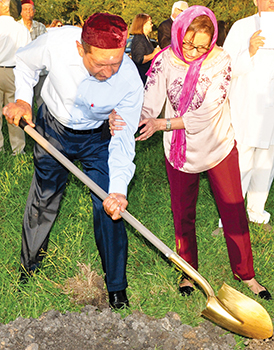
For the Houston community, he was a major donor for Phase 1 of ZHCC and recently donated nearly $ 1.2 million (Rs 7.65 crores) to build the first atash kadeh in the USA that should be ready by 2018. Three years earlier, the Bhandaras donated seed capital of $ 300,000 (Rs 1.90 crores) that helped raise funds for the New York Darbe Mehr (see "Bhandara benevolence,” Parsiana, July 21, 2015). "I love Parsis and do everything I can to help them,” mentions Feroze who realizes also the need "to reach outside and contribute to the bigger community.”
Describing himself as "passionate about religion,” Feroze says it is "ingrained in me since childhood, the core values of goodness and charity.” The Mama Parsi School in Karachi was set up by his maternal grandfather Khan Bahadur Ardeshir Mama, he spoke with pride of his forebears. His mother Tehmina had launched the Bhandara Foundation in Lahore. His elder sister and well-known author Bapsi Sidhwa, 18 years his senior, residing just two minutes away from his home and being confined to the house he visits daily. He mentions how the Rice University is archiving her work, manuscripts and letters. He also supports the oral history project under the auspices of the Zoroastrian Association of Houston that has also been involved in archiving material. Feroze is happy that 34-year-old Berzin, a certified public accountant, has been working with him for the last 10 years. Elder son Zubin, 37, is running a computer laboratory. Daughter Zareen, 27, is a qualified counselor and school administrator.
As per his estimates, 70-80% of the youth in the US have married out of the community. "They feel strongly about discrimination. They don’t want (non-Parsi) friends to feel slighted when they come to our agiary. They already think we fight too much and argue about things inconsequential. They don’t care about getting a free flat in Cusrow Baug… I can’t stand intolerance (or) people who try to impose their views on others,” he states categorically.
At the Houston atash kadeh that will be open to all Zoroastrians, their spouses and children, he plans to introduce visual aids such that while priests are praying, devotees have the option of reading the translation on screen. When he prays he simultaneously switches on the recitation recorded on YouTube to experience the "peace that prayers bring.” Darbe mehrs like the ones in New York and Houston "were created down-up. The community had to collectively struggle to get it. It is not my atash kadeh but belongs to the community although the family will have two seats in its management. Through evolution of religious practices, the community will determine what best suits them.”
What most appeals to him is that this religion is "monotheistic, not proscriptive, permitting freedom of thought… The essence of our religion is freedom. That is what America is all about too. I don’t know rituals but I know the essence and that matters.”