
Observation
The path of truth
A book on the Gathas is one’s soul companion in Tenughat Jail
The purity of our thoughts, and the extent to which they have been cleaned of evil, can only be gauged when faced with the traumas, disturbances and the varied facets of life. As explained in Yasna 15.2 of the Gathas, "That man is holy who is filled with right mindedness. Through his wisdom, words, deeds and way of thinking, he promotes truth. May God give him power of the pure mind.”
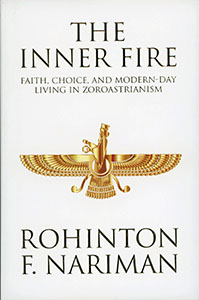
In today’s context where we see all around us dishonesty, duplicity, greed, corruption, etc (in essence evil), Justice Rohinton Nariman’s book The Inner Fire: Faith, Choice, and Modern-Day Living in Zoroastrianism is not only extremely valuable but timely and relevant. The message of truth, goodness and purity of mind, words and deeds we get from the Gathas is in sharp contrast to what currently exists in society, particularly in the echelons of power. This has been my only companion in Tenughat Sub Jail, Jharkhand which I had never even heard of.
In today’s context where we see all around us dishonesty, duplicity, greed, corruption, etc (in essence evil), Justice Rohinton Nariman’s book The Inner Fire: Faith, Choice, and Modern-Day Living in Zoroastrianism is not only extremely valuable but timely and relevant. The message of truth, goodness and purity of mind, words and deeds we get from the Gathas is in sharp contrast to what currently exists in society, particularly in the echelons of power. This has been my only companion in Tenughat Sub Jail, Jharkhand which I had never even heard of.
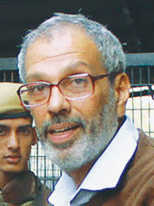
Kobad Ghandy: solace from the Gathas
According to Nariman there are three basic principle of the Gathas. The first is Asha which is the very embodiment of truth. The second is Vohu Mana or the Pure Mind. The third is Armaiti or Right Mindedness. "Truth is so important that it occurs in almost every verse of the Gathas” Nariman observes. "In perhaps the most important verse in the Gathas (chapter 45, verse 8)… good thoughts, good words and good deeds is laid down as the path of truth which mankind is to follow.” In India too "Satyamev Jayate (Truth shall prevail)” was the premise on which newly independent India was founded. Also, the three monkeys were the symbols to see, speak and hear no evil. Though some of this idealism continued in the earlier decades after independence, later Chanakyaism took over which made truth and honesty look foolish and naïve.
The media worldwide and more so in India has become notorious for propaganda, fake news, half-truths, insinuations, outright lies and distortions, and suppression of uncomfortable truth/facts. Falsehood has become so widespread that to give it authenticity, it is being said we are in a "post truth era.” Things have got so bad that people no longer believe the mainline media and seek alternatives. Though this was earlier said about communist regimes (more propaganda, less news), one has just to look at our Doordarshan (DD) TV channels and even most private ones to see the extent to which Gobbelian propaganda (presented as news) has reached.
Straightforwardness is a rare commodity, with most having to live up to images through pretenses. In a world where I cannot be myself, it is not possible to be true to myself, let alone to others. I am no longer myself, but forever playacting to suit other images of me. This is not only in day to day social life but also in many an organization (particularly the Left) where many things are taboo, though they may be the most normal, emotional, instinctive and human feelings.
What would be the best measure for "knowledge brought by the path of truth?” Surely, the extent of happiness brought for all would be the best indicator. In Yasna 43.1 the Gathas state: "Happiness to him who gives happiness to whomsoever else.”
In any country the starting point for happiness would be that everyone gets the basic necessities of life: food, clothing, shelter, health care and basic minimum education. In a country like India where a rising number of people — now estimated at 70% — do not get this, where can they find happiness? Now even this tends to be distorted saying that the poor have no worries, while it is the rich who have numerous tensions. This may be true with some of the rich, because of their insatiable greed, extreme individualism and ego. But try living "happily” when you do not know where your next meal comes from and you find you have no money for medicine/treatment for your sick child leading to his/her death.
So, today to live by the path of truth would be to seek happiness for all. This would entail, first and foremost, to be true to oneself by being straightforward, honest and with simplicity in all our interactions. This would naturally involve countering falsehoods, oppression, injustices, hatred, lies and anything that distorts the truth and the path to happiness.
In Yasna 43.8, the Gathas state: "I am in the first place dedicated to good and the true adversary of evil, to the extent that I can contain it.” But, in today’s context who/what is good and who/what is evil? Obviously those responsible for perpetuating the acute suffering in society are evil, while the rest are generally good; though many of them too get deceived/attracted by the evil-doers and join their ranks. Yasna 30.9 of the Gathas makes this abundantly clear when it says: "Those who make life worth living for others have real companionship with truth, such persons are clear-minded and free from doubt and are able to withstand falsehood whenever reason sways in doubt.”
And what the Gathas say in Yasna 49.4 is as true today as when it was said over 3,000 years back: "These evil persons increase hatred and cruelty with their speech — sham protectors, the wolves among the shepherds. Those who perpetrate evil don’t have any desire to do good deeds. Such men create false Gods and evil ways of thinking.” Do we not see today these same people inflaming caste and communal hatred and setting the country aflame with wanton violence (as happened for the movie Padmaavat) and even killing innocent and aged people like rationalists Gauri Lankesh, M. M. Kalburgi, Govind Pansare, Narendra Dhabolkar and numerous journalists and right to information activists.
Then what about the good people in relation to those evil doers? Should they remain as silent spectators allowing unhindered the perpetration of crimes against humanity? In Yasna 43.15 the Gathas say: "Never should any person try to placate evil persons for they will always regard the righteous as their enemies.” And adds further in Yasna 31.8 "Let not any of you listen to the words and teachings of those who are evil. It is only when such person comes to kill you that you can resist their violence with violence.”
It is clear from this that the good must stand up to the evils being perpetrated. Silence, after all, means consent. The lines are clearly drawn in the Gathas between the righteous and the evil doers represented by the path of Spenta Mainyu and that of Angra Mainyu — and everyone has to chose their path.
The Gathas go so far as to state that even any association with the evil doers is tantamount to joining them. Nariman says that: "Chapter 46 Verse 6 makes the dichotomy between good and evil crystal clear by declaring that he who is good to those who are evil is himself evil, and he who is good to the righteous in himself righteous.”
Humility/simplicity helps acquire, as the Gathas say, "good insight,” while ego/pride arising from money and power blinds the person to reality, with them only seeing what is convenient/conducive to them. Where the caste hierarchy prevails, those at the top consider themselves as superior beings no matter what their level of competence.
With ego, we tend to think we know everything, and thereby, in effect, turn into the biggest buffoons, as we are not willing to listen to others, let alone learn from them. Ego promotes submissiveness, scurrility and fosters flattery, keeping all others in a state of fear and uneasiness. On the other hand, humility/simplicity allows for ease of mind and a warm and conducive atmosphere allowing for freedom to flourish. While ego kills others’ individuality and ability to grow [creating a babu (bureaucratic) mentality, so prevalent in India)], humility allows for the individuality to flower and facilitates the growth of all.
If we seek examples of both from today’s society, there could be no better example than the late Jayaram Jayalalitha, former chief minister of Tamil Nadu as the symbol of ego and the late Anuradha (my wife, see article April 2017 Mainstream) as the symbol of humility/simplicity. The contrasts could not be sharper!
Nariman, quoting the Gathas says: "The followers of the old religion, who believe in many gods are… harmful polluters of modern life. They are said to be of the false spirit… those who are liars, those who are self-centered, and those who have double-speak. They have strayed from the path of truth. Yet, they are an extremely powerful group, and men doing the worst deeds are said to be beloved of the Gods, spreading hatred and making mankind wail in bondage.” No one could believe these words were written over 3,000 years ago, as every word would be applicable to today’s India and also much of the world. Do we not see the worst elements as the most powerful, the very pillars of the establishment?
In those days the evildoers may have been those linked to the worship of many gods but today it matters little, for whomever they worship, they have, in effect, one god — money and power. It is these people who are dishonest, corrupt, insincere, autocratic, with inflated egos, with all the vices of greed, avarice, selfishness, spewing venom and hatred wherever they go. It is true what Zarathustra says, that such evil people are "without a conscience,” and chameleon-like, they change their color overnight when it suits them. They are never to be trusted though their words may be sweet sounding.
Clearly, like most prophets Zarathustra’s sympathies are with the oppressed rather than the big and powerful. In Yasna 47.4 the Gathas state: "Only one who has little material wealth is inclined to be righteous. But, being rich and powerful, such person is inclined to be evil.” Finally, in a cry of desperation the Gathas say in Yasna 51.4: "When will compassion take over? When will truth take over?”
Things will change for the better, only when the bulk of humanity tries to live by the spirit of the Gathas, and stands up for truth, however painful it may be. It is more convenient to adjust with the powers that be, turning a blind eye to the reality around us. Of course, in this, the media/entertainment/sports world helps us along this false path by camouflaging reality and keeping us in a make believe world of glitter. (Here in Tenughat jail the Bhojpuri channels seem the most popular, which have the most cheap, vulgar and sexist songs/dances/films.)
So, in the prevailing environment, it will be no easy task to put the tenets of the Gathas into practice and live along the path of truth and the pure mind. But at least one should make an effort in that direction. Of course, not just today, even in Zarathushtra’s time it seems to have been a difficult choice. In Yasna 32.7 the Gathas says: "These violent people do not understand the Herculean effort required to tread the path of truth which is taught by life’s molten metal test.”
This book is indeed a valuable treatise which has brought to light text hidden by old Avestan languages. Nariman has indeed undertaken a splendid yet difficult task of translating the Gathas and presenting it in simple language. It must have taken enormous effort, specifically given his judicial responsibilities in the Supreme Court.
Appropriately, the very release function of this book was itself accompanied by the most relevant comment made by the then chief Justice of India, Justice Tirath Singh Thakur, which continues to resonate in my ears till today, that religion is purely my personal relation with God. Nothing could have been more appropriate in today’s context when religious passions are consuming the country, when hatred, rather than love, is becoming the bedrock of most religions. Hope we can all emulate him and give life to what is fast becoming a dead religion. Let us not just read Nariman’s account of the Gathas, but try and put the lessons into practice in our daily life.
◆ ◆ ◆
From the archive