
In Memoriam
Palamkote’s piano proficiency
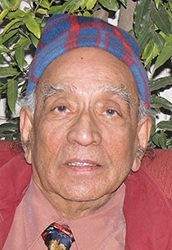
Died: Hosie Pestonji Palamkote (pictured), 92, founder director of the Delhi Music Society (DMS) and principal of the Delhi School of Music (DSM); on September 8, 2017 in Delhi, following kidney failure.
 He almost single-handedly built the DSM, from its very humble beginning in 1969, filling many different roles in the process: helping to plan the building, managing all aspects of the School for many years, encouraging and promoting younger teachers during the decades he served as principal. He did this quite selflessly, without any thought of improving his own personal circumstances. During his tenure, the DMS kept in touch with well-known international musicians and music groups, organized their tours through India and took advantage of visiting performers to organize concerts in Delhi, mainly at the India International Centre (IIC).Workshops and lectures were a regular feature at the Music School as also annual students’ concerts and recitals.
Humble and unassuming, his unparalleled understanding and comprehension of western classical music, the various composers and performers was a revelation. He shared his love for music generously with his students, training with care and perseverance, especially his more talented students, not only in the technique of playing an instrument proficiently but in understanding the finer nuances of the music being studied.
Jayati Ghosh, professor of economics at the Jawaharlal Nehru University (JNU) who studied under him and has for many years been associated with the DMS as a trustee, remarked that as a piano teacher, Palamkote’s students found him "generous, thoughtful, very knowledgeable and often inspiring. He was understated and modest in personality, but very confident in his approach to music and performance, and able to emphasize the importance of discipline and effort in ensuring creativity in musical expression. He stressed the importance of understanding theory and musical analysis of every piece being studied. At a time when the internet and YouTube had not opened up the possibilities of listening to different interpretations, he was remarkably au fait with developments in western classical music in different parts of the world. He had a very finely grained, even sophisticated, musical sensibility and a very acute ear.”
"His knowledge and experience of music was certainly greater than that of anyone else I knew while growing up: it was a privilege to have played for him and to have received his guidance. His legacy at the DSM will be remembered for generations to come,” stated Jehangir Cama, a physicist from Cambridge, whose second love is the piano and western classical music. Although Jehangir did not study directly under Palamkote, he remembered well his senior repeating the words of the Italian pianist and composer Ferruccio Busoni: "It is better to play the wrong notes the right way rather than the right notes the wrong way.”
"Like all great teachers he wanted to bring out the student’s experience in music, not his own. He would discuss technique and styles and suggest the best points of the pianists he admired, like Claudio Arrau, to encourage the student to aspire to that level,” added Cama. He always stressed the example of how Arrau kept his arms loose to ensure that the music flowed through the arms to the keyboard, further recommending that there should be no bumps along the way in terms of tension and stress.
His star student was Surojeet Chatterji who now teaches music at the A. R. Rahman Music Conservatory in Madras. Both master and star pupil achieved their day of glory when with Palamkote’s encouragement and help Chatterji earned the LRSM (Licentiate of the Royal School of Music) degree, a feat no candidate in India had achieved in the preceding five years. Reminiscing about his long standing relationship, Chatterji said, "I looked upon Mr Palamkote as more or less an Englishman, as I did with other Parsis. It was probably their visual decorum, ethics and behavior. Being with him was not just studying the piano, but an exposure as to how the West may be.”
Chatterji revealed that Palamkote was unable to go to the best of music schools in England for he went there to study and practise chartered accountancy but the lure of music deflected his course. Having completed his Licentiate of the Trinity College, London (LTCL) Performers Diploma in Calcutta, Palamkote managed through the years to accumulate a vast repository of knowledge and experience. Extremely curious, open-minded, an avid researcher of different methods and approaches towards teaching and performance at the piano, Palamkote was not prone to rigidity. Most magnanimously he shared his firsthand observations of the world’s finest musicians. Equipped with binoculars he had attended their performances at London’s leading auditoriums. He thereby learnt and assimilated a whole lot more than those who were studying under one teacher in a stricter academic environment. On one occasion he featured on a jacket of an LP (Long Playing) record that portrayed the audience at a Horowitz concert.
Palamkote, Sunny Raghunath who taught piano for some time at the DSM, Shyamali Mukerjee, who had first met him as a student at the DSM, and the writer of this piece met regularly, attended concerts together, and sat at the IIC for outings, teas and meals. Mukerjee recalls her first impression of Palamkote as formal, somewhat distant and disinterested in anything apart from music. When she was better acquainted with him, she realized that he was multifaceted and warm-hearted with varied interests. He shared his love of English literature with her husband and the two would discuss the works of their favorite authors and exchange books. With her and her two sons Palamkote shared his love for history, music, old Hollywood films and food! His knowledge and love of the arts prompted him to round up a clutch of close friends and take them to various exhibitions — Czar Nicholas’ collection of Faberge eggs, Nizam of Hyderabad’s priceless jewelry displayed at the National Museum, a treasure trove of Picasso’s works owned by the Lady Jamsetji Tata Trust and other such events.
What his friends appreciated in Palamkote was his positive outlook on life — ever hopeful, with a remarkable capacity to bounce back despite adversity. In his witty, inimitable style, he would quote, "I’d rather count my years by blossom than by blight.” In his down-to-earth pragmatic style he would knock down despondency with "Don’t make tragedies out of trifles, or shoot butterflies with rifles.” He had mastered that turn of phrase that bore the stamp of colonial Calcutta where he grew up. The most he would permit himself to say by way of criticism of someone he did not like was "I suspect he has got more up his sleeve than his arm.”
The bachelor is survived by his sister Kitty Moddie.
He almost single-handedly built the DSM, from its very humble beginning in 1969, filling many different roles in the process: helping to plan the building, managing all aspects of the School for many years, encouraging and promoting younger teachers during the decades he served as principal. He did this quite selflessly, without any thought of improving his own personal circumstances. During his tenure, the DMS kept in touch with well-known international musicians and music groups, organized their tours through India and took advantage of visiting performers to organize concerts in Delhi, mainly at the India International Centre (IIC).Workshops and lectures were a regular feature at the Music School as also annual students’ concerts and recitals.Humble and unassuming, his unparalleled understanding and comprehension of western classical music, the various composers and performers was a revelation. He shared his love for music generously with his students, training with care and perseverance, especially his more talented students, not only in the technique of playing an instrument proficiently but in understanding the finer nuances of the music being studied.
Jayati Ghosh, professor of economics at the Jawaharlal Nehru University (JNU) who studied under him and has for many years been associated with the DMS as a trustee, remarked that as a piano teacher, Palamkote’s students found him "generous, thoughtful, very knowledgeable and often inspiring. He was understated and modest in personality, but very confident in his approach to music and performance, and able to emphasize the importance of discipline and effort in ensuring creativity in musical expression. He stressed the importance of understanding theory and musical analysis of every piece being studied. At a time when the internet and YouTube had not opened up the possibilities of listening to different interpretations, he was remarkably au fait with developments in western classical music in different parts of the world. He had a very finely grained, even sophisticated, musical sensibility and a very acute ear.”
"His knowledge and experience of music was certainly greater than that of anyone else I knew while growing up: it was a privilege to have played for him and to have received his guidance. His legacy at the DSM will be remembered for generations to come,” stated Jehangir Cama, a physicist from Cambridge, whose second love is the piano and western classical music. Although Jehangir did not study directly under Palamkote, he remembered well his senior repeating the words of the Italian pianist and composer Ferruccio Busoni: "It is better to play the wrong notes the right way rather than the right notes the wrong way.”
"Like all great teachers he wanted to bring out the student’s experience in music, not his own. He would discuss technique and styles and suggest the best points of the pianists he admired, like Claudio Arrau, to encourage the student to aspire to that level,” added Cama. He always stressed the example of how Arrau kept his arms loose to ensure that the music flowed through the arms to the keyboard, further recommending that there should be no bumps along the way in terms of tension and stress.
His star student was Surojeet Chatterji who now teaches music at the A. R. Rahman Music Conservatory in Madras. Both master and star pupil achieved their day of glory when with Palamkote’s encouragement and help Chatterji earned the LRSM (Licentiate of the Royal School of Music) degree, a feat no candidate in India had achieved in the preceding five years. Reminiscing about his long standing relationship, Chatterji said, "I looked upon Mr Palamkote as more or less an Englishman, as I did with other Parsis. It was probably their visual decorum, ethics and behavior. Being with him was not just studying the piano, but an exposure as to how the West may be.”
Chatterji revealed that Palamkote was unable to go to the best of music schools in England for he went there to study and practise chartered accountancy but the lure of music deflected his course. Having completed his Licentiate of the Trinity College, London (LTCL) Performers Diploma in Calcutta, Palamkote managed through the years to accumulate a vast repository of knowledge and experience. Extremely curious, open-minded, an avid researcher of different methods and approaches towards teaching and performance at the piano, Palamkote was not prone to rigidity. Most magnanimously he shared his firsthand observations of the world’s finest musicians. Equipped with binoculars he had attended their performances at London’s leading auditoriums. He thereby learnt and assimilated a whole lot more than those who were studying under one teacher in a stricter academic environment. On one occasion he featured on a jacket of an LP (Long Playing) record that portrayed the audience at a Horowitz concert.
Palamkote, Sunny Raghunath who taught piano for some time at the DSM, Shyamali Mukerjee, who had first met him as a student at the DSM, and the writer of this piece met regularly, attended concerts together, and sat at the IIC for outings, teas and meals. Mukerjee recalls her first impression of Palamkote as formal, somewhat distant and disinterested in anything apart from music. When she was better acquainted with him, she realized that he was multifaceted and warm-hearted with varied interests. He shared his love of English literature with her husband and the two would discuss the works of their favorite authors and exchange books. With her and her two sons Palamkote shared his love for history, music, old Hollywood films and food! His knowledge and love of the arts prompted him to round up a clutch of close friends and take them to various exhibitions — Czar Nicholas’ collection of Faberge eggs, Nizam of Hyderabad’s priceless jewelry displayed at the National Museum, a treasure trove of Picasso’s works owned by the Lady Jamsetji Tata Trust and other such events.
What his friends appreciated in Palamkote was his positive outlook on life — ever hopeful, with a remarkable capacity to bounce back despite adversity. In his witty, inimitable style, he would quote, "I’d rather count my years by blossom than by blight.” In his down-to-earth pragmatic style he would knock down despondency with "Don’t make tragedies out of trifles, or shoot butterflies with rifles.” He had mastered that turn of phrase that bore the stamp of colonial Calcutta where he grew up. The most he would permit himself to say by way of criticism of someone he did not like was "I suspect he has got more up his sleeve than his arm.”
The bachelor is survived by his sister Kitty Moddie.
◆ ◆ ◆
From the archive