
Events & Personalities
“A creation of art”
"Can Press freedom, which includes the screening of a movie, be restricted on the ground that it hurts the sentiments of some members in the community or that it distorts historical facts? It may be noted that the concept of hurt sentiments is inherently vague. Whose hurt sentiments are to be taken into account? According to judicial decisions, they are of level-headed reasonable persons, not hyper-sensitive souls and fanatics who perceive insult and offence in any speech or song or painting which they do not approve of.”
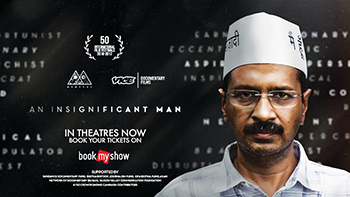
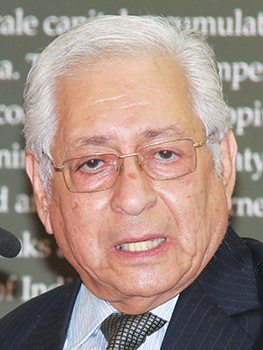 Noted jurist and former attorney general of India Soli Sorabjee (pictured) raised the issue in The Indian Express ("Be intolerant of intolerance”) of November 22, 2017 while referring to a writ petition rejected by a three-member bench of the Supreme Court of India. The petitioner prayed that the release of the movie, An Insignificant Man (pictured pg 14) be stayed "on the ground that it contained a video clip pertaining to the petitioner and the film should not have been granted a certificate by the Central Board of Film Certification (CBFC). The petitioner’s argument was that the Constitution guarantees him the right of not being portrayed in a derogatory manner as was allegedly sought to be done by the film.”
Chief Justice Dipak Misra on behalf of the Bench comprising him and Justices A. M. Khanwilkar and D. Y. Chandrachud refused the prayer noting, "freedom of speech and expression is sacrosanct... A film or a drama or a novel or a book is a creation of art. An artist has his own freedom to express himself in a manner which is not prohibited in law… A thought-provoking film should never mean that it has to be didactic or in any way puritanical. It can be expressive and provoking the conscious or the subconscious thoughts of the viewer. If there has to be any limitation, that has to be as per the prescription in law… Courts are to be extremely slow to pass any kind of restraint order in such a situation and should allow the respect that a creative man enjoys in writing a drama, a play, a playlet, a book on philosophy, or any kind of thought that is expressed on the celluloid or theater.”
Noted jurist and former attorney general of India Soli Sorabjee (pictured) raised the issue in The Indian Express ("Be intolerant of intolerance”) of November 22, 2017 while referring to a writ petition rejected by a three-member bench of the Supreme Court of India. The petitioner prayed that the release of the movie, An Insignificant Man (pictured pg 14) be stayed "on the ground that it contained a video clip pertaining to the petitioner and the film should not have been granted a certificate by the Central Board of Film Certification (CBFC). The petitioner’s argument was that the Constitution guarantees him the right of not being portrayed in a derogatory manner as was allegedly sought to be done by the film.” Chief Justice Dipak Misra on behalf of the Bench comprising him and Justices A. M. Khanwilkar and D. Y. Chandrachud refused the prayer noting, "freedom of speech and expression is sacrosanct... A film or a drama or a novel or a book is a creation of art. An artist has his own freedom to express himself in a manner which is not prohibited in law… A thought-provoking film should never mean that it has to be didactic or in any way puritanical. It can be expressive and provoking the conscious or the subconscious thoughts of the viewer. If there has to be any limitation, that has to be as per the prescription in law… Courts are to be extremely slow to pass any kind of restraint order in such a situation and should allow the respect that a creative man enjoys in writing a drama, a play, a playlet, a book on philosophy, or any kind of thought that is expressed on the celluloid or theater.”
Referring to the "blatant resort to intimidation” against film director Sanjay Bhansali and actress Deepika Padukone in regard to the movie Padmavati, Sorabjee inquires, "What is the purported justification for this manifestly criminal conduct?... A majority of the people who are bursting with anger have not seen the film. The objected scenes are imaginary, not factual. Aggrieved sections of society can certainly approach the appropriate authorities (CBFC) or the courts to restrain exhibition of the movie after submitting cogent and credible evidence about alleged distortion of history. It is open to them to write and publish articles or even produce a documentary against the movie and urge people not to see it and boycott the cinema halls. But the right to protest cannot descend to vandalizing cinema halls and assaulting Bhansali… Blatant dadagiri (hooliganism) in the guise of hurt sentiments for alleged distortion of historical facts is absolutely unacceptable.”
◆ ◆ ◆
From the archive