
Out with “draconian laws”
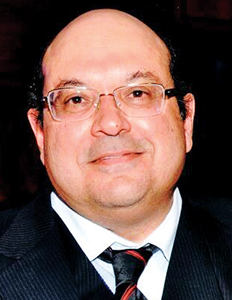
"Governments will come and go (but) it is important for the court to use its power and strike down Section 124A (of the Indian Penal Code) and the offensive portions of UAPA (Unlawful Activities Prevention Act, 1967). Then citizens here would breathe more freely.” So stated retired Supreme Court (SC) Justice Rohinton Nariman (pictured). He was speaking at a function organized by the Vishwanath Pasayat Memorial Committee on October 10, 2021. Section 124 A criminalizes sedition while the UAPA Act has been indiscriminately invoked by Indian governments in the name of anti-terrorism, including recently against journalists and activists like Kobad Ghandy and Fr Stan Swamy. "I would exhort the SC to not send sedition law cases pending before it back to the center,” Nariman stated.
 Nariman ascribed India’s rank of 142 out of 180 in the global law index to the "draconian and colonial laws that still exist.” News website indiatoday.com quoted Nariman as stating that the laws had a "chilling effect” on journalists. He pointed out that "the Nobel Peace Prize (2021) was given to two journalists (Maria Ressa of the Philippines and Dmitry Muratov from Russia)... We had the China and Pakistan wars…Thereafter, we introduced…UAPA… (It) is a draconian act as it has no anticipatory bail and has a minimum of five years imprisonment…This Act is not under the scanner yet… This too has to be looked into along with the sedition law.”
Legal website livelaw.in reported that Nariman quoted US Justice Oliver Wendell Holmes in a similar case, "I think that we should be eternally vigilant against attempts to check the expression of opinions that we loathe and believe to be fraught with death, unless they so imminently threaten immediate interference with the lawful and pressing purposes of the law.”
Dwelling on the history of Indian jurisprudence, Nariman stated that though the section on sedition was initially part of the draft Indian Penal Code, it was not included in the final Code. "It was rediscovered and incorporated in 1870…They (the British colonial government) said it was missed by oversight!” Nariman recounted that the first case where sedition was invoked was for publication of articles that attacked the Age of Consent Act introduced to curb child marriage. "The judge was not pleased and held the editor guilty under 124A for causing disaffection towards the government of the day.” Nariman then added that the British used the sedition law against prominent freedom fighters and mentioned how Bal Gangadhar Tilak, Mohandas Gandhi and Jawaharlal Nehru were convicted of sedition for speaking against the colonial authorities.
The Economic Times (ET) of October 18 recounted that Nariman had, in 2015, quashed Section 66A of the Information Technology Act for having a "chilling effect” on the right to freedom of speech. That section gave the government sweeping powers to arrest and imprison individuals for up to three years for "offensive and menacing” online posts.
ET recounted that earlier, on July 15, Chief Justice of India (CJI) N. V. Ramana had questioned the government on the requirement of the sedition law. "Our concern is a misuse of the law and lack of accountability,” he had stated. The SC’s CJI bench had asked union attorney general K. K. Venugopal why the sedition law cannot be repealed. Venugopal had responded that Section 124A need not be struck down, only guidelines need to be set so that its legal purpose is fulfilled. Farrokh Jijina