
Dealing with the defunct
The Federation of the Parsi Zoroastrian Anjumans of India endeavors to earn the confidence of community members in outlying areas
Sam Chothia
For the well maintained cemetery property in Dharwar in Karnataka measuring 32,670 sq ft, offers were invited and four bids received with the highest being Rs 1,051 per sq ft from Mansvi Constructions. Sanction was sought from the Federation representatives to accept the highest bid and proceed with the sale that is expected to earn the Federation Rs 3.5 crores. It was specified that the area where the graves stand will not be sold and additionally eight gunthas will be set aside for the approach road to the graves. The Federation assembly was in favor of selling the land on the rationale, "jé haath ma té saath ma (a bird in hand is worth two in a bush).” As per the understanding, 95% of the sale proceeds will be retained by the Federation and five percent will be given to the Dharwar anjuman to maintain the graves and tombstones. Further Rs 8,00,000 will be given as reimbursement to Ervads Hoshang and Jehangir Dalal of Belgaum who have maintained the aramgah over the years and an additional Rs 10,000 per month will be individually sent to them, and in their absence, their wives, in appreciation of their service.
Fifty kilometers away from Dharwar, there is the Seth Hormusji Navroji Belgamvala Daremeher (dadgah) at Hubli which is under redevelopment, and the aramgah on 2.5 acres. With 10 Parsis left in the area, Chothia is trying to convince them to sign the custodianship agreement with the Federation.
For Bijapur in Karnataka which is left with its last Parsi family of seven members and a two-acre aramgah plot at Yogapur village, plans are afoot to sell two-thirds of the property that is vacant after inviting bids. Fili and Kersi Elavia of Bijapur anjuman are willing to hand over the management to the Federation which will undertake "all previous and any future legal and financial responsibility concerning this property.” Twenty-five percent of the sale proceeds will be transferred to the Bijapur anjuman to manage the aramgah plot which will remain with them and for the betterment of Bijapur local residents. From the 75% that will accrue to the Federation, "the amount will be utilized for the betterment of the Parsi Zoroastrian community, with first preference being given to the residents of Bijapur and surrounding areas.”
Bhopal in Madhya Pradesh which has a population of 10 Zoroastrians has aramgah property admeasuring 68,750 sq ft (a little over one-and-a-half acres). The cost of a compound wall on a portion of the land is expected to be three lakh rupees. Since they are not a registered body, Rohin Gandhi of Bhopal was advised to form the Bhopal Parsi Anjuman. As per the proposal forwarded by FPZAI, two members from Bhopal and two from the FPZAI will serve as trustees and whenever the property is sold, 70% of the sale amount will be used by the Federation "for the betterment of the community as a whole with first preference being given to the residents of Bhopal and surrounding areas, and 30% to Bhopal Anjuman for protecting of aramgah land and for the betterment of Bhopal local members.”
A lone Parsi resides in Chhattisgarh where stands an aramgah in Raipur measuring approximately 1.72 acres. The FPZAI offered to help the Chattisgarh office bearers legalize their trust.
The two-acre aramgah property in Bina, in Madhya Pradesh "is totally encroached.” There is no Parsi in the area. The title of the land shows "government” but an advocate has been appointed to advise since the book Parsi Dharmasthlo shows the land was purchased by Parsis in 1900.
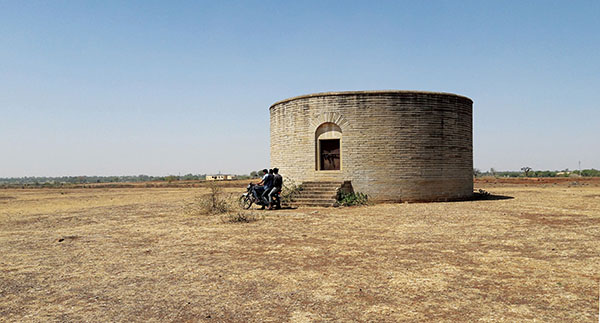
Dakhma in Neemuch
Neemuch that is left with 13 Parsis was happy to hand over its Anjuman affairs to the FPZAI office bearers in April 2017 (see "Faith in the Federation,” Parsiana, May 7, 2017). At their last annual general meeting, president Noshir Jal proposed that the management of the Madhya Pradesh anjuman with its properties be under the management of the all India body. Five years ago Jal was aggrieved with the Federation’s defunct anjumans representative Sorab Katpitia (see "Ground realities,” Readers’ Forum, Parsiana, August 21, 2012) for alleging that the Neemuch office bearers were alienating anjuman properties.
Allahabad in Uttar Pradesh (UP) where reside six members of two families has the Jalejar Shapoorjee Ghandhi Dar-e-Meher that stands on two acres, 60 sq yds, and an aramgah at Munfortganj on five acres. The agiary property is reportedly being eyed by the local land mafia. Chothia sought the assistance of the divisional commissioner and district magistrate to protect this property. In the meanwhile the DAC has received a five-page correspondence from Darius Ghandhi stating the agiary property belongs to their family and not the anjuman or any other trust. While the Federation has sought legal advice, Adil Nargolwala of Delhi sought to reassure the gathering that Vera Ghandhi of the Dar-e-Meher Trust comes "from a respectable family with a lot of property… They have a mall and lots of property. They would not want to cheat the community.”
In response to a clarification sought by Parsiana, Darius Ghandhi wrote: "Based on information available with me, there are four families in Allahabad and the headcount of Parsis in Allahabad is nine. The only property the Allahabad Parsee Anjuman manages is the aramgah at Munfortganj.
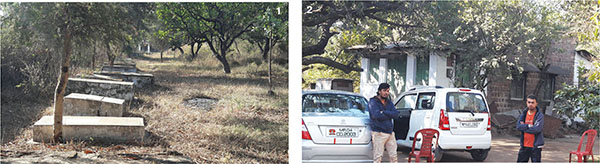
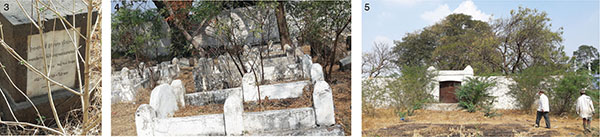
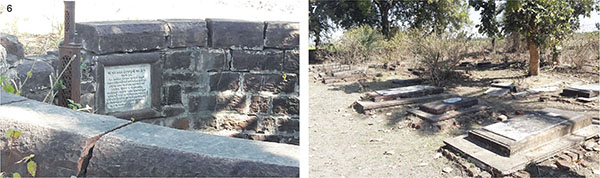
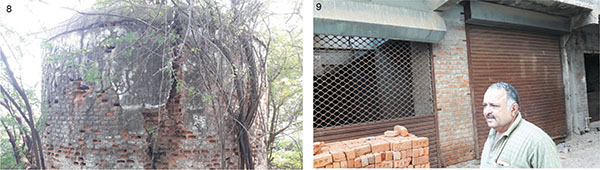
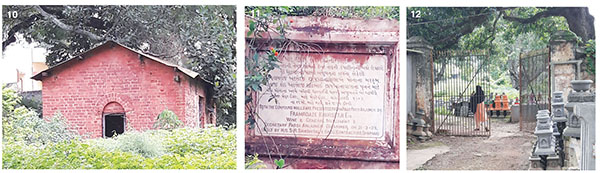
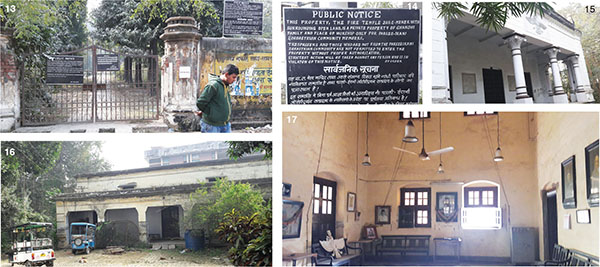
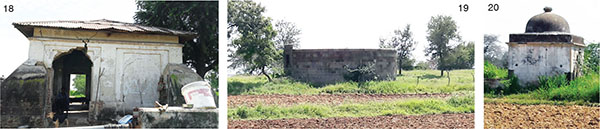

"The Jalejar Shapoorjee Ghandhi Dar-e-Meher at Allahabad was built by my great-grandfather Shapoorjee Rustomjee Ghandhi from his own hard earned personal funds to perpetuate the memory of his young son Jalejar who passed away in tragic circumstances in 1921. As per the government records, this was a lease in perpetuity granted by the government exclusively to Shapoorjee Ghandhi, and the entire property was mutated in his name only.
"The entire project of the Dar-e-Meher, right from the stage of application to the government for granting of lease in 1925, purchasing of land from the government, construction of the agiary and its adjoining buildings, purchasing of all religious articles, artifacts, furniture, fixtures and utilities, as well as all expenses towards the consecration ceremony (1930), appointment of the mobed, etc (were) all personally handled and borne by Shapoorjee Ghandhi. Since the founding of the Dar-e-Meher, all administrative and running expenses over the past nine decades have been borne entirely by the Ghandhi family. The Ghandhis have never reached out to any Parsi in India or abroad, or the Allahabad Parsee Anjuman or any other anjuman or punchayet, or for that matter any social or charitable body in Allahabad or elsewhere for any help — financial or otherwise. The Allahabad Parsee Anjuman has had no role to play in the affairs of the agiary property.
"Chothia’s allegation that the property is being eyed by the local land mafia seems most preposterous. If he was in the know of any specific information that could put the property at risk either now or any time in the future, he should have shared the details with the family immediately so that the family could get the matter investigated through its local sources and would be better prepared to handle any such threat to its properties. He should immediately desist and refrain from representing the family’s interest unilaterally with any department or machinery of the government in UP or elsewhere, as he does not hold any brief from the family, as yet.
"By undertaking this very singular act of vigilantism he has hurt the sentiments of the family and damaged the confidence that the family has in FPZAI.
"Any misinformation or rumor mongering does no good to anyone. As a family we are united in condemning such irresponsible statement/s by anyone, within or outside the community. Those making such statements must understand that the family has been in Allahabad for more than 125 years and we have over time established good connections with the police, local authorities, and have friends and well-wishers within the large and influential legal fraternity of the city, and we are very much capable of protecting our own properties!
"The Ghandhi family is fully cognisant of its responsibilities to protect all the properties in its fold, regardless of whether the property is the one the family resides in, or the ones we run our businesses from, or the Dar-e-Meher property which my great-grandfather built.”
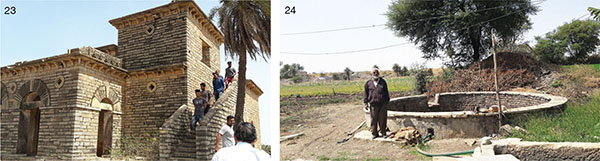
In Gujarat, Chothia is currently looking into the affairs of several defunct anjumans. Deesa has only two members of a family residing there. The properties of the Anjuman that include one commercial complex and the Tower of Silence on two acres are being looked after by Cyrus Khambatta. In view of the pending litigation filed by the Federation against Khambatta and others, challenging their right to call themselves trustees of the Anjuman, it was decided to settle the matter with him on mutually agreeable terms after consulting a lawyer.
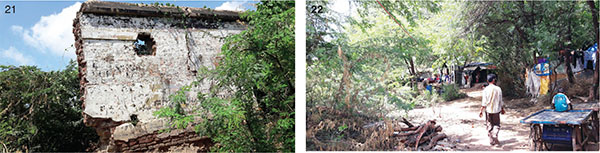
Khambhat, where reside eight Zoroastrians, is left with land where once stood their agiary and the Tower of Silence at Metpur (nine kilometers away). The Ahmedabad Parsi Panchayat (APP) looks after the Khambhat residents, giving each of them Rs 1,000 every month, reported APP president Brig Jahangir Anklesaria (Retd). Nadiad has 2.32 acres of aramgah land filled with heavy foliage and surrounded by slums but not a single Parsi. The sewage of the entire village is emptied in the vicinity, regretted Anklesaria who felt the need to approach the state government so that necessary orders can be passed by the collector in that area. Efforts are under way to bring on record the names of FPZAI office bearers on the properties of Khambhat and Nadiad. Federation president and chairman of the Bombay Parsi Punchayet (BPP) Yazdi Desai recommended that Anklesaria handle these two defunct anjuman properties. "If we can’t use the land, at least monetize it and use it for the community.” Lauding the foresight of our forefathers who had purchased properties for the benefit of the community, Anklesaria added, "Whatever assets we liquidate, invest 50% in some other form of real estate wisely.” A few delegates though were apprehensive that in the course of time there may not be any community members remaining to look after these properties.
The stalemate in Rajkot should hopefully soon be resolved once the sole trustee Jehangir Cassod returns from his overseas trip. Chothia had discussions with Cassod and the Anjuman secretary Khushman Tamboli regarding filing a new scheme for management of the 10-member anjuman properties that include an agiary, Damri Baug, 2.5 acres of Tower of Silence and Akhar Baug. Chothia has also initiated discussions once again regarding management of the 10-acre Tower of Silence land in Damka village, dadgah at Suvali and dharamshala in Hajira. There are eight Parsis residing in these areas.
When Narendra Modi was the chief minister of Gujarat he had said that all properties of religious trusts will be tackled separately by a fast track court, stated Anklesaria. He referred to an anjuman property under dispute for which he was offered three lakh rupees. He approached the collector of Ahmedabad who got the piece of land vacated after which the value of the land escalated and he was able to settle a deal for Rs 7.51 crores.
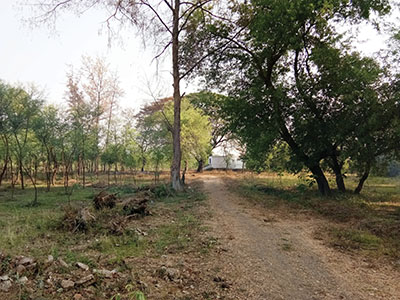
Baval plantation in Vyara;
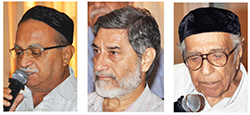
From left: Persi Buhariwala, Rustom Vakil and Dr Bahadur Jokhi
The sole trustee Hormazd Jalnawalla, looking after the aramgah, community hall and shops in Nanded in Maharashtra where four Parsis remain, has assured Chothia that he would favorably look into the proposals made by the DAC.
When it was recommended that a five-member committee work under Chothia, Federation honorary secretary Farrokh Rustomji reminded the representatives that there is already a DAC in existence comprising the Federation president, all the vice presidents and all the trustees of the BPP. Grateful to the BPP for funding the endeavors on defunct anjumans, Rustomji noted, "Once the Federation starts receiving the money, the burden will be less on the BPP. By streamlining operations and making the work more transparent, we are making progress.” At different points during the meeting it emerged that representatives were not familiar with the rules and regulations of the Federation making Desai request the Federation executive secretary Cawas Panthaki to distribute copies of the rule book to all present.
Who will be funding the caretakers who look after the aramgahs? enquired Nargolwala who was informed that from the sale proceeds a significant amount will be kept aside to look after the cemeteries. When Nargolwala mentioned that Delhi has to contribute towards the maintenance of the aramgahs in Shimla, Hathras, Agra and Aligarh, Desai indicated that the Federation could help once it starts getting funds from the sale of properties.
Farokh Shaher of Gandevi expressed the need for the Federation to "help… by coming in as trustees.” He was concerned that land records are not in the name of the anjuman but in the name of an individual.
Baval and bodies at Doongerwadi
The Aajivan Kathi Yojna project of the Vyara Songadh Parsi Zarthosti Anjuman in which 2,500 baval trees have been planted on their Doongerwadi land was publicized by Anjuman trustee Persi Buhariwala, and Rustom Vakil, managing trustee of the Faramji Hormusji and Manekji Faramji Sethna Trust which donated Rs 28,73,000 towards the project (see "Baval bounty for Vyara,” Events and Personalities, Parsiana, July 21, 2016). Estimating that the annual kathi costs for the fire temples in India would be around Rs 70 lakhs, Vakil wondered, "How will we as a community be able to afford this?” He was keen "to create an infrastructure that would supply one crore worth of baval” after identifying plots of land and a steady stream of funds. Gujarat is ideal for baval trees, not the Western Ghats. In 12-15 years’ time, a baval tree can supply 800-1,000 kg of kathi. After meeting the needs of the agiary in Vyara, the balance kathi will be sold to other anjumans — "not on market terms but to cover the costs and money required for reinvestment,” specified Vakil.
Considering that the annual kathi requirements for agiaries in India is 700 tonnes of which Vyara itself would be able to provide 250 tonnes once 10% of their 2,500 trees are cut, BPP trustee Kersi Randeria sought to ascertain, "with three more projects like this will our lifetime requirements be taken care of?”
Porus Debara who has an organic fertilizer factory in Agra offered to donate Rs 30,000 worth of fertilizers if Vyara bears the transportation cost. Shaher mentioned that there are "jungli bawal trees around all dakhmas” which can provide kathi. There are two varieties of baval — desi and gaando, specified Anklesaria.
President of the Vyara Anjuman, Dr Bahadur Jokhi, made a fervent plea that the system of dakhmenashini should continue and the bodies be "exposed to nature as we are part of mother nature.” Against cremation and even solar panels at the dakhmas, according to Jokhi’s "medical point of view… the brain cells do not die after the heart and lungs stop functioning and remain active even after corporal death. As a result of this activity, the ruvan remains in a semiconscious condition for about three days.” The brain being the "biggest archive… (and) storehouse of record of our past lives,” he believed cremation would destroy the record. During cremation, the skull would break open and cause "agony” to the soul. Likewise he viewed solar panels as "cremation in disguise” causing tissues to burn and create pollution to the atmosphere. He favored the natural rays of sun which, when falling on the slabs of red stone pavis emit infrared rays, sufficient to dissolve the tissues and convert them into liquid which flow through the channels.
According to Desai, of the 176 pavis at the Bisni Dakhma in Bombay, the solar panels can only reach four pavis. The remaining bodies depend on "the natural process of disintegration.” When Yasmine Sanjana of Bardoli mentioned that she had learnt that nassessalars only dump the bodies inside the dakhma, Desai responded, "It is easy to believe the worst.” He was sanguine that with the appointment of a new manager at Doongerwadi there will be "a lot of changes.” "Along with the nassessalars we have one volunteer” who accompanies the body inside the dakhma. "You could try it,” suggested Anklesaria.
Gita Choksi of Panchgani who had shared her personal experiences at Bombay’s Doongerwadi at the last Federation meeting in 2016 regretted that "a lot of her friends had had very unfortunate experiences at the Doongerwadi. At the Worli Prayer Hall, there is none of the hand stretching exercises. All the charges are clearly ratified and displayed.”
With continuous "scurrilous allegations” circulated on WhatsApp, Pareecheher Daviervala of Davier suggested that every quarter the Federation should circulate news of major projects completed by different anjumans. She was keen that the Federation initiate a WhatsApp group but when told by Desai that he is not on this social networking medium, the matter was not discussed further.
Since no representative from the Federation of Zoroastrian Youth Associations (FOZYA) attended the meeting, Pervez Irani of the Iranian Zoroastrian Anjuman announced that FOZYA will be convening a seminar in Ahmedabad in September. He suggested that since the Federation is also scheduled to meet in Ahmedabad in September, the two bodies can come together, but Desai felt that it was best to keep the workings separate.
The next report on the Federation meeting will appear in the June 7 issue of Parsiana.