
“Textures are my thing”
Architectural photographer Pallon Daruwala’s portrayal of buildings, textures and patterns is an art form
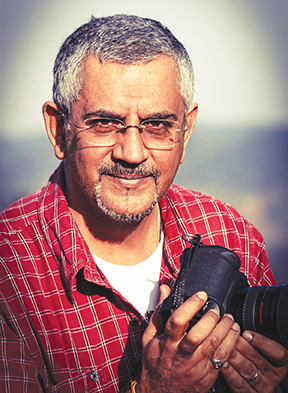 Trends Excellence Awards for Architecture and Design for photography in early 2016. During an interview with Parsiana at a downtown coffee shop in Bombay on July 8, 2016, he runs his fingers over an adjoining brick wall stating, "Textures are my thing... Something that is not so good looking to begin with, I make it look beautiful ... there’s a sense of achievement in that.” Pointing to a cruet stand on the table, he says, "I can make that look pleasing to the eye, even to someone who never gave a second glance to it.”
 Fifty-four-year-old Daruwala counts Jetwings, the in-flight magazine of Jet Airways, Elle Decor, Business Traveller (Hong Kong), Travel and Leisure (New York) and Architectural Digest among his clients and has been featured in five books on design. Having held his first solo exhibition in 1996 at the West End in Bangalore where he showed 30 images and sold 144 prints, the photographer has exhibited in two dozen shows in Bangalore, Hyderabad, Delhi and Bombay. The lensman is the first Indian member of the International Association of Architectural Photographers.
The testimonials on his website from industrialists, architects, designers are fulsome. Daruwala shies away from competitions and critiquing. "Who am I to impose my creative views on another human?” he asks, but admits that he would be happy to provide ‘technical’ inputs to a budding cameraperson. "The world would be a very boring place if everyone’s idea of what looks good would be the same as mine,” he laughs.
Daruwala processes his shots "on an assembled computer.” He has no desire to get a swish new computer. "If I were to learn something new at my age, I would rather it be in photography,” states the creative artist who serves on the technical panel of photographers for Epson, makers of photo printers. "One of the few photographers who prints his own pictures,” according to his website, Daruwala explains why: "I know exactly what is to be done after a shoot, as I have already painstakingly looked at the picture in a frame and worked on its composition in-camera, so there needs to be very little cropping ... I don’t do anything with my photographs I would not have done in a dark room (back in the day).”
Interior of Seth Jeejeebhoy Dadabhoy Agiary, Bombay
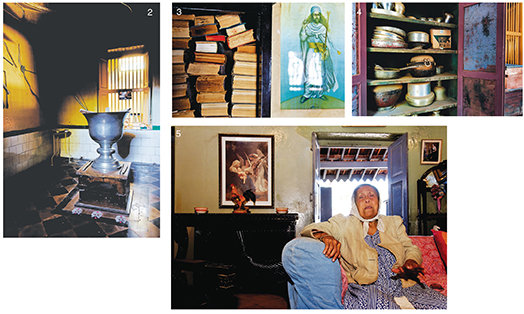
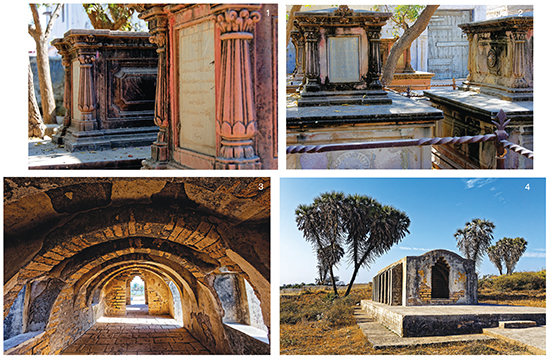
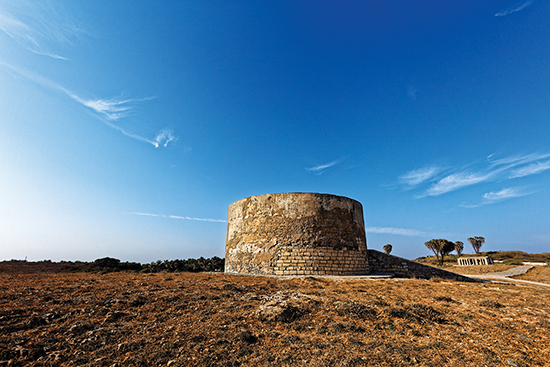
1) and 2) Aramgah in Bhuj; 3) and 4) views of bungli in Diu;
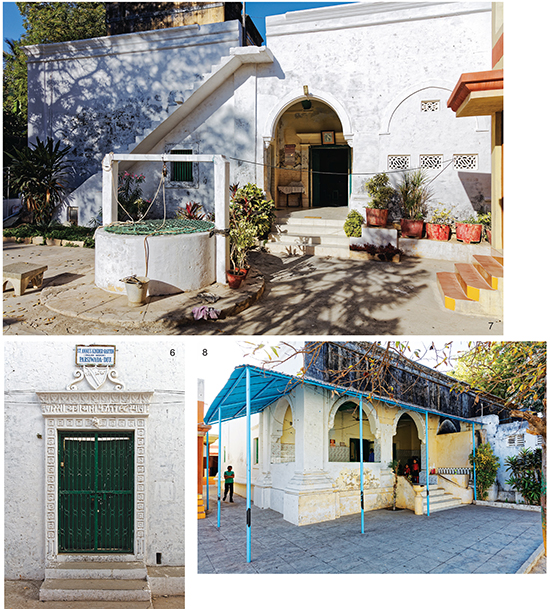
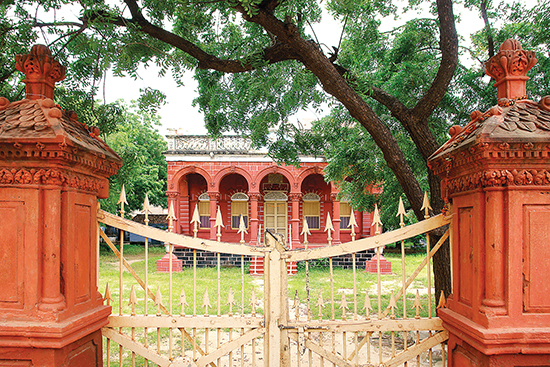
6) entranct to the Diu agiary premises used as a school 7) and 8) in the compound of the prior Diu agairy
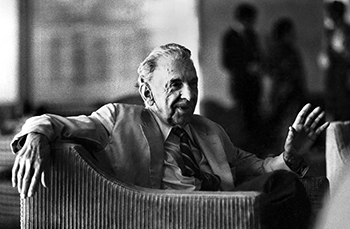
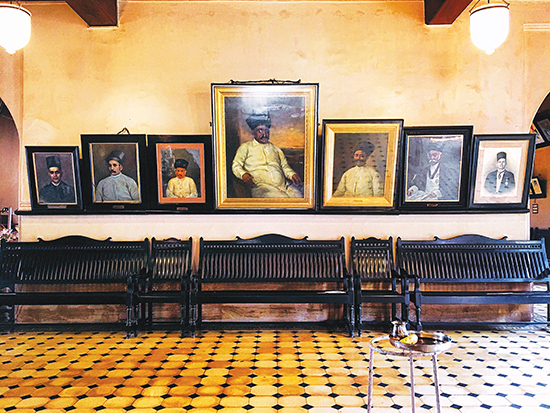
JRD Tata shot at The Chambers, Taj, Bombay
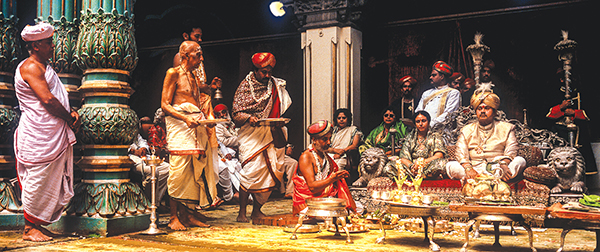
The maharajah’s 50th birthday
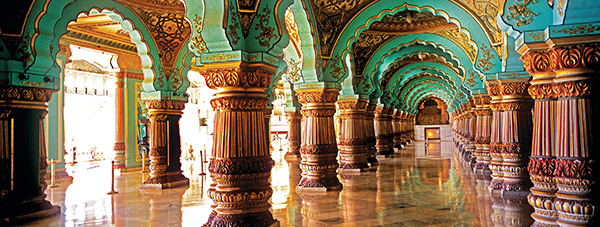
Mysore palace
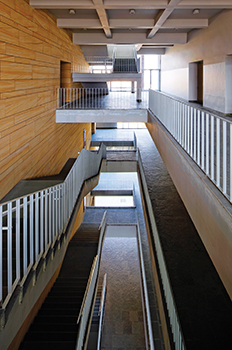
Award winning photo: Tata Medical Center
The professional owns four cameras, the oldest being a Haselblad 500 CM. "I give away older models, mostly to young folks who are entering the profession ... I have given away most of the lighting equipment I owned too,” states the man who has only shot digitally since 2002. "My first digital camera was a five mega-pixel Nikon, a point-and-shoot, that cost Rs 78,000 back then,” he explains.
The lensman narrates stories from his three-decade career. It was a thrill for him to go up the 60 storied Imperial Towers residential complex in central Bombay when it was under construction, in a lift "stapled to the outside of the building.” He says he could see Bombay disappearing under his feet as he was ferried up on the moving platform to photograph the progress of the Shapoorji Pallonji-Hafeez Contractor project. Yet another engagement took him to the port at Pipavav in Gujarat, where he was hauled up via a 300 ft crane to photograph the under-construction facility. He reveals an incident that occurred while shooting at the MICO (manufacturer of auto components) plant in Bangalore, where the client wanted aerial shots of their facility. Shooting from a ledge near an overhead tank, he says he did not realize the platform curved away into a slope and was slippery from rain. "I would have slid away, had it not been for my presence of mind, and that of my assistant,” he reminisces.
Another memory he shares, one that resulted in his most prized shots, was when in 1985 he sneaked out to the seldom-open-to-the-public 110th floor of the World Trade Centre Towers, past the security guards. It was the thrill of doing something forbidden, he lets on with a smile. A cover picture shot for Taj Magazine, the in-house magazine of the Taj Mahal Palace and Towers featuring the much-photographed dome of the hotel also holds a special place in his heart. A lover of Colaba in South Bombay, having lived there during his growing-up years, he says, "For two years after 26/11, I could not walk past that road; the images of the terror attack haunted me.”
"Oh yes, I went into one of the dakhmas and looked inside the well,” he states, showing pictures of the now-defunct final resting place for Zoroastrians in Diu. "I came out too,” he continues with a laugh, stating that he saw only sand at a depth of about nine feet in the well in the tower of silence in the western Gujarat city. The dakhma lands are totally barren, he informs, showing pictures of the unused bungli. The erstwhile agiary, he says, has been converted into a school being run by Christian missionaries who did not allow him to shoot in the premises, but he did manage to get some shots, surreptitiously.
Rewind
Daruwala undertook his first professional assignment as a freelancer in 1986 in the Taj in Bombay for Taj Magazine, photographing a Pierre Cardin fashion show. "From the head of the ramp, only one camera and no flash,” he exults at the vantage position he had. Two other magazines including a design publication, Mega City picked up his pictures and featured his work on their cover pages. That engagement opened a lot of doors for the young Daruwala: campaigns for Modern Suitings and Raymonds, and fashion shoots with top models of the day, Sangeeta Bijlani and Poonam Gidwani. The shoot caught the eye of Elizabeth Kerkar, senior executive in the Taj group, who "loved my style of working with available light, with no fuss, and most importantly my being able to meet her stringent deadlines.”
An engagement for the Taj chain took him to the "then garden city” of Bangalore to shoot their newly furbished restaurants — Southern Comfort, Memories of China, and Jockey Club. The Bombay man fell in love with that city and decided he wanted to make it his home, and that is where he still resides, alone. Bangalore had opportunities for fashion shoots back then, but limited infrastructure and "poor processing facilities,” he recalls. And Bombay was where the large opportunities were, he states. He shuttled between the cities twice a month for a while. "I’d catch the Udayan Express from Bombay with my cameras and a box full of pora-pau (omelete sandwiches), most of which would be devoured by the time I reached Poona.”
Two events propelled him into taking a deeper interest in architectural photography. Daruwala was selected to cover the 1996 Miss World pageant in Bangalore, as their official photographer. Recalling that all work done had to be processed and delivered within three hours of the shoot to the media center for despatch all over the world, he terms those 10 days "exhaustingly strenuous.” The event set him thinking: "A fashion model or beauty queen is pretty to start with, has access to the best of make-up people, the most beautiful of clothes; any cameraman can do well in those circumstances.” The second was a cancelled shoot: "I was dying to try out some extremely high speed film for a fashion shoot, and the model fell ill... My assistant and I decided to take off to the Nandi Hills, to try out the Kodak 3200 ASA (ISO) on the natural vistas there. The results stumped me.” The supermodel of the year (1996) was Daruwala’s last significant fashion shoot.
The developing years
"I would take my mum’s Minolta to school (St Peter’s, Panchgani) and develop the prints in the school laboratory,” recalls the veteran. The young Daruwala was invited by an uncle to complete his schooling in Canada, which he did, and also toyed with the idea of taking up architectural courses in North America. While travelling in California, a cousin, knowing of his interest in still photography, enthused him to visit the Brooks Institute of Photography (now the Brooks Institute) at Santa Barbara. "I just fell in love with the place,” he states. Parents Bachi and Noshir, both executives with the Taj Hotel "were supportive but said: ‘Uh-uh, we need more information about the outlay involved,’” he reminisces. After acquiring a bachelor in fine arts in 1985 from Brooks, he did a year’s course in digital film making, a new medium then, at the University of California. Back in India, he worked for an advertising agency — Everest — for 10 months till he landed the Pierre Cardin assignment as a freelancer.
Counting the late Mitter Bedi, pioneer of industrial photography in the country, as his greatest inspiration, he has spent hours admiring "the starkness in his photographs.” He holds Bedi’s wife Sarla in equal reverence. "If she said something was not right with a frame of mine, I still left their studio feeling good after her feedback,” Daruwala says. He wishes his grandmother had not sold off the photographic equipment of his maternal grandfather Burjorji Batliwala, who was an amateur photographer, to the jari-puranawala (junk collector) when the senior gentleman passed away.
"It’s all a business these days,” he says of the profession, shaking his head. Photography schools in India don’t teach with depth, he rues. "They teach from the here and now.” He avers that a good photographer has to know how shots were taken at least 20 years previously. "When I studied at Brooks they even taught us sheet photography (where the photographer had to cover himself with a sheet to cut out light), which was obsolete a generation earlier,” he recalls. His advice to newcomers in the profession: "You have to like it with a burning passion ... just go out and take shots ... the camera does not matter ...it’s good to take good pictures with a crummy camera, not vice versa.”
The photographer believes that there is a powerful being up there, who looks after us. "I don’t believe in the rituals and rites that go with religion,” he states. A votary of freedom of choice for methods of disposal of the dead, he admits he wears the sudreh, "not too often though.”
His next big challenge? "Maybe another Kutch experience will come along,” he states, recounting his foray into the arid parts of Gujarat to help a friend promote local crafts. Daruwala lets on that he has since then made three trips there and has over 800 photos of the region’s natural beauty in his private collection that he would hate to part with!