
Books
Narratives in novellas
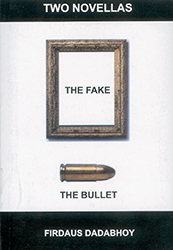
Two Novellas. The Fake and The Bullet by Firdaus Dadabhoy. Published by Gamin Books. Pp: 102. Price: Rs 150. Two Novellas Living Doll and The Most Beautiful Girl in the World by Firdaus Dadabhoy. Published by Gamin Books. Pp: 170. Price: Rs 250.
 Is the Mona Lisa which hangs in the Louvre and seen by millions from all over the world an original or a fake? Was it the second version? And was the first gifted to Andrea Salai, Leonardo Da Vinci’s apprentice and lifelong companion? Is it possible that the one in the Louvre is "a copy made by Salai or one of Leonardo’s apprentices?” In which case, the painting acquired by Salai would have been worth much more than the one presented to Francis I and which hangs in the Louvre today.
In The Fake writer Firdaus Dadabhoy, takes us into the murky world of art and the elaborate methods to determine whether the painting is an original or a fake. The detail seems to be a bit overwhelming at times and could have been abbreviated but the ending certainly comes as a surprise. Chris, an expert on the paintings of Da Vinci, Michelangelo and Raphael, is employed by Dart who introduces himself as a representative of a wealthy person. The latter has the Mona Lisa in his possession and wants it certified and authenticated by a competent evaluating authority.
Dadabhoy has written four novellas which have been published in two volumes. The first consists of two works The Fake and The Bullet and the second of Living Doll and The Most Beautiful Girl in the World.
The Bullet is set in 1944 in a small Italian village of Dozza. The Germans are marching into the village when Amadeo, a young boy rushes out with his father’s shotgun. As a reflex action, a German soldier fires his rifle; the bullet kills the young boy, entering his body through the pelvis region. The same bullet wounds Aleesa, a girl who is standing directly behind him. Aleesa is taken to the hospital where she is operated on and the bullet which "had entered the abdomen” is removed. Life proceeds at its normal pace in Dozza. But complications arise when the kindly doctor and the village priest are both astonished to find that Aleesa is pregnant and even more astonished to know that she is still a virgin.
Life will never be the same for Mark, a full-time poet and a part-time professor in literature when he enters a shop with the idea of buying a gift for his girlfriend, Cindy, in Living Doll. What he thinks is a little girl is, in reality, a life-size doll. On the spur of the moment, he buys it at great cost and takes the doll home with him. Mark has been in a long term relationship with Cindy; however, he has been unable or rather unwilling to make a commitment. The doll, whom he names Alika, which almost sounds like "I like her” initially captivates him and he treats her like a human being. However, Alika has a more important role to play in his life. She forces Mark to face his inner self and for the first time he learns truth about himself and loses his romantic notions about love.
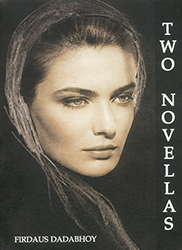
In The Most Beautiful Girl in the World, Dadabhoy writes a first person narrative about a young girl of exceptional beauty and how this affects the course of her life. She ponders, "If my beauty and I are a thing apart, then who am I?” She is convinced that loss of virginity would have a disastrous effect on her beauty. She feels that her life is purposeless and she is unable to forge any permanent relationships. Then, suddenly, a plastic surgeon enters her life and changes it forever.
The first two novellas are gripping and make enjoyable reading; they are more short stories than novellas and their strength lies in their brevity and fast paced action. Unfortunately, the same cannot be said about the second set of novellas. They are much longer and tend to ramble. The plots are rather thin and what Dadabhoy tends to do in these is to give a detailed account of the thoughts of the protagonists. One feels that he is manipulating the reader as he seems to spend much of his time narrating and he does not allow situations to speak for themselves. The Most Beautiful Girl in the World is more in the nature of an extended monologue by a not particularly interesting character. Dadabhoy seems to labor the point and the plot fails to hold the reader’s interest.
As neither of the volumes mention the date of writing, it is very difficult to establish which was written first. One wonders if the volume with The Fake and The Bullet is a later work as this seems to be a more mature collection. F. G.
◆ ◆ ◆
From the archive