
Zoroastrians Abroad
Self-sustaining scholars
The US based non-profit Foundation for Excellence (FFE) has developed a financially sustainable method for higher education whereby the academically brilliant (top 15%) among the economically disadvantaged (bottom 15%) students in India can aspire to become doctors, engineers and computer scientists, notes San Francisco based Sarosh Kumana who is spearheading the Parsi Zoroastrian outreach of FFE through the Foundation for a Sustainable Future (FSF). Eligible students who meet their criteria are given an annual scholarship of around Rs 40,000 with the expectation that the grant would continue through the four or five-year degree program, assuming the financial circumstances and performance remains the same. Currently about 4,200 students are benefitting from the scholarship program. An initial pledge to support 10 Parsi scholars through the program has been received from an anonymous Parsi with business interests in the San Francisco area.
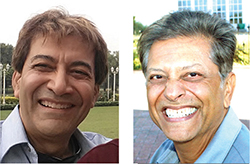
Sarosh Kumana (left) and Ader Gandi: educational outreach
Given the level of tuition and other fees in professional colleges, the economically disadvantaged have limited avenues to pursue their dreams of becoming engineers or doctors. Coupled with this is the difficulty of securing educational loans from banks that insist on collateral security. Knowing that the earning potential of these professions is very high, FFE helps students whose gross family income does not exceed Rs 1,80,000 per year. "By a conservative estimate, each rupee invested in a talented child returns 140 times to the society,” they believe and have supported 45,000 Indian youths in the last 22 years. To make this program self-sustaining, each scholarship recipient of FFE makes a pledge to support at least two more students once he/she has the capacity to do so.
"In India, FFE has a volunteer force of several hundred distributed around the country. We do not yet have a specific Parsi organization identified to shepherd Parsi scholars through the FFE system, and so we invite interested groups or volunteers to approach us to develop a protocol,” writes Kumana who sponsors and supports a number of educational projects globally through FSF. After his commerce graduation from Bombay’s Sydenham College, he earned an MBA from Carnegie-Mellon University where the real estate entrepreneur and angel investor continues his association as advisory council member of the Don Jones Center for Entrepreneurship. Ader Gandi who has been deputed by Kumana to handle the India-Zoroastrian outreach for FFE runs a mortgage company in San Francisco and is better known in the community as co-founder of www.TheMissingParsi.com. With an MBA from the San Francisco State University he makes time as advisory board member for Serve India International, a non-profit organization involved in educating and housing children of need in India.

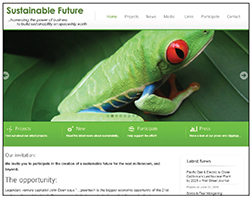
The FFE program for Parsis introduced only a few months earlier seeks to: locate and identify Parsi scholars meeting the criteria; identify the principals and heads of Parsi schools and orphanages in areas like Sanjan, Surat, Udvada; identify and recruit a Parsi organization/organizations to shepherd scholars’ applications and funnel them to FFE in competition with other youth meeting the criteria; recruit volunteers and mentors. Those interested in these opportunities are requested to contact Kumana at sarosh@sfrentonline.com or sarosh@sfrent.net
"The Federation of Zoroastrian Associations of North America and other local Zoroastrian groups in the USA have expressed their desire” to support this program, mentions Kumana. While Parsis are well represented in the leadership group and board of directors of FFE, Kumana is keen to bring Parsi students on board, convinced "there is a need in every community... There is some flexibility in the economic criteria for those who live in cities where the cost of living is higher. Some geographies and demographics have higher needs than others, and FFE seeks to be evenhanded and spread scholarships among all communities.”
◆ ◆ ◆
From the archive