
“The monarchs of...”
I recently came across an article by Berjis Desai titled "The monarchs of Mahalaxmi” (Parsiana, February 7, 2016) which dealt with the community’s contribution to racing and the breeding of thoroughbred horses. The article concentrates on the present scenario and deals with contemporary breeders, trainers, jockeys and punters. However, it would be of interest to look into the past, for there is more about Framji Dossabhoy Wadia (pictured) than what Desai mentions. Wadia, affectionately known to all as Faly, was born in Bombay on December 8, 1903. He was educated at St Xavier’s College, following which he took to the pursuit of a law degree; due to the untimely death of his father he turned to stock broking.
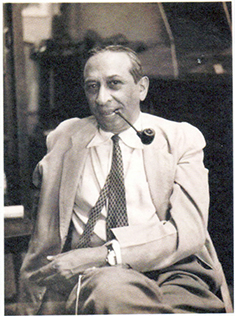 As a boy he was often taken by his maternal grandfather to the Arab stables and there he fell in love with those glorious animals — a love which lasted a lifetime. On medical advice he was forced to relocate from Bombay to the more suitable climate of Poona. It was then that he decided to try his hand at breeding thoroughbred horses. This was a pioneering and brave venture. With his sister-in-law Perin Dalal as partner he set up the Yeravada Stud Farm in 1939. They made frequent visits to the Remount Depot in Ahmednagar to learn the art and science of breeding horses from the English officers stationed there.
The first stallion to stand at the Yeravada Stud Fram was Centoi (by Achtoi). Among the first broodmares was Stella Marina (by Noble Star) — who became a foundation mare of the Indian Stud Book and ancestress of numerous classic winners including Our Opinion, Fair Haven, Sweet Memories, Mica Empress, Neon and a host of others. Over the years Yeravada bred eight Indian Derby winners and a host of other Classic winners, most famous was Squanderer.
On February 1, 1976 the first three home in the Indian Derby were Yeravada breds. The excitement perhaps precipitated a massive heart attack while Wadia was in the paddock; he passed away shortly thereafter.
Many have bred champion horses and won great races but few are blessed with what one calls "horse sense.” This attribute is a gift given to few, it cannot be measured, quantitated or characterized any more than one can describe adequately the tints of a Titian or the deft strokes of a Michelangelo. Wadia had that attribute. Since breeding horses was not in his family and therefore not in his genes, he must have acquired it by a single-minded study of horse flesh. There are several sterling examples of this. In 1941 he discovered by chance a grandson of one of his favorite stallions, Tracery. His name was Bellrue. He was standing at a livery stable in very poor condition. To every one’s surprise Wadia bought him on the spot, paid his livery bill and took him home. Bellrue fulfilled his expectations by siring two fine Indian Derby winners, Gold Street and Balchand.
Another example was when Wadia set up the Meath Paddocks Stud in Ireland. In 1947 he picked out a yearling at the sales in England. The colt was sired by Nearco out of the dam Kong and was in fact under-bidden on. This colt turned out to be Nimbus who won the Epsom Derby in 1949. In 1946 he struck a tentative deal with Prince Aly Khan to buy Nasrullah, who later became a breed shaping international stallion, but when the Aga Khan heard of it he scuttled the transaction.
Wadia’s crowning glory was not the champions that he bred, or the races that they won. As vice president of the National Horse Breeding Society of India he was faced by a major crisis. Between 1947 and 1953 two of the most powerful men in Indian politics, Morarji Desai and K. Kamaraj, were bent on stopping racing in Bombay and Madras, which gravely damaged the breeding industry and would have rung its death knell. Wadia fought it tooth and nail. At the state level it was a losing battle. Finally, at a personal meeting between him and Prime Minister Jawaharlal Nehru the plan to stop racing was given up for good. If it had not been for this man the sport of horse racing and the breeding of thoroughbreds in India would have come to an end. This great sportsman, a man of singular charm and personal integrity, must be remembered and honored specially for this among many other things. Wadia was indeed "a tall man, sun crowned who lived above the fog. In public duty and in private thinking.”
The former Poona City Cup at Poona was renamed the F. D. Wadia Trophy in his honor and in his memory. A fitting tribute to the man who almost single-handedly saved the Indian Turf from extinction.
Dr HIRJI S. ADENWALLA
Trichur
charlespinto102@gmail.com