
Talented tenor’s tale
Glyndebourne Summer by Minoo Golvala. Published in 2015 by amazon.co.uk, Ltd., Marston Gate. Pp: 343. Price: Not mentioned.
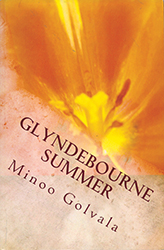 Minoo Golvala’s Glyndebourne Summer tells the story of Rumi Varla, a young Parsi tenor who is born in Bombay with a pair of "operatic lungs,” as confirmed by the midwife who delivered him. His amazing potential is spotted at a talent contest at the Cricket Club of India as a result of which he wins a scholarship to pursue voice training at the Conservatorio di Santa Cecelia in Rome and from there makes his way to Glyndebourne, the English Mecca for opera singers.
The main events are then narrated by way of a flashback where Rumi reminisces about the difficulty of finding lodgings in Sussex in the 1960s. Living in India, where he is probably proud of his fair skin, a possible means of identification with the white Caucasian male, he suddenly realizes that the world is divided into "whites” and "blacks” and there is no accommodation for the Parsi with his "naturally tanned, sun-kissed complexion.” After several rebuffs, he is eventually welcomed by Gertrude Earlsfield, an elderly lady who welcomes him giggling like a geisha girl, whose "kimono comes undone revealing ample sagging breasts” and who is excited to have an Indian from the "land of maharajas.”
Golvala handles the relationship between Rumi and Gertie with great sensitivity. He presents a sympathetic portrait of this lonely lady who has lost her son in the war, a son who would probably be Rumi’s present age of 25. Contrary to the terms of their original arrangement, she provides him with meals and the security of a place he can call home. Rumi, on the other hand, equally displaced in an alien culture (where he even suffers serious injuries when attacked by some English ruffians) treats Gertie as a mother and takes her to St James’s Palace in London when he is asked to sing for the Commonwealth day concert. She is also a special invitee when the lead singer singing the role of Rudolfo in La Boheme is unable to meet his commitment and Rumi, his understudy, is called to take his place.
Gertie provides Rumi with all the creature comforts he dreams of and there is no doubt that the balance of benefit and gain in this relationship tilts strongly in favor of Rumi. Golvala sensitively portrays the borderline emotions between affection and the dissatisfaction Gertie feels when Rumi finally decides to get married. The same cannot be said of Golvala’s depiction of the relationship between Rumi and his girlfriend, Jasmine. This could have been done in a more sensitive and convincing manner; it leaves one feeling that one would like to know more about Jasmine and her motivations.
Gertie’s daughter informs Rumi that her mother is recuperating in a nursing home. We are never clear why she stonewalls his attempts to get in touch with Gertie; but, in a perfunctory manner, he is told to collect his belongings, pay his dues and be off on his way.
In an author’s note at the end of the book Golvala confesses that there has been an "absence of critical assessment.” The novel would have done well with some editing. Golvala, a singer/actor has been a resident of London and has performed in several operas, musicals, theater and television productions. He certainly knows his subject matter in great detail and with great accuracy. However, it is occasionally this very intimate knowledge of the world of the performing arts which is, to my mind, a pitfall.
The performance of La Boheme is described in great detail. The crisis of nerves, the excitement, the sheer adrenaline rush of the performance is superbly captured. But then Golvala decides to give us a scene by scene account of the opera and Rumi’s state of mind at several stages of the performance. As a result he tends to labor the point and repeat himself. This tends to slow down the pace. This repetition could have been noticed by an astute editor and unnecessary elaboration could have been avoided. Also, a few typos could have been avoided with more careful proofreading. In a few cases, the apostrophe ("natures’ exceptional artistry” and "audiences’ response”) has been erroneously used. In one place, I am not sure why the word "famme” has been used instead of the word "faim.”
There are several loose ends which Golvala has not tied up to the satisfaction of the reader. However, the backstage gossip, the banter amongst the participants, their passions and their failings, their camaraderie and their jealousies are all portrayed with perception and sensitivity. The style is easy and readable. One looks forward to Golvala’s next novel.