
Books
From bitter to better
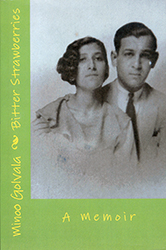
Bitter Strawberries: A Memoir by Minoo Golvala. Published in 2015 by Amazon.co.uk Pp: 469. Price: Not mentioned.
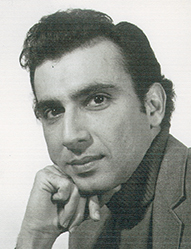
Bitter Strawberries is largely an account by Minoo Golvala (pictured) of his growing up in Bombay as an only son in a middle class family. What makes his memoir an interesting read is the trajectory his life takes as an opera singer from humble beginnings in Tardeo and Grant Road to his arrival in the UK to make his way in the world of the performing arts. We learn from the rear cover that his career has spanned the world of opera, musicals, stage and television.
The book begins with Golvala wondering what impels a person to write about his life and to share his innermost secrets with the rest of the world. Is it the need for a reader to bear witness to one’s life, is it a general need to be remembered, or is it merely to understand oneself and to "comprehend the incomprehensible?” And even if the author swears to be truthful, and in fact tries his best to be truthful, how much is forgotten and fabricated to fill in the gaps of memory?
But biographies and autobiographies are often interesting because they describe lives and events which are exceptional and interesting and Golvala’s struggles certainly fulfil that task. His early life growing up in Bombay is described vividly and in great detail. His relationship with his father is difficult. The parent was impossible to please, dictatorial, bad tempered, penny pinching and incapable of enjoying life or demonstrating affection. However, Golvala does present a fairly balanced picture and justifies his father’s attitude as a "struggle for survival in a fast evolving technological world.”
 Golvala does not flinch from depicting the "bitter” parts of his youthful existence. The family income was just about enough to meet the daily needs and Golvala grew up without a piano which he wanted very much. Even the purchase of a radio resulted in much strife. His school years were much like those of any adolescent — a mixture of fights in the all boy school playground counterbalanced by success in dramatics, an ability to excel in making cartoons and drawing for the school magazine. Usual affections for members of the same sex, cravings for sexual relationships with the opposite sex, fear of failing in exams resulting in an escape to Amritsar, circumcision arising out of ruptured foreskin are all described vividly and in a fair amount of detail.
Also early successes! Golvala’s singing The Loveliest Night of the Year brought him instant fame and popular band leader Goody Seervai assisted him in launching his career as a singer of popular songs. This led to his interest in opera and his training to become an opera singer. Even today, the possibility of an Indian becoming an opera singer is difficult and for Golvala to acquire funds and, what is more important, remit them abroad in days of foreign exchange control and Reserve Bank restrictions must have been a Herculean task. However, he does make his way to Rome and then to England where the memoir ends. We learn from his earlier novel, Glyndebourne Summer, which is probably a thinly disguised account of his early life in England, that he did finally achieve his ambition.
However, the book could have improved with suitable editing. Several chunks seem to be extraneous and this tends to dilute the life Golvala sets out to describe. The book begins with a long description of his conception and his growth in the womb of his mother. Similarly, there are several events which occur in the present day and age when Golvala is actually writing his memoirs which, though informative and interesting, seem padding to an already long memoir. Much of the descriptions of Rome, the Zoroastrians, or Bombay are clumsily introduced; these could, with a little more imagination, have been woven into the narrative in a more seamless manner or could have been shortened, even totally omitted. There is a constant and repetitive questioning about the existence of a supreme power, fixed fate and free will, all of which seem to be a digression from the memoir.
Several errors in Italian used in the book could have been avoided especially since these are attributed to Italians. Common Italian words like "conoscere” are constantly misspelt as "connoscere” and words like "davvero” and "insieme” have inexplicably been split into "da vero” and "in sieme.” When the Italian consul greets Golvala, he writes that he said "molti piacere di vederlo” instead of "vederLa” or "vederti.”
Every life is composed of several events and, while choosing these, the writer should try to achieve some cohesive form to his narration; else it just becomes a string of disconnected events. Several pages are devoted to trips to the Sai Baba shrine in Shirdi and an escape to Amritsar. But one wonders why these have been included. Does Golvala learn from these events he so painstakingly describes? One is not sure. Hence, the book comprises more of a series of individual strawberries indiscriminately placed rather than presented as a carefully served dessert.
The account of his growing up in Bombay, which seems to be similar to that of any young man growing up during that period, could have been shortened and more of his trials and tribulations as a student in Rome training to become an opera star would have been more welcome as this is an area the general reader is not conversant with.
But biographies and autobiographies are often interesting because they describe lives and events which are exceptional and interesting and Golvala’s struggles certainly fulfil that task. His early life growing up in Bombay is described vividly and in great detail. His relationship with his father is difficult. The parent was impossible to please, dictatorial, bad tempered, penny pinching and incapable of enjoying life or demonstrating affection. However, Golvala does present a fairly balanced picture and justifies his father’s attitude as a "struggle for survival in a fast evolving technological world.”
Golvala does not flinch from depicting the "bitter” parts of his youthful existence. The family income was just about enough to meet the daily needs and Golvala grew up without a piano which he wanted very much. Even the purchase of a radio resulted in much strife. His school years were much like those of any adolescent — a mixture of fights in the all boy school playground counterbalanced by success in dramatics, an ability to excel in making cartoons and drawing for the school magazine. Usual affections for members of the same sex, cravings for sexual relationships with the opposite sex, fear of failing in exams resulting in an escape to Amritsar, circumcision arising out of ruptured foreskin are all described vividly and in a fair amount of detail. Also early successes! Golvala’s singing The Loveliest Night of the Year brought him instant fame and popular band leader Goody Seervai assisted him in launching his career as a singer of popular songs. This led to his interest in opera and his training to become an opera singer. Even today, the possibility of an Indian becoming an opera singer is difficult and for Golvala to acquire funds and, what is more important, remit them abroad in days of foreign exchange control and Reserve Bank restrictions must have been a Herculean task. However, he does make his way to Rome and then to England where the memoir ends. We learn from his earlier novel, Glyndebourne Summer, which is probably a thinly disguised account of his early life in England, that he did finally achieve his ambition.
However, the book could have improved with suitable editing. Several chunks seem to be extraneous and this tends to dilute the life Golvala sets out to describe. The book begins with a long description of his conception and his growth in the womb of his mother. Similarly, there are several events which occur in the present day and age when Golvala is actually writing his memoirs which, though informative and interesting, seem padding to an already long memoir. Much of the descriptions of Rome, the Zoroastrians, or Bombay are clumsily introduced; these could, with a little more imagination, have been woven into the narrative in a more seamless manner or could have been shortened, even totally omitted. There is a constant and repetitive questioning about the existence of a supreme power, fixed fate and free will, all of which seem to be a digression from the memoir.
Several errors in Italian used in the book could have been avoided especially since these are attributed to Italians. Common Italian words like "conoscere” are constantly misspelt as "connoscere” and words like "davvero” and "insieme” have inexplicably been split into "da vero” and "in sieme.” When the Italian consul greets Golvala, he writes that he said "molti piacere di vederlo” instead of "vederLa” or "vederti.”
Every life is composed of several events and, while choosing these, the writer should try to achieve some cohesive form to his narration; else it just becomes a string of disconnected events. Several pages are devoted to trips to the Sai Baba shrine in Shirdi and an escape to Amritsar. But one wonders why these have been included. Does Golvala learn from these events he so painstakingly describes? One is not sure. Hence, the book comprises more of a series of individual strawberries indiscriminately placed rather than presented as a carefully served dessert.
The account of his growing up in Bombay, which seems to be similar to that of any young man growing up during that period, could have been shortened and more of his trials and tribulations as a student in Rome training to become an opera star would have been more welcome as this is an area the general reader is not conversant with.
◆ ◆ ◆
From the archive