
Bawa Musings
Does Chhaiyé Hamé Zarthoshti make you misty-eyed?
The Parsi anthem still evokes strong passion
Chhaiyé Hamé Zarthosti [(CHZ) We are proud to be Zoroastrians], the unofficial anthem of our community, continues to evoke strong passion. A nation is what a nation feels. If you are not misty eyed every time CHZ is played; something is amiss with your Parsipanu (a uniquely untranslatable phrase – effectively meaning a sense of belonging to the community).
CHZ, composed by Kavi (poet) Firoz Batliwalla who died in 1912, speaks of the heroic few who battled all odds to save their faith from marauding Arabs (Gujri jafaao bhaari, to pun na chhodyo dharam meaning endured severe hardships but did not forsake the religion). The poet adds that the secret of Parsi prosperity is this undying devotion to the faith. Batliwalla extols the great charity instinct (Baholi sakhawat hathé, jé chhè jag jaher meaning extensive charitable instincts are known worldwide) and the community’s outstanding ability in all fields (sauv vaat ma maaher).
CHZ, composed by Kavi (poet) Firoz Batliwalla who died in 1912, speaks of the heroic few who battled all odds to save their faith from marauding Arabs (Gujri jafaao bhaari, to pun na chhodyo dharam meaning endured severe hardships but did not forsake the religion). The poet adds that the secret of Parsi prosperity is this undying devotion to the faith. Batliwalla extols the great charity instinct (Baholi sakhawat hathé, jé chhè jag jaher meaning extensive charitable instincts are known worldwide) and the community’s outstanding ability in all fields (sauv vaat ma maaher).
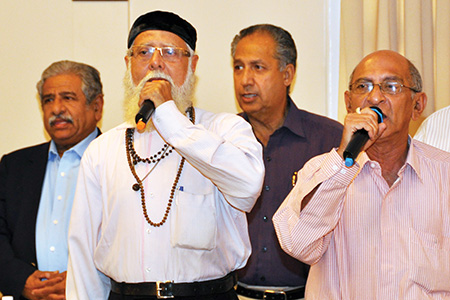
Chhaiyé Hamé Zarthoshti being sung at the Federation meeting in Bombay in 2012
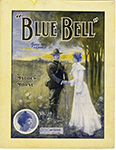
Composed over a century ago and sung to the tune of Farewell My Bluebell, composed in 1904, the poet is ahead of his times in emphasizing the role of Parsi women and asserting that female education is the key to a happy family. Women are our legitimate pride, the poet asserts. (Té kom ni banu thaee, chhaiyé hamé magroor). However, some liberals have criticized the anthem for its repeated reference to racial stock and genetic superiority (O tokhum kyani, O jagmashoor). Almost like the ultra orthodox credo "tokhum ni jalaavni né boond ni paasbani.” CHZ, while, propagating a friendly approach to other communities (kul jehaan saathé dosti), does emphasize the exclusivity of the Parsis and even a slightly understated sense of superiority over non-Parsis.
The unstinted loyalty of the Parsis to the rulers who provided them refuge is lauded (Jéni vafaadari par padya nathi koi daag meaning our loyalty is unstinted). Even our present Prime Minister has never lost an opportunity to uphold the Parsis as the ‘loyal’ minority and a beacon light to others who are more vocal in asking for special rights.
At the 16th North American Zoroastrian Congress, New York, in August 2012, the ZAGNY (Zoroastrian Association of Greater New York) philharmonic orchestra rendered CHZ, with the audience mouthing the lyrics, as teary eyed American Parsis clicked this very emotional moment on their cell phones. The migrants’ nostalgia for the motherland is always touching.
Parsi associations like the Rahnumae Mazdayasni Sabha, the Rathestar Mandal, the Bombay Parsee Association, the Navsari Parsi Association, Youths Own Union and the like would invariably end their functions, cutely called a ‘mélavdo,’ with a rendering of the CHZ, though the audience did not spring to attention (most of them would not have been able to, even if they had wanted to).
In the collective consciousness of the community, the most powerful thought is our forefathers making the arduous journey from Iran to protect the faith; a people hounded out of their motherland and deprived of their kingdom by barbaric hordes. This thought, being the central theme of CHZ, strikes an emotional chord in most. If you don’t feel sentimental when the chorus of CHZ plays, you are either disconnected from the community or do not understand Batliwalla’s lyrics couched in shuddh Gujarati (not the Parsi dialect).
Apart from CHZ, there are other recorded songs which make us feel devotional. Most are eulogies to Zarathushtra (O Dadgar dadar Nabiji vandan ho shut var, amara bhav bhav na aadhar, Koi poochhé mané kya chhè tara Zarthosht paygamber, dil chiri né batavoon, mara jigar ni andar). The Dadar Parsi Association, music director Vistasp Balsara from Calcutta and Mani Rao have all, at different times, produced discs containing these Parsi devotional songs, some of which are available on YouTube.
Decades ago, Parsis like the Chiniwalla brothers and Pervez Katrak used to sonorously recite or sing monajats (hymns) and passages from Firdausi’s Shahnameh – the chronicles of the ancient kings, warriors and pehelvans (a kind of samurai). The most popular of these being the tragic saga of the legendary father-son duo of Rustom and Sohrab; the former vanquishing the latter in a brave battle, not knowing that he was killing his own son. This did not stop Adi Marzban and thespian Jimmy Poncha from spoofing the saga on stage, Shahnameh style – "Rustom é aapyo Sohrab né jolab; Né Sohrab é kidho léngho kharaab (Rustom gave an overdose of laxative to Sohrab, who soiled his pyjamas).”
Flippancy apart, Parsi devotional music, with CHZ leading the list, is as much a part of Parsi culture as gahanbars, lagan nu paatru, garo and dhansak. Even after hearing a diatribe on the demographic decline and a grim future, sung with gusto CHZ invariably lifts spirits and offers hope, reminding us of a thousand years ago when the odds against our survival were stacked even higher than now.
Berjis M. Desai, managing partner of J. Sagar Associates, advocates and solicitors, is a writer and community activist.
◆ ◆ ◆
From the archive