
Institutions
Sentinel for the seniors
The WZO Trust Funds Senior Citizens Centre is sensitive to the physical and emotional needs of the elders
"E loko né bachha aavsé (Will they beget children)?” The septuagenarian lady resident at The WZO (World Zoroastrian Organisation) Trust Funds Senior Citizens Centre (SCC) in Navsari daily seeks an answer to this question from the administrator Sharmin Tamboly. Whilst the senior lady who joined in the nuptial celebrations on September 12, 2015 has been able to comprehend that her fellow inmates Minoo Kabraji and Havovi Bhagat are now married, she is unable to grasp that the sexagenarian couple will be unable to bear children.
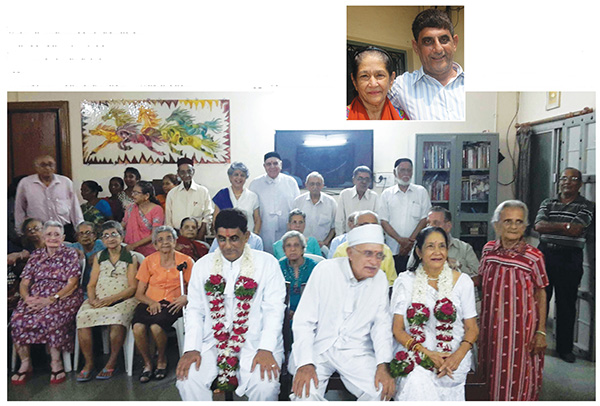
Minoo and Havovi Kabraji (inset and above) on their wedding day in Navsari Photo courtesy: WZO
The important days in the Zoroastrian calendar are regularly celebrated at SCC as are the birthdays of the 29 female and 23 male inmates but this is the first time since the institution was founded in 1998 with a munificent donation from Bai Maneckbai P. B. Jeejeebhoy Deed of Settlement Fund that a wedding of two residents was organized on the premises. Whilst 69-year-old Kabraji was a bachelor residing at the Centre since 2012, 66-year-old Bhagat was a widow with four sons whose husband Noshir had expired eight years earlier. She came to reside in SCC only this year and got an opportunity to be acquainted with Kabraji when he was recovering from an illness.
When they expressed their intention to get married, some family and friends were happy and some were disturbed "but we went ahead and got married,” Havovi related to Parsiana on October 2. Whilst they were pleased that Dastur Kaikhushru N. Dastur Meherjirana, also a resident of SCC, was in their midst, the couple was happiest though to get the blessings of "Dinshaw uncle and Bachi aunty,” as the Tambolys, the pillar trustees of the WZO Trust Funds (WZOTF), are respectfully addressed by everyone in Navsari, even those elder to them.
Very appreciative of the "love and care we get here,” Havovi is convinced that "jé bhi Centre maa aavé té sookhi thai (whoever comes to the Centre becomes happy)” after being neglected at home. Having worked as a packer for Merck Sharp and Dohme, Havovi later supplemented the family income by sending tiffins from home and selling vasanu, badampak and pickles until she developed a retinal problem. Kabraji candidly states that having failed his ninth standard examination three times, "mè maaraa pag par kulhadi maari (I marred my future prospects).” He recalled with gratitude the individuals who had given him employment over the years as driver, companion, security guard, rector… and particularly named the Parsis who had been supportive as Hoshang and Framroze Hansotia, Hoshang and Daulet Aga, Cyrus and Piloo Aga, Noshir and Erin Nagarvala, and Byram Avari.
"After slogging throughout their lives, this is like a heaven” during their senescence, observes Bachi. The inmates are more than content to get their meals on time, to rest when they want, to watch television or read if they choose. In fact some of them have to be nudged to step out of the premises and take a daily walk or visit the agiary/atash behram. When the committee members tried to interest them in special programs in the form of karaoke evenings or fashion show or movie or housie, they found that the elders would sign up for these activities initially but when the day drew closer they chose to opt out, leaving the organizers disheartened. Even visits to Udvada, followed by a three-day stay at the WZO Sanatorium in Sanjan evokes the same dispirited response, points out Sharmin who realized that they are most comfortable with their daily schedule which starts with morning tea at 7 a.m. and ends with dinner at night.
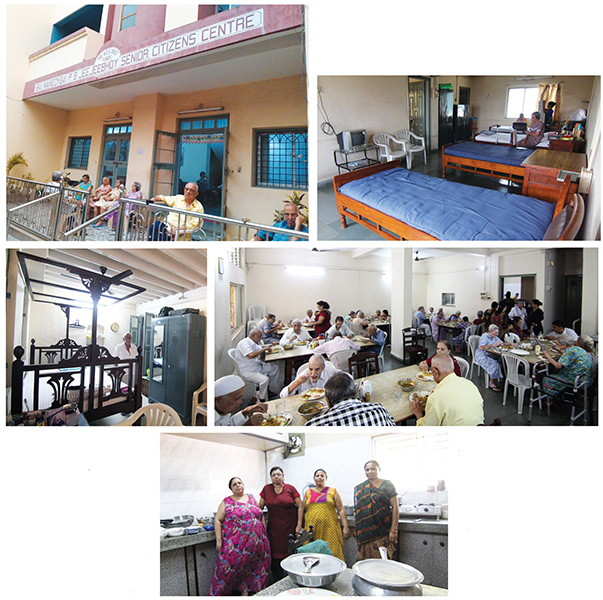
Top row: seniors socialize on the verandah; recovery room;
(2nd row) living and dining facilities;
(3rd row, from left) Khorshed Variava, Bapsy Daruwala and
their assistants in the kitchen
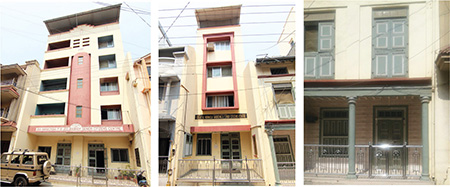
From left: the first second and third wing of The WZO Trust Funds Senior Citizens Centre
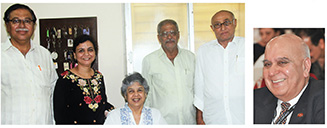
Above (from left): Sarosh Gazdar, Sharmin Tamboly, Bachi Tambody,
Sam Dharampuriwala, Soli Vandriwala and Dinshaw Tamboly
They all have seats assigned to them in the dining room and are expected to adhere to timings. On the recommendation of noted lawyer and former Bombay Parsi Punchayet trustee Burjor Antia, they tried introducing common prayers before meals but realized the futility of their efforts seeing the seniors take time to file in one after another, making those who arrived first complain that their meal was getting cold. They are now recommended to say their individual prayers before starting their meal and end their repast by pushing the chair back in its place and leaving their dirty vessels in the tub. "We are very strict about discipline,” says Bachi and those who refuse to comply with the rules and regulations are given a warning which if they refuse to heed, requires them to quit the Centre.
Whilst those who can afford pay a contribution of Rs 4,000 per month towards their stay at the SCC, there are 17 who are housed totally free of cost and in fact WZOTF gives them Rs 2,000 every month towards their personal expenses on the condition that they do not seek alms from any other organization. Meherjirana has been assigned a room to himself and there are three couples who enjoy double occupancy. The majority share rooms and bath facilities with one/two/three others, depending on the vacancy. The food served to all the inmates though is the same with the kitchen being in the able hands of the ever smiling Khorshed Variava who is assisted by Bapsy Daruwala, Zenobia Bhesania and Kamini Bharucha. Besides the Parsi favorites they are given popular Gujarati dishes and in fact the seniors also look forward to the dosawala on wheels who is booked on certain evenings.
Only the aged members of the community who are mobile are permitted residency here. If for any reason an inmate needs hospitalization, the patient is shifted to the D. N. Mehta Sarvajanik Hospital. As per their understanding with the management, in the ward reserved for free Parsi patients, medical attention is given to the seniors with their sundry needs taken care of by the attendant posted there by SCC. Only if he/she can manage to walk up to the toilet is he/she brought back to the recovery room at the Centre where an attendant looks after the invalid until he/she is stable and can manage independently. Alternatively those confined to the bed are transferred to the Infirmary in Navsari managed by the Navsari Samast Anjuman. Whilst initially the Infirmary had unpleasant odors associated with it, with the convenience of adult diapers, those ailing and their caretakers are now more comfortable, reveals Bachi.
If a resident from the Centre dies in hospital, the body is first taken to the morgue and kept there until the family members who are intimated direct them to go ahead with the obsequies or await their arrival. Before taking the body to Doongerwadi, it is brought to the Centre to permit the other residents to pay their last respects. This same procedure was followed when one of their inmates suddenly collapsed on the agiary steps on October 3, the day when Navsari was celebrating the 250th anniversary of its Atash Behram. The next morning the body was brought from the morgue to SCC before it was taken to Doongerwadi.
The seniors have come to depend on their resident manager Soli Vandriwala who has learnt to handle them with kid gloves for one never knows what may upset them. He recalls how some of them felt affronted when on his daily rounds he would ask "Kèm chhèo (how are you)?” They felt this question should only be routinely asked to those who are ailing to find out their daily progress! Other long-standing assistants who are assigned duties at the Centre are Sam Dharampuriwala who is in charge of maintenance and Sarosh Gazdar who is designated the handyman and also helps with the Trust’s self-employment scheme.
Since 2011 the WZOTF trustees — Bachi, Dinshaw, Farzana Mojgani and Farokh Kasad — have appointed a six-member committee including Sharmin, Pauruchisti Kadodwala, Cyrus Vandriwala, Aspi Ambapardiwala, Simin Bharda and Rohinton Contractor "for the simple reason” that they wanted the welfare work to continue. To train this team to take over, they have a meeting once a month to give them experience on how to interview the deserving and make a report on each case.
The seniors are housed at the three wings of SCC, the first built in 1998, the second in 2005 named after Dolat and Hormusji Vandrewala following a donation from their son Behram Baxter of California, and the last in 2013. WZOTF has further provided 100 flats on leave and licence basis to the newly wed and deserving members of the community on different properties in Navsari. Their 13th building will shortly be ready for occupancy, mentions Bachi referring to old Parsi homes being bequeathed to them by long-standing residents of Navsari who specify that they do not want them to be sold but to be put to good use. "Whilst everything depends on the donor, most have no objection to giving flats to intermarried couples,” she adds. As per their policy, they do not maintain any waiting list, inviting applications only when flats are available for occupancy.
Currently on the pay roll of SCC are 26 employees, including seven staff members. Although there is an increasing demand to accommodate more seniors, they have to keep in mind that expansion would require more labor which is not easily available. Confident of the trust reposed in them by their donors Bachi specifies, "Money is never a problem. Our donors are very supportive.” Other community institutions in Navsari show their thoughtfulness in many ways too. Whenever the Navsari Anjuman hosts a free dinner function, food is invariably sent for the inmates of the Centre. On Senior Citizens Day on October 1, 2015, nearly 200 kindergarten children from Sir J. J. School came visiting the elders. A card left behind for the seniors was meant to remind them that there are some who care.
◆ ◆ ◆
From the archive