
Gholvad’s glory days
Dhun Villa, over 90 years old, has been restored by the family that enjoyed fun-filled holidays there
I also have fond memories of Gholvad where my late maternal grandparents Jamshedji Navroji Masani and Dhunmai (née Antia) had built a holiday retreat — Dhun Villa — in 1923. Jamshedji was a businessman with associations in Gholvad, Vapi and Kosbad (near Gholvad) where he owned several plots of land (varis). He also owned a brick manufacturing factory in Vapi and traded in ghas (dry grass) for feeding animal-driven vehicles — mainly horses. As kids we would spend six to eight weeks in summer and two to three weeks at Christmas in Gholvad. Even after 75 years, I have vivid memories of my holidays.
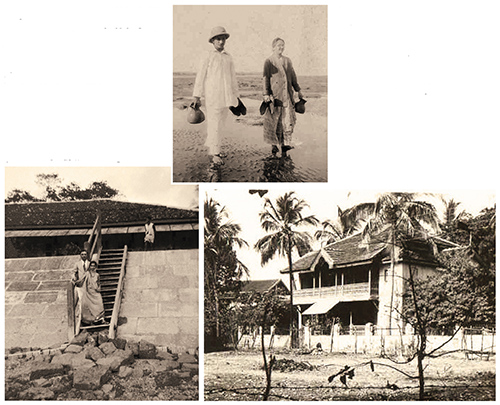
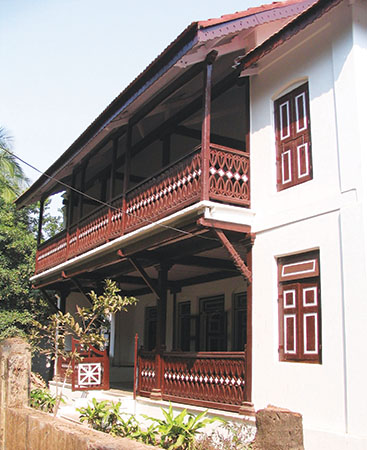
Since we always travelled by "Royal Class” we had to get to the Bombay Central station early to get "good” seats. As the Saurashtra Express backed into Platform No. 2 my siblings and I would make a mad dash into the empty coach even before the train came to a complete halt. Depending on how many were travelling, we would spread our belongings to reserve seats. One of us kept a close eye on the window to summon granny, mummy, Homai masi (mother’s sister), Dina masi and Katy masi who followed later with baggage. The journey to Gholvad took about three hours. We could recite the names of every station, from Bombay Central to Gholvad and beyond by heart. When we arrived at Gholvad station, a two-horse driven tonga was hired to take us to Dhun Villa. Until the mid-60s, a horse-driven tonga and a bullock cart were the only common modes of transport in Gholvad. Invariably, there were six persons plus our faithful resident servant Navsa Kothare, the tonga driver and our luggage, all hauled by two very poorly fed horses on a bumpy narrow road!
After the 15-minute ride to the majestic Dhun Villa, the adults would arrange for the first lunch of the season which was always ordered from King’s Hotel, owned and ably managed by the big-hearted Rustomji Kanga. The large oval dining table was brought out on the ground floor verandah as we rarely ate the main meals in the dining room. We kids would insist that Navsa bring down the basket of toys and urge granny to instruct him to install swings on the top and bottom verandahs. Poor Navsa did not know whether he was coming or going! Navsa was thin as a rake, but tough as boots. He was not only our housekeeper, but also our gardener and village doctor of chala-pala (unconventional medicine).
The first afternoon was spent preparing the beds. The bedrooms were rarely used as it was much cooler to sleep on the 70-ft long verandah upstairs. Granny and my mother Viloo (being the eldest daughter) had the privilege of sleeping on the two wrought iron beds. Yes, the pecking order in the Masani family was followed strictly! The rest of us kids along with the masis slept on mattresses laid in a row. It was heavenly to sleep "al fresco” with the cool breeze at high tide on a moonlit night with the mesmerizing sound of the sea, crickets, dogs barking, bats flying and the occasional sound of trains zooming past Gholvad.
The daily routine was the same with a morning breakfast of fried eggs or akoori or an omelette (made with duck’s eggs) with bread (or chapattis from the previous day) and IXL jam (made in Tasmania; reportedly the jam factory is now closed but the premises house a museum depicting the past history of the company). In days gone by there were very few general stores in Gholvad so my dad always gave my mother a large crate full of provisions to last the six weeks — jams, biscuits, toast, cans of Kraft cheese, cans of ham, Rex orange and lemon squash, sev-ganthia and chevdo (munchies), dried fruits, soaps, toothpaste, etc.
Lunches and dinners that were granny’s creations, ably assisted by all the daughters and Navsa’s wife Lakhi, would put the modern-day chef of a five-star restaurant to shame! Once, as granny was dressing a freshly slaughtered chicken, she found inside it a row of neatly packed egg yolks — the size of small marbles. She quickly summoned all the children and adults and gave each one a little, slippery ball of warm yolk that tasted delicious. Fresh lobsters marinated in turmeric, chilli powder and lime juice and then barbequed on a coal fire were everyone’s favorite. In the kitchen we had a special grate to burn charcoal. Once lit, the cherry-red coals generated enough heat to cook the entire meal for eight to 10 persons! This grate was supplemented by a Criterion kerosene stove, the work horse in many Parsi kitchens of the day!
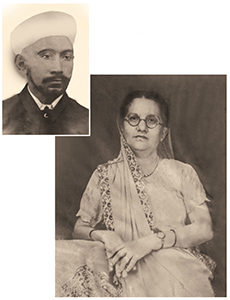
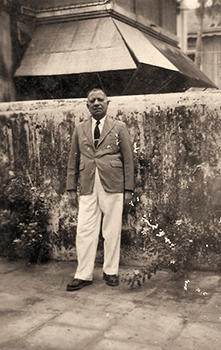
Kaikashru Javeri
Even during the summer vacation we were supposed to prepare ourselves for the forthcoming term and mummy made sure that textbooks, all "hand-me-downs” from my elder brother Eruch, were carried to Gholvad. Homai masi who always helped me with my studies was a fantastic teacher.
Evenings were spent at the beach that was a leisurely five-minute walk from Dhun Villa. We meandered through narrow lanes of Mangela Wad lined on both sides with mud huts of fisher folk with welcoming smiles, naked children chanting "sahib-ji” (hello), ducks and geese quacking and piglets dashing hither and thither. The roofs of most huts were spread with fish, mostly Bombay Ducks, drying in the sun. We enjoyed the long walks on the beach, collecting shells, playing with children of other Parsi families who also spent their summers in Gholvad.
Eruch and I, along with Nari and Adi usually played nargolio and gilli-danda with the local kids. One evening, one of the lads whacked the "gilli” straight on my face and I went crying into Shireen aunty’s arms! On another occasion we were walking home from the beach on a dark night when a glow-worm landed on Shireen aunty’s arm. As she was admiring this wonder of nature I stepped forward and gave her arm and the worm a smart whack to see if the worm still glowed — but only earned a reprimand from the adults!
One summer my sister Katy and I went swimming on the beach with our Homai and Dina masis. We encountered jellyfish swimming very close to us and promptly ran ashore. Those were the days when the water at high tide lashed the slopes of Dak Bungalow — a property on the waterfront that belonged to the Bombay Baroda & Central India Railway (BB&CI), currently the property of Western Railways.
We always said our night prayers before dinner by the light of an antique Ditmar oil lamp which graces the front room to this day. Dinner was at 8 p.m. (about the same time as we heard the Flying Ranee from Bombay speed past Gholvad) by the light of a Petromax (there was no electricity in Gholvad and neighboring villages), and then to bed with the lead person carrying a hurricane lantern to light the path up the stairs.
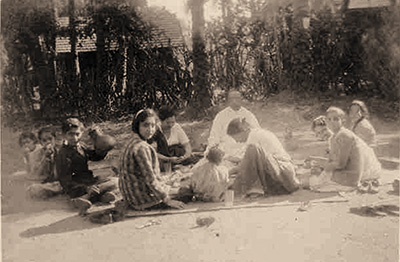
Grandpapa had to attend to his work in Bombay so he would make an appearance on his way to or from Vapi where he had business dealings. He would purchase ghas from Vapi and surrounding villages and sell it to merchants in Bombay — a lucrative business in those days when ghas was in great demand due to animal-driven modes of transportation. There were horse-drawn carriages to transport humans (called Victorias — denoting the period in which they were introduced to India by the British) and bullock carts to transport goods. Since Jamshedji had earned the moniker "ghaswalla,” Dhun Villa to this day is better known among the locals as "Ghaswalla Bungalow” to distinguish this property from another owned by Manekshaw Masani whose family had a large fruit orchard in another part of Gholvad.
Grandpapa was very fond of flowers and on several visits he would bring Ponchaji’s seeds from Bombay and give them to Navsa to plant in the garden. Sadly, only some plants, like lilies, survived as we believe Navsa went on a sabbatical as soon as the family left Gholvad! Since Grandpapa loved papayas there were papaya trees dotted all over the perimeter of the garden along with coconut palms. The famous Gholvad chikoos, a certain variety of mangoes and lychees all grew in our adjoining vari (farm).
Among my memorable trips was the one in 1949 when only Granny and I visited Gholvad. Whilst running on the bumpy road in front of Dhun Villa wielding a long cane that got lodged on a stone, I tumbled, landed on my left arm and fractured it. Granny promptly summoned Navsa who put it in a sling. That same afternoon I was sent to Bombay with Navsa as my travelling companion. In those days there were no telephones in Gholvad or in our Tardeo home. The reception in Tardeo was not so welcoming! Poor Navsa had to return on the night train reaching Gholvad at 1 a.m. Those were our faithful employees. They executed any and all tasks that they were assigned and always with respect! To this day we are blessed with the fourth generation of Navsa’s family in our employ at Dhun Villa.
My father Jal would occasionally make an appearance mid-summer on Saturday and Sunday. He came by the night train on Friday and left on Sunday afternoon. I believe he came to replenish our stock of jams, biscuits, orange and lemon squash, etc.
A lady called Hilla aunty, a cousin of Grandpapa, was a frequent visitor to Gholvad during summer. She was very fond of crocheting, singing Parsi songs and playing cards. The adults loved playing flush with real money — half paisa, paisa and annas — never a full rupee. Rumor has it that both granny and Hilla aunty were rivals at flush and both cheated to beat each other! Sometimes the arguments got so acrimonious that the two ladies would sulk for hours and ignore each other until the following day. They also played a card game called bezique.
Another frequent visitor to Dhun Villa was Kaikashru Javeri (fondly known as Kiku uncle). The Javeri family were granny’s neighbors in Souter Street, Bombay. Kiku uncle was a retired employee of the Bombay Police Force. He always travelled to Gholvad with a rifle and several rounds of ammunition. I dare say he never saw a tiger, leave aside kill one! He was fond of snuff and playing cards with the adults. He told us a lot of tales related to the Bombay police.
On some occasions we had the pleasure of having Rattan masa (Antia) at Gholvad. He was a retired electrical engineer having spent his working life with the Indian Railways. He was also a horologist (one skilled in timepieces and their repairs) and looked after all maintenance work in Dhun Villa. In the mid-sixties he supervised the installation of electricity and inside privies. He was fond of narrating stories from the Shahnameh, as well as the Ramayana and the Mahabharata.
Beyond the beaches
Due to the proximity of Dhun Villa and Kapadia Cottage (where the Katgaras resided), a four-minute walking distance, the Masanis were close to the Katgaras (founders of Jeena and Company). Every summer our respective families got together and enjoyed the evenings on the beaches in Gholvad, and at times in the nearby fishing villages — Chickli and Touke (both famous for good toddy) and at Bordi. For our evening picnics bullock carts were hired and fitted with mattresses to act as shock-absorbers during the bumpy ride. Another cart carried food, drinks, crockery, straw mattresses, Petromax lanterns, rudimentary musical instruments, family pets and a football or two to keep the kids occupied!
Eruch has never forgotten an instance when children from the Katgara and Masani families requested the guard at Gholvad station to delay the train by a few minutes as they wanted to play ring-a-ring-of-roses! After a couple of minutes they rushed into their respective compartments and the train chugged off to Bombay.
Granny and grandpapa were also friends with Manekshaw Masani and his family. Manekshaw had a large chikoo vari. Jehangir Irani (florist) was our neighbor and he grew beautiful flowers to supply to the florists in Bombay. Bag-e-Iran was a property owned by another Irani family who grew pomellos and chikoos. Then there was the Patel family which had a vari behind Dhun Villa.
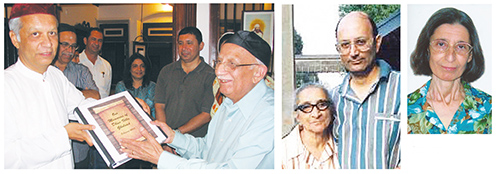
The last time I visited Kapadia Cottage was in 1974 when I took my Italian wife Annamaria for the first time to Gholvad to show her all that it means to me. We visited places that I had frequented as a child. As we stood outside Kapadia Cottage the old gardener/housekeeper recognized me and welcomed us, opened the house and gave us a tour of the magnificent Cottage.
During the Diwali holidays in 1985 when Annamaria and I, accompanied by Katy and her family, visited Dhun Villa at night we played 78 RPM vinyl records — Rum and Coca Cola, Tennesee Waltz and other oldies on a hand-wound gramophone. The gramophone had been made by Rustom mama and given as a wedding gift to my mother in 1933. This gramophone is now in my possession in our home in Canada and it still plays 78 and 33 1/3 RPM records with high fidelity.
Dhun Villa’s restoration
After nearly nine decades, when Dhun Villa started showing signs of age, in 2008 Katy, along with her husband Frinasp Bamji (who is also my cousin), and my other cousins Feroze Masani and Jamshed Khursigara initiated the restoration of Dhun Villa. Thanks to Feroze and his wife Hema Masani’s (see "It’s their blooming business,” Parsiana, December 1995) indefatigable energy, and with financial support of all cousins, Dhun Villa was restored to its original glory and as a gesture of gratitude to our faithful fifth-generation domestic help, we also constructed new living quarters for them adjacent to Dhun Villa.
To celebrate Dhun Villa’s 90th anniversary in 2013, seven cousins, their spouses and children met in Gholvad for a grand reunion. Cousins came from Australia, England, Canada and India to attend the khushali-nu-jashan performed by two priests from the Bordi agiary.
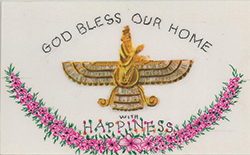
Prior to our reunion we took the opportunity to document "Our Memories of Dhun Villa Gholvad” to which 11 cousins and spouses contributed. A binder containing our reminiscences is now lodged in Gholvad for posterity. Since Katy did not live to see the restoration, to commemorate her involvement, a photo frame was hung in the dining room alongside photos of Dhun Villa’s restoration. Katy, being a commercial artist, had created a special inscription which adorns our abode: "God bless our home with happiness.”