
A puff of prestige
The Gurkha Cigar Group owned by Kaizad Hansotia manufactures over 40 labels of cigars, including the world’s most expensive ones
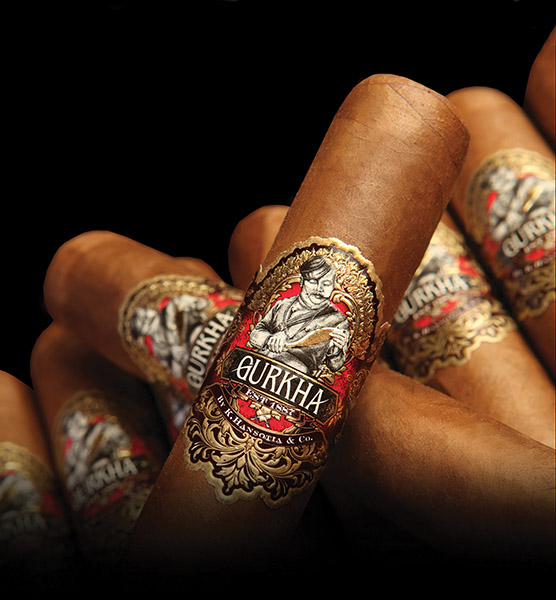 Gurkha’s rare edition Black Dragon boxes of 20 cigars sold for $ 125,000 in 2007 and five years later one such box was resold for $ 680,000, Hansotia impresses on us the value of his super luxury brand. Their next premium product, titled Maharaja, will be released in December 2015.
The top end customers of Gurkha are known to be Middle Eastern royalty or chief executive officers of Fortune 500 companies who buy the cigars as corporate, wedding or birthday gifts. To be in the company of Brad Pitt and Matthew McConaughey who distributed Gurkha Grand Reserves at the birth of their children, or Donald Trump at the wedding of his son, or Sylvester Stallone and Harrison Ford who enjoy their Gurkha at their Hollywood haunts, one must understand that the waiting list for premium Gurkha cigars can be between six to eight months in the US. "Every single celebrity” smokes or gifts Gurkha cigars, claims its founder who even offers to custom-make some limited editions for his select clientele.
"Most people think it is the Dutch and Cubans who control this business. (Did) you think a Parsi could be the head of one of the most competitive industries?” conveyed 48-year-old Hansotia in his email responses to Parsiana. The only person of Indian origin to be in the premium cigar league, Hansotia says Gurkha is "number one not by quantity but by quality,” with their cigars showing a rating as high as "98 or 99. No one else has this.” On a 100-Point Rating System for cigars, 15 points are generally reserved for appearance and construction, 25 points for flavor, 25 points for smoking characteristics and 35 points for overall experience.
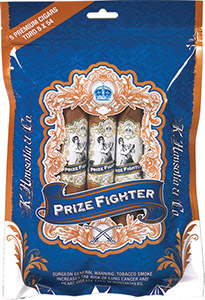
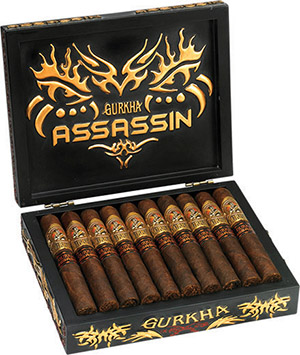
Above: Gurkha insignia; (left) some of the Gurkha labels
Producing seven million cigars a year, Gurkha has over 40 different lines of cigars, but Hansotia says he cannot increase the quantity because tobacco is not available. Of the tobacco available in the market he uses "one percent of one percent,” he mentions. Since tobacco, like wine, matures with age, Gurkha buys tobacco today to last 30 years hence, sourcing it "from all over the world.” Their website lists 10 "official Gurkha lounges” in prestigious outlets like Joseph’s and Monte’s where their cigars can be purchased and enjoyed by those holding private membership. There is an online search facility to help locate the nearest retailer. Online purchase facilities have also been introduced because Hansotia realizes that future growth throughout the luxury sector will be driven by online factors. With personal tastes evolving and eastern aficionados increasingly seeking exclusivity, novelty and status he expects traditional markets will grow in China, in the Middle East, in India.
Having bought Gurkha, then "a dead brand” for $ 143 from a Portuguese gentleman as an impulse purchase when vacationing in Goa 26 years ago primarily to present a unique gift to the clients of the family’s watch company, Hansotia was soon able to spot the business potential. On checking out the market in the late 1980s, he realized that the premium Davidoff cigars cost eight dollars which spurred him to create his brand of exclusive cigars. "When we started there was no super premium business in the cigar industry… Where pedigree was an issue we did just the opposite. We went to a different extreme… (With) innovation, we changed all that,” explains Hansotia whose earlier experience lay in the manufacture, distribution and marketing of time pieces.
With Gurkha cigars commonly referred to as the Rolls Royce of cigars, the owner elaborates, "A person buying a Rolls Royce is not buying it for transport, he is making a statement.” Similar is the case when one smokes a thousand dollar cigar. "A cigarette smoker is like a beer drinker. A cigarette smoker wants nicotine. The cigar smoker is an aficionado. He wants flavor, taste,” explains the cigar connoisseur who smokes all cigars for "I want to see the difference.”

He introduced his first cigar for $ 12 at a time when the high-end cigars of his competitors were selling for half that price. "Do not under any condition listen to any naysayers,” advises Hansotia, adding, "If you believe in what you have, then do it… If I would have listened to all my associates Gurkha would never be the number one cigar in the world.”
In his endeavor to ensure that their prized customers "never get bored with the same flavor,” Gurkha presents a unique cigar profile in each label. Enjoying Elegance at lunch time is quite different from smoking Evil, Titan or Beast at night, says Hansotia. He is very clear that he would not like to rush with production, preferring "to perfect what we are doing right now,” Hansotia clarifies on the Gurkha Cigars website. Another highly rated Gurkha cigar is their 125th Anniversary XO, a medium bodied cigar with flavors of tobacco, sweet spice, vanilla and chestnut.
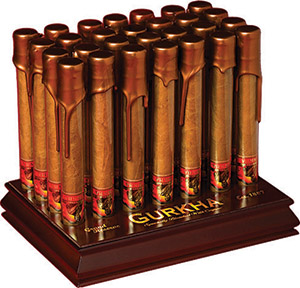 Knowing that his cigars are included in the choicest collections is a matter of pride for Hansotia, an avid collector himself, who believes, "If you are drawn towards fine cigars, swords, pens, watches or cars, you’ll feel that long before you can afford them, and when you can, the collection starts… There’s a powerful emotional side to collecting, and fun is the bottom line.”
With the cigar boom in the 1990s that saw a resurgence of its consumption in the United States and a dramatic rise in imports and sales, Hansotia decided to cater to the blue collar, middle-class workers too and thus besides the high-end offerings he introduced cigars that were affordable by all. Last month, the Gurkhas released Envy, an extension to its popular Ghost line with the manufacturer’s suggested retail price shown as $ 6.99-$ 10.99.
Gurkha derives its name from the Nepalese fighters who impressed the British with their valor and kukri knives in the 1880s. "At the height of the British rule, colonial soldiers began to make their own cigars from the local tobacco. The fondness of the British for these legendary Nepalese fighters inspired them to name their cigars Gurkhas,” notes a brief historical note on the Gurkha website. Hansotia is happy to retain this association and the logo on some of his cigars shows a Gurkha sporting a cap and kukri. The name "K. Hansotia and Company” features prominently too.
Referring to the initial toil and sacrifices he explained to Parsiana: "A new business is like having a baby. You have to spend all your time taking care of your business. I went on my first vacation after 12 years. I worked seven days a week and traveled three weeks (in) a month.”
He says he has adopted the management style of the Chinese military general, strategist and philosopher Sun Tzu (544-496 BC) when interacting with his staff of 40. "Every operation of ours whether it be advertising, management or corporate structure is based on that management structure. In other words I’m in the front lines with my troops at all times and I have a very open door policy with my whole staff. It is important for me to spend time with everyone from the office staff to my guys out on the road…” After "a massive metamorphosis” Hansotia is now content to concentrate on the creative part, the blending (see below) and the packaging.
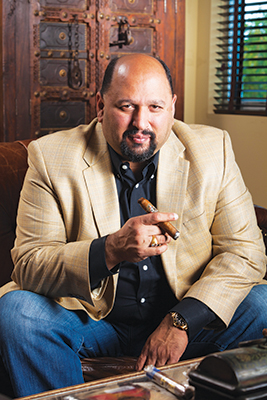
Born in Bombay to Dinshaw and Hootokshi Hansotia, Kaizad says he grew up in Colaba, "creating havoc in Cusrow Baug.” A childhood acquaintance remembers young Kaizad mischievously ringing doorbells of neighbors, bolting their doors from outside and fleeing from the scene before the old occupants could realize what had happened! Among the many institutions where he studied were St Joseph’s and Campion in Bombay, later in Hong Kong and London before the family migrated to the US in 1981 where he majored in criminal justice! Continuing to visit India at least thrice a year, Kaizad says, "I love India and hopefully one day I will have a residence there.” Currently Kaizad, wife Katya who assists him with accounts and the day-to-day management of Gurkha and their three young sons Kyle, Brennen and Nicholai stay in Miami, Florida. "I am 100% Parsi and Zoroastrian and I am very proud of my heritage,” he proclaims.
Taking pride in his cousin’s accomplishments, Bombay based Viraf Hansotia confessed to the family’s initial reservations on whether there would be any market for his cigars and related how Kaizad, "always very enterprising, started with something so small and how it has evolved into something so big.” Their grandfather used to sell sandalwood in Bombay, Dinshaw started the watch business and Kaizad ventured into cigars. With Kaizad having been "brought up in a different culture,” Viraf can understand his US cousin’s liberal leanings but is particularly impressed with his charities to different causes on his annual visits to the Iranshah in Udvada.
Does the manufacture or smoking of cigars contradict the Zoroastrian ethos? "Absolutely not,” proclaims the Gurkha owner. "Does drinking also contradict Zoroastrianism?” he asks rhetorically. "I have never seen any document in our Avesta (that) a person shouldn’t drink or smoke.” Commenting on the health aspects of the business Hansotia declares, "Anything in moderation is good. Once you start abusing it then you always have a problem, no matter what (the) product.”
Cigar concepts
A cigar is defined, for tax purposes, as "any roll of tobacco wrapped in leaf tobacco or in any substance containing tobacco,” while a cigarette is "any roll of tobacco wrapped in paper or any substance not containing tobacco.” Most cigars are made of a single type of air-cured or dried tobacco. Cigar tobacco leaves are first aged for about a year and then fermented in a multi-step process that can take from three to five months. The blending of wrapper, filler, binder and additives is what determines the overall flavor of a cigar. There is a definite art of blending tobaccos to achieve particular flavors. Traditional cigars don’t usually have filters, although many of the smaller, more cigarette-like cigars do.
The wrapper or the outside layer of tobacco are usually very high quality leaves, available in colors ranging from Double Claro (the lightest) to Oscuro (the darkest). The wrapper is the most important and most expensive part of a cigar. Typically grown under a gauze tent (shade) to prevent the leaf from growing too thick, the wrapper must be smooth and have very few veins. Most of the cigar’s flavor is derived from the wrapper.
A binder is the intermediate leaf used to hold the filler tobacco together. Binders usually come from the bottom part of the plant, where the leaves are thicker and have more strength. These leaves usually have little or no flavor.
The bunch of tobacco that forms the center of the cigar is the filler that is responsible for determining how strong a cigar smokes. The top of the plant usually produces the strongest flavor, while the bottom produces the tobacco with the best burning properties. Most cigars have blended fillers (fillers from varying parts of the plant and varying sources) to achieve the desired taste and optimum burning qualities.
The smallest, known as little cigars or small cigars, are about the size of cigarettes and come in flavors like mint, chocolate or fruit, and many have filters. Slightly larger cigars are called cigarillos, blunts, or cheroots. They contain more tobacco than little cigars, and are also often flavored. Large cigars may contain more than half an ounce of tobacco — as much as a whole pack of cigarettes. It can take one or two hours to smoke a traditional large cigar. Inhaling cigarette tobacco gives an instant hit of nicotine, as opposed to cigars and pipes which take a little while to kick in. Cigar and pipe tobacco absorb nicotine more efficiently through the mucous membranes in the mouth, while cigarettes absorb best in the lungs.
As explained in G2, the production of Gurkha’s Grand Reserve "begins in Navarette in the Dominican Republic with five-year-old Connecticut shade wrappers fermented an additional seven months, five months longer than most Cuban cigars. The filler and the binder are a Dominican blend grown from Cuban Pilato seed. The final step in the year long manufacturing process, the marrying of the filler and the binder with the delicate wrapper, takes place in the United States where Kaizad has added his own unique and justly celebrated imprint. The wrapper is infused with Louis XIII cognac that costs $ 3,000 a bottle. The cigar is then placed in a glass tube. A drop of cognac is put inside the tube and then sealed with a gold wax seal. The cigar will keep inside the tube for 400 years. A humidor is not required for this cigar.” (A humidor is any kind of box or room with controlled humidity to store cigars, cigarettes, or pipe tobacco.)