
Zoroastrians Abroad
Inbox illumination
"Mere muttering of prayers without understanding their meaning might indicate faith in them; but such muttering leaves the spiritual thirst of our soul unquenched. Let us mend that mode. Let us discover that there is more to our religion than just good thoughts, good words and good deeds,” states Kayomarsh Mehta of Chicago inviting "all interested individuals” to register for the e-course on Zarathushti religion by sending him an email at kayomehta @aol.com The e-course, under the aegis of the Zarathushti Learning Center of North America (ZLCNA) will be emailed free of cost, one lesson a month. The duration of the course will depend on the interest of the majority of the participants and could go on for a couple of years.
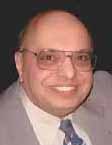
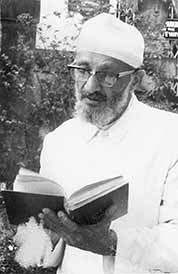
Kayomarsh Mehta and Dastur Navrooz Minochehr- Homji (right)
The lessons, based on the teachings of the late Dastur Navrooz Minochehr-Homji, have been developed by Mehta over the last 30 years and continue to be in use in the religion education programs conducted at different locations. "The lessons concentrate on understanding the fundamental concepts of our religion as expressed in our daily Avesta prayers. Mastering these concepts will enable us to recite our prayers intelligently with full understanding of what they mean. They will teach us how to live our daily life according to the teachings of our religion,” writes Mehta who acquired most of his religious education from Minochehr-Homji whom he considered "a learned scholar, an eloquent speaker and a seasoned teacher.”
As related by Mehta, in the 1970s when the community members in Chicago felt a lacuna in their religious education they sought to learn from someone knowledgeable and were elated when Minochehr-Homji spent several months with them on each visit. His intensive Avesta classes kept the audience "engrossed for hours at a time, quite often very late in the night on work days. During the weekends, we would have classes extending for the entire afternoon,” recalled Mehta. Their thirst for knowledge satiated, some of them endeavored to develop education material for their children as also the adult education classes for the community.
"Initially my intent was to provide this course for the mobeds within North America so that they would be well equipped to share the knowledge with the laity,” relates Mehta. However when sharing the education material with individuals in India, UK and Australia he felt "there would be merit in propagating the knowledge to anyone who was interested…for the good of the community.” Referring to the commitment of the community in the diaspora vis-à-vis those in India, Mehta points out, "In the Judeo Christian majority, one has to learn about our religion to be able to explain it to our neighbors and associates at work. Parents have to be able to educate the children so that they can feel on par with their friends. Each association has to struggle and contribute to be able to have its darbe mehr… (and must) also support the programs such as jashans, gahanbars, muktads, regular religion education classes… as opposed to having agiaries and atash behrams which are established and supported by existing trusts (in India).”
Fifteen years ago Kayomarsh and Nergish Mehta took the initiative to establish ZLCNA in Chicago "to serve the educational needs of Zarathushtis worldwide.” A director, trustee and past president of the Zoroastrian Association of Metropolitan Washington, Mehta who is a religion education teacher had served as chair of FEZANA’s (Federation of Zoroastrian Associations of North America) religion education committee and is a recipient of the Outstanding Zoroastrian Award from FEZANA. He is currently president of the World Zoroastrian Organisation (WZO) US chapter. Having graduated from Northwestern University with an MBA in finance, he works as a financial advisor and broker.
◆ ◆ ◆
From the archive