
Politics and Policy
Accounts and accountability
If the Federation executive is unable to finalize its own accounts, it cannot be trusted to manage dwindling or defunct anjumans, asserted some members
"We need to know where the cash has gone… Forensic investigation is needed…I owe it to the Federation to give them an explanation,” stated Yazdi Desai, joint honorary treasurer of the Federation of the Parsi Zoroastrian Anjumans of India (FPZAI) at the executive council meeting on the afternoon of September 13, 2014. The annual accounts for the year ended March 31, 2014 had not been audited and tabled before the all-India body because Desai found certain discrepancies which needed to be corrected.
As a trustee of the Bombay Parsi Punchayet (BPP) when signing a cheque for nine lakh rupees in the name of the Federation alongside a list of people to whom the doles were to be given Desai realized that no such entry featured on the Federation accounts. "Since this amount was not reflected in the balance sheet of the Federation, I thought it disturbing,” he said. His enquiries revealed that the "money is going into a bank account in Surat” which had as signatories BPP chairman and Federation president Dinshaw Mehta, former BPP chief executive officer, the late Mehli Colah, and the octogenarian Sorab Katpitia who handles the Federation’s defunct anjumans portfolio. In August 2012 Rs 8,92,000 was deposited in the account and the next day Rs 8,26,900 was withdrawn by cash. "When signing cheques, please be vigilant,” Desai cautioned Mehta, adding, "maybe he signed blank cheques.” (Relations between Mehta and BPP trustees Khojeste Mistree and Desai have been strained with the latter two having initiated court cases against Mehta.)
As a trustee of the Bombay Parsi Punchayet (BPP) when signing a cheque for nine lakh rupees in the name of the Federation alongside a list of people to whom the doles were to be given Desai realized that no such entry featured on the Federation accounts. "Since this amount was not reflected in the balance sheet of the Federation, I thought it disturbing,” he said. His enquiries revealed that the "money is going into a bank account in Surat” which had as signatories BPP chairman and Federation president Dinshaw Mehta, former BPP chief executive officer, the late Mehli Colah, and the octogenarian Sorab Katpitia who handles the Federation’s defunct anjumans portfolio. In August 2012 Rs 8,92,000 was deposited in the account and the next day Rs 8,26,900 was withdrawn by cash. "When signing cheques, please be vigilant,” Desai cautioned Mehta, adding, "maybe he signed blank cheques.” (Relations between Mehta and BPP trustees Khojeste Mistree and Desai have been strained with the latter two having initiated court cases against Mehta.)
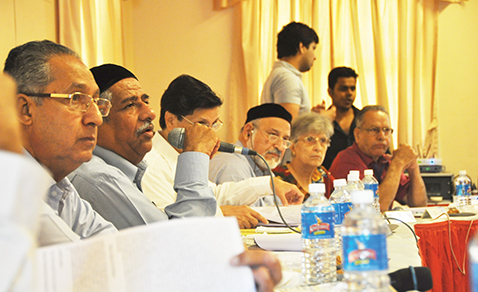
Some office bearers at the Federation meeting in Bombay
"The fact is that the BPP has been giving monthly doles” which were earlier despatched by money order. "There were numerous complaints that the money order was not received on time… or that the postman would hand over the money to anyone,” clarified Katpitia. Hence was started the practice of remitting a lump sum to him for disbursal to poor Parsis from Udvada to Bharuch, receipts for which would be duly sent to BPP, added Katpitia.
Representatives from Mahuva and Mandvi-Mangrol alleged that no one in their region is getting aid. "He (Katpitia) cannot cross this hall unassisted and you expect him to distribute cash in villages?” enquired Cdre (retd) Medioma Bhada representing Belgaum. Declared Hoshang Wania representing Nargol, "This is a very serious matter. It has to be taken to the police… Investigations should start today. It is a question of Rs 36 lakhs per annum. Who is the beneficiary? We have been kept in the absolute dark.” Responded Mehta: "Please stop disrupting the meeting. This is more BPP money than Federation money… There is nothing about you being kept in the dark or light.” He advised that the matter be left in the hands of BPP auditor Falee Billimoria, partner of Kalyaniwalla and Mistry. Dismissing the insinuations, Mehta supported Katpitia, as did Dadi Mistry, Zoroastrian representative on the National Minorities Commission and the only surviving founder member of the Federation, who reminded the assembly that Katpitia has a wealth of information and he should be regarded as "an encyclopedia on Parsi properties.”
Dispute over delay
Whilst two years ago it was the vice presidency of the West Zone B (anjumans of Gujarat) that had become a contentious issue between Areez Khambatta of Ahmedabad and Darayas Master of Surat, this time at the Federation meeting there was a dispute over the West Zone A (anjumans of Maharashtra) vice presidency. The contest was between Mancher Mubarakai of Dahanu Road Agiary Trust Fund (DRATF) who had filed his nomination for reelection as vice president and Pervez Irani of the Iranian Zoroastrian Anjuman (IZA) whose nomination was received two days after the stipulated deadline.
According to Irani, the IZA has its board meetings on the first Thursday of every month. The circular had not reached IZA the previous month and by the time they convened the next month, the deadline had already passed. Irani’s nomination, duly signed by the IZA president, was sent to the BPP office the day following the meeting. "Two days’ delay cannot be condoned?” he enquired. Besides, where does the constitution stipulate that nominations have to be received before a deadline? he demanded. According to Federation joint honorary secretary and BPP trustee Khojeste Mistree, a precedent had been set at an earlier meet when then Federation president Minoo Shroff had rejected Areez Khambatta’s nomination on the same grounds. If they want to go by the rule book, they should adhere to all the recommendations, insisted Irani. Where is the resolution from the BPP naming the four trustees authorized to represent the Bombay community on the all India body? Irani further challenged.
Mehta who supported Irani’s candidature cited BPP trustee Muncherji Cama’s view that since Mubarakai represented the DRATF and not the Dahanu Anjuman, his nomination should not be accepted. Soon thereafter Mehta announced, "I do not think the DRATF is eligible. This is the ruling I have given.” Although Irani maintained, "The president has all authority to pass a ruling,” this unilateral decision ruffled many feathers.
Anahita Desai representing the Badnera-Amravati anjuman said that whilst Mehta cited one part of Cama’s opinion he did not read the full email that stated "even Irani should not be allowed.” Khushman Tamboli representing Rajkot sought to intervene but was not permitted by Mehta. Farrokh Rustomji representing Delhi reasoned that if the Federation has been accepting subscription from the DRATF and recognizing it as a member, "then its nomination is valid.” Nagpur’s Shiraz Doongaji stated that it is "bad luck” that Irani’s nomination was late. An enraged Mubarakai was keen to pass "a no confidence motion against the president.”
Witnessing the general sentiments of the members, Mehta changed his stance and declared that only members of West Zone A would have a say in their vice president’s election. Those who did not want to condone a two days’ delay in the filing of nomination were asked to raise their hands. The support was clearly in favor of Mubarakai who was declared vice president.
The other vice presidents are Sam Chothia from West Zone B, whose candidature had been finalized after a stormy meeting in Bardoli in end August (see "Contention over consensus,” Parsiana, September 21, 2014); Tehmton Anklesaria from the North Zone; Mani Clubwala from the South Zone whose late nomination was condoned as hers was the only candidature; and Russi Jeejeebhoy from the East Zone who was presumed elected from the start of the meet when he was given a seat at the main table.
The two joint honorary secretaries who were appointed were Mistree and Rustomji; the two joint honorary treasurers are Desai and Brig (retd) Jahangir Anklesaria. BPP trustee Arnavaz Mistry was reappointed as executive secretary.
The five members who were coopted to the executive council are: Rustomji, Persi Buhariwalla of Vyara, Minoo Khan of Borivli, Pervez Mehta of Bardoli and Yazdi Karanjia of Surat.
Whilst two years ago it was the vice presidency of the West Zone B (anjumans of Gujarat) that had become a contentious issue between Areez Khambatta of Ahmedabad and Darayas Master of Surat, this time at the Federation meeting there was a dispute over the West Zone A (anjumans of Maharashtra) vice presidency. The contest was between Mancher Mubarakai of Dahanu Road Agiary Trust Fund (DRATF) who had filed his nomination for reelection as vice president and Pervez Irani of the Iranian Zoroastrian Anjuman (IZA) whose nomination was received two days after the stipulated deadline.
According to Irani, the IZA has its board meetings on the first Thursday of every month. The circular had not reached IZA the previous month and by the time they convened the next month, the deadline had already passed. Irani’s nomination, duly signed by the IZA president, was sent to the BPP office the day following the meeting. "Two days’ delay cannot be condoned?” he enquired. Besides, where does the constitution stipulate that nominations have to be received before a deadline? he demanded. According to Federation joint honorary secretary and BPP trustee Khojeste Mistree, a precedent had been set at an earlier meet when then Federation president Minoo Shroff had rejected Areez Khambatta’s nomination on the same grounds. If they want to go by the rule book, they should adhere to all the recommendations, insisted Irani. Where is the resolution from the BPP naming the four trustees authorized to represent the Bombay community on the all India body? Irani further challenged.
Mehta who supported Irani’s candidature cited BPP trustee Muncherji Cama’s view that since Mubarakai represented the DRATF and not the Dahanu Anjuman, his nomination should not be accepted. Soon thereafter Mehta announced, "I do not think the DRATF is eligible. This is the ruling I have given.” Although Irani maintained, "The president has all authority to pass a ruling,” this unilateral decision ruffled many feathers.
Anahita Desai representing the Badnera-Amravati anjuman said that whilst Mehta cited one part of Cama’s opinion he did not read the full email that stated "even Irani should not be allowed.” Khushman Tamboli representing Rajkot sought to intervene but was not permitted by Mehta. Farrokh Rustomji representing Delhi reasoned that if the Federation has been accepting subscription from the DRATF and recognizing it as a member, "then its nomination is valid.” Nagpur’s Shiraz Doongaji stated that it is "bad luck” that Irani’s nomination was late. An enraged Mubarakai was keen to pass "a no confidence motion against the president.”
Witnessing the general sentiments of the members, Mehta changed his stance and declared that only members of West Zone A would have a say in their vice president’s election. Those who did not want to condone a two days’ delay in the filing of nomination were asked to raise their hands. The support was clearly in favor of Mubarakai who was declared vice president.
The other vice presidents are Sam Chothia from West Zone B, whose candidature had been finalized after a stormy meeting in Bardoli in end August (see "Contention over consensus,” Parsiana, September 21, 2014); Tehmton Anklesaria from the North Zone; Mani Clubwala from the South Zone whose late nomination was condoned as hers was the only candidature; and Russi Jeejeebhoy from the East Zone who was presumed elected from the start of the meet when he was given a seat at the main table.
The two joint honorary secretaries who were appointed were Mistree and Rustomji; the two joint honorary treasurers are Desai and Brig (retd) Jahangir Anklesaria. BPP trustee Arnavaz Mistry was reappointed as executive secretary.
The five members who were coopted to the executive council are: Rustomji, Persi Buhariwalla of Vyara, Minoo Khan of Borivli, Pervez Mehta of Bardoli and Yazdi Karanjia of Surat.
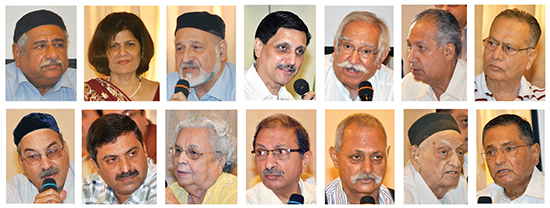
Clockwise from top left: Dinshaw Mehta, Arnavaz Mistry, Khojeste Mistree, Yazdi Desai, Dadi Mistry,
Tehmton Anklesaria, Russi Jeejeebhoy, Burjor Antia, Sorab Katpitia, Brig (retd) Jahangir Anklesaria,
Farrokh Rustomji, Mani Clubwala, Sam Chothia and Mancher Mubarakai
Property prerogatives
In a meeting with Dr Najma Heptulla, Union minister for minorities affairs, in Delhi in July 2014, among the subjects brought up for discussion by leading members of the Parsi community was protection of community land. "She said she will come back with guidelines” so that the Parsi community can enjoy immunity under laws similar to the Waqf Act applicable to Muslims, reported Dinshaw Mehta, Zoroastrian representative on the Maharashtra State Minorities Commission. "Few Parsis left in some areas claim the community property to be their father’s property,” said Mehta referring to complaints that Ervad Temton Karanjia was using his influence to allegedly transfer anjuman property in his personal name in Igatpuri. Jamsheed Kanga representing Satara cautioned that even protection under the Waqf Act cannot ensure that the land will be free from encumbrances in the face of pressure from unscrupulous politicians.
"We have circulated two documents prepared with great care,” reminded Rustomji. The custodianship agreement was sent to member anjumans in advance and the Guideline Note dealing with the properties of dwindling and defunct anjumans was distributed at the meeting. "Look at it and approve it in principle (within 30 days). You can sign at a later date when you feel the need.”
As per the custodianship agreement, "The Federation shall automatically become custodian of the assets of the said anjuman in the event of it coming to know or being informed…that the total number of members being Parsis/Iranis permanently residing and or having immovable properties in the territorial jurisdiction of the said anjuman have been reduced to 15 or less than 15… A resident member of the anjuman will be given first preference for the benefit of the properties and assets of the anjuman and also those members who were original residents and are presently owning properties within the territorial jurisdiction of the anjuman…provided they stay for at least two months in two years in the jurisdiction of the anjuman.”
The Guideline Note specified that an anjuman will be classified as dwindling if its resident individual members drop to 15, and as defunct if the count drops to less than 15 or where no members exist. The Note has recommended the inclusion of Rule 35A under which if a dwindling or defunct anjuman seeks Federation assistance "in protecting its immovable assets…and/or in managing its affairs and safeguarding its movable properties” the executive council shall appoint a "guardian anjuman” or "guardian committee” to act "in a fiduciary capacity as trustee(s) or custodians(s)…” Further Rule 35B states that if the assets of a defunct anjuman "are threatened with encroachment or alienation by unauthorized persons or one or more of the existing trustees or members of a defunct anjuman or any other Parsi Zoroastrian body or any other person(s) have a design to misappropriate the property and funds… the president and/or the secretary of the Federation shall be empowered to take such immediate action as may be necessary, including approaching the charity commissioner… or a competent court of law…with an application to approve a scheme whereby the Federation is granted authority to hold and administer the impugned property and funds of the defunct anjuman in trust for the benefit of the Parsi Zoroastrian community…”
Jahangir Anklesaria, president of the Ahmedabad Parsi Panchayat, recommended that we should "leave it to the members of the anjuman to decide whether they want to merge with the nearest anjuman or to seek Federation assistance” to look after their interests. He cited instances of the Abu Road anjuman which appeals to the Ahmedabad Panchayat when (it) needs assistance with priests or kathi and the Parsi Panchayat of Vadodara helping Godhra residents. "It is an honor that a smaller anjuman is banking on us,” he said. Baman Cama, president of the Vadodara Panchayat felt this decision should be left to the Federation and not the members of the dwindling anjuman. The Guideline Note has specified that "a dwindling anjuman may be given an option to amalgamate with a neighboring anjuman…”
"The nearest big anjuman should be taken into confidence,” suggested Mubarakai. As pointed out Tehmton Anklesaria, "Whilst the anjumans in Gujarat may be at a distance of two or five kilometres, in Rajasthan and Madhya Pradesh they are at a distance of 500 km… Neither the Federation nor the BPP wants your property,” he assured the smaller Gujarat anjumans who were wary of being swallowed up by the all-India body. Supplemented Xerxes Udhnawala of Thana, signing of the custodianship agreement "is not compulsory. It is optional.” Subsequently Pervez Bhesania detailed the Thana Anjuman experience where they were able to build flats for the community after "we won the legal case because of support from the Federation. The Federation has helped us in every direction.”
 Khergam representative Pervez Khergamwalla who was the most vociferous of the opponents to the custodianship agreement insisted he would maintain the agiary at Khergam himself. When Bhada asked, "Who will do so after you? Do you want to own it?” Khergamwalla was confident his son and cousin would manage.
Representatives from the smaller Gujarat anjumans like Mahuva and Mandvi-Mangrol demanded that the Federation should first clarify its stand on the Dharwar and Bhusaval properties. "What have you done with the income? Which anjuman have you helped so far?” Since some of the Gujarat anjumans have an inherent mistrust of Katpitia, Dinshaw Mehta suggested in the coming week they could approach former BPP trustee Burjor Antia whose legal guidance had helped draft the custodianship documents. Stated Antia, "I am a quick worker. If you have any suggestion or objection, come to me today afternoon or tomorrow morning.”
According to Desai, "The angst, anger from the anjumans is justified. The Federation has not been transparent… It is incumbent on the Federation to be above board, show integrity and have clear communication… Not behave in a cloak-and-dagger manner.” He felt any allegation of misappropriation "should be investigated and not swept under the carpet.” According to him, with regard to the Bhusaval sale, "If the local people had not intervened at the right time, we would not have got the best deal…Same was the case with Dharwar where property worth four crore rupees” was being negotiated for Rs 1.54 crores.
In connection with the Dharwar property, Mistree was concerned, "The information coming to the Federation representatives is not accurate… The local anjuman members need to be involved… People in the boardroom should know what are the (prevailing) prices and encumbrances… We need to work in a spirit of cooperation versus confrontation. The Federation needs to run in a democratic way… This is not a democracy but a mobocracy.”
Although Katpitia did not get a chance to clear the air on these issues, in his detailed report on the defunct anjuman properties under his purview he mentions in connection with Bhusaval, that Desai "tried to instigate Bhusaval Parsis… If at all he had to say something, he should have brought up the matter by convening a meeting in Bombay… If Desai finds that it is an illegal sale he has legal remedy to challenge and file a suit… He tries to defame FPZAI and create rumors.” On the subject of the Dharwar property Katpitia insisted that when local members were unsuccessful in getting a higher offer, "propaganda started.”
Realizing the split in the working of the BPP board, Rustomji recommended that all seven trustees should be on the Defunct Anjumans Subcommittee so that matters need not go back to the BPP board for approval. Further, since all the vice presidents are on this subcommittee, any anjuman with a problem can approach their respective zonal vice president.
Observed Bomi Heerjee, president of the Indore anjuman, "There seems to be a dichotomy in the working of the Federation and the BPP. The BPP is just a constituent of the Federation. Having regard to its exalted position it can be considered primus inter pares (a Latin phrase meaning first among equals)… There is a deficit of trust between the members and the Federation. If a better atmosphere can be created, many more results will be achieved.” He was also in favor of functioning "without imputing any motive so that everyone will be wiser and stronger.”
Supported Mehta, "Any number of individuals can point fingers… Has anybody got information (like Katpitia)? What about lands already lost? Information and records will be required otherwise the
In a meeting with Dr Najma Heptulla, Union minister for minorities affairs, in Delhi in July 2014, among the subjects brought up for discussion by leading members of the Parsi community was protection of community land. "She said she will come back with guidelines” so that the Parsi community can enjoy immunity under laws similar to the Waqf Act applicable to Muslims, reported Dinshaw Mehta, Zoroastrian representative on the Maharashtra State Minorities Commission. "Few Parsis left in some areas claim the community property to be their father’s property,” said Mehta referring to complaints that Ervad Temton Karanjia was using his influence to allegedly transfer anjuman property in his personal name in Igatpuri. Jamsheed Kanga representing Satara cautioned that even protection under the Waqf Act cannot ensure that the land will be free from encumbrances in the face of pressure from unscrupulous politicians.
"We have circulated two documents prepared with great care,” reminded Rustomji. The custodianship agreement was sent to member anjumans in advance and the Guideline Note dealing with the properties of dwindling and defunct anjumans was distributed at the meeting. "Look at it and approve it in principle (within 30 days). You can sign at a later date when you feel the need.”
As per the custodianship agreement, "The Federation shall automatically become custodian of the assets of the said anjuman in the event of it coming to know or being informed…that the total number of members being Parsis/Iranis permanently residing and or having immovable properties in the territorial jurisdiction of the said anjuman have been reduced to 15 or less than 15… A resident member of the anjuman will be given first preference for the benefit of the properties and assets of the anjuman and also those members who were original residents and are presently owning properties within the territorial jurisdiction of the anjuman…provided they stay for at least two months in two years in the jurisdiction of the anjuman.”
The Guideline Note specified that an anjuman will be classified as dwindling if its resident individual members drop to 15, and as defunct if the count drops to less than 15 or where no members exist. The Note has recommended the inclusion of Rule 35A under which if a dwindling or defunct anjuman seeks Federation assistance "in protecting its immovable assets…and/or in managing its affairs and safeguarding its movable properties” the executive council shall appoint a "guardian anjuman” or "guardian committee” to act "in a fiduciary capacity as trustee(s) or custodians(s)…” Further Rule 35B states that if the assets of a defunct anjuman "are threatened with encroachment or alienation by unauthorized persons or one or more of the existing trustees or members of a defunct anjuman or any other Parsi Zoroastrian body or any other person(s) have a design to misappropriate the property and funds… the president and/or the secretary of the Federation shall be empowered to take such immediate action as may be necessary, including approaching the charity commissioner… or a competent court of law…with an application to approve a scheme whereby the Federation is granted authority to hold and administer the impugned property and funds of the defunct anjuman in trust for the benefit of the Parsi Zoroastrian community…”
Jahangir Anklesaria, president of the Ahmedabad Parsi Panchayat, recommended that we should "leave it to the members of the anjuman to decide whether they want to merge with the nearest anjuman or to seek Federation assistance” to look after their interests. He cited instances of the Abu Road anjuman which appeals to the Ahmedabad Panchayat when (it) needs assistance with priests or kathi and the Parsi Panchayat of Vadodara helping Godhra residents. "It is an honor that a smaller anjuman is banking on us,” he said. Baman Cama, president of the Vadodara Panchayat felt this decision should be left to the Federation and not the members of the dwindling anjuman. The Guideline Note has specified that "a dwindling anjuman may be given an option to amalgamate with a neighboring anjuman…”
"The nearest big anjuman should be taken into confidence,” suggested Mubarakai. As pointed out Tehmton Anklesaria, "Whilst the anjumans in Gujarat may be at a distance of two or five kilometres, in Rajasthan and Madhya Pradesh they are at a distance of 500 km… Neither the Federation nor the BPP wants your property,” he assured the smaller Gujarat anjumans who were wary of being swallowed up by the all-India body. Supplemented Xerxes Udhnawala of Thana, signing of the custodianship agreement "is not compulsory. It is optional.” Subsequently Pervez Bhesania detailed the Thana Anjuman experience where they were able to build flats for the community after "we won the legal case because of support from the Federation. The Federation has helped us in every direction.”
Khergam representative Pervez Khergamwalla who was the most vociferous of the opponents to the custodianship agreement insisted he would maintain the agiary at Khergam himself. When Bhada asked, "Who will do so after you? Do you want to own it?” Khergamwalla was confident his son and cousin would manage.Representatives from the smaller Gujarat anjumans like Mahuva and Mandvi-Mangrol demanded that the Federation should first clarify its stand on the Dharwar and Bhusaval properties. "What have you done with the income? Which anjuman have you helped so far?” Since some of the Gujarat anjumans have an inherent mistrust of Katpitia, Dinshaw Mehta suggested in the coming week they could approach former BPP trustee Burjor Antia whose legal guidance had helped draft the custodianship documents. Stated Antia, "I am a quick worker. If you have any suggestion or objection, come to me today afternoon or tomorrow morning.”
According to Desai, "The angst, anger from the anjumans is justified. The Federation has not been transparent… It is incumbent on the Federation to be above board, show integrity and have clear communication… Not behave in a cloak-and-dagger manner.” He felt any allegation of misappropriation "should be investigated and not swept under the carpet.” According to him, with regard to the Bhusaval sale, "If the local people had not intervened at the right time, we would not have got the best deal…Same was the case with Dharwar where property worth four crore rupees” was being negotiated for Rs 1.54 crores.
In connection with the Dharwar property, Mistree was concerned, "The information coming to the Federation representatives is not accurate… The local anjuman members need to be involved… People in the boardroom should know what are the (prevailing) prices and encumbrances… We need to work in a spirit of cooperation versus confrontation. The Federation needs to run in a democratic way… This is not a democracy but a mobocracy.”
Although Katpitia did not get a chance to clear the air on these issues, in his detailed report on the defunct anjuman properties under his purview he mentions in connection with Bhusaval, that Desai "tried to instigate Bhusaval Parsis… If at all he had to say something, he should have brought up the matter by convening a meeting in Bombay… If Desai finds that it is an illegal sale he has legal remedy to challenge and file a suit… He tries to defame FPZAI and create rumors.” On the subject of the Dharwar property Katpitia insisted that when local members were unsuccessful in getting a higher offer, "propaganda started.”
Realizing the split in the working of the BPP board, Rustomji recommended that all seven trustees should be on the Defunct Anjumans Subcommittee so that matters need not go back to the BPP board for approval. Further, since all the vice presidents are on this subcommittee, any anjuman with a problem can approach their respective zonal vice president.
Observed Bomi Heerjee, president of the Indore anjuman, "There seems to be a dichotomy in the working of the Federation and the BPP. The BPP is just a constituent of the Federation. Having regard to its exalted position it can be considered primus inter pares (a Latin phrase meaning first among equals)… There is a deficit of trust between the members and the Federation. If a better atmosphere can be created, many more results will be achieved.” He was also in favor of functioning "without imputing any motive so that everyone will be wiser and stronger.”
Supported Mehta, "Any number of individuals can point fingers… Has anybody got information (like Katpitia)? What about lands already lost? Information and records will be required otherwise the
next generation will have much difficulty in protecting land for the community.”
The final instalment will appear in the November 21 issue of Parsiana.
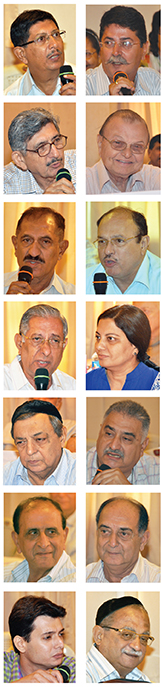
Clockwise from top left: Pervez Mehta, Pervez Irani, Yazdi Karanjia, Xerxes Udhnawala,
Anahita Desai, Shiraz Doongaji, Cdre (retd) Medioma Bhada, Persi Buhariwalla, Khushman Tamboli,
Minoo Khan, Hoshang Wania, Pervez Khergamwalla, Pervez Bhesania and Baman Cama
◆ ◆ ◆
From the archive