
Line of control
here is a move to revise the misused rules that govern the working of the Federation of the Parsi Zoroastrian Anjumans of India
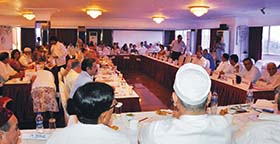 The day earlier too when the executive council meeting was confirming minutes of the previous meeting, Mehta had stopped her from speaking on the grounds that Khergam, not being a member of the executive council, could only attend as a silent observer. On that day, whilst Parakh sat amidst the anjuman representatives assigned seats in the concentric rectangular arrangement, Khergamwalla sat with the observers until Mehta reminded him, "You cannot sit in the background. As far as the Federation is concerned, you are the main person from Khergam.”
 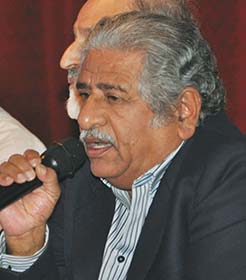 At the commencement of the rumpus on the second day, Khergamwalla, in support of Parakh, stated that he would not be able to stay back for the meeting as he had some matters to attend to. Shortly thereafter he left the premises expecting that Parakh as the sole Khergam representative would be permitted to speak. Once the trustee had left, Parakh challenged Mehta: "Under what rule” would he debar her from speaking? Even more peeved that a sitting trustee "was hounded out… Bichaaro chaali gayo (the poor man left),” Mehta promptly shot back, "Under Rule 10 that authorizes the president to conduct the meeting.”
 Do the Federation regulations need to be reviewed so that the proxy system is not exploited? Referring to this item on the agenda, Mehta commented, "Proxies are not conducive to the Federation… (They) cause the biggest problem as we have seen... Leads to more acrimony.” Should proxies be restricted to one-time members of the anjuman they represent? he wondered. With the opening of the Pandora’s box, some apprehensions were expressed regarding how a ‘member’ is to be defined when many anjumans don’t have any system of paying fees. What happens when elderly trustees are not able to commute long distances or not able to afford the travel costs. Can the current rules be changed arbitrarily? Is proxy becoming an issue because of the prevailing dictatorship? Should they be given voting rights?
Considering that the last time the bylaws were amended was in 1987 Mhow anjuman president Cyrus Muncherji suggested that a subcommittee be formed to go through the rules to make the "Federation more work oriented. There is lack of direction and clarity in the rules.” Since a similar exercise had been initiated years ago with inputs from stalwarts like Bomi Heerjee, president of the Indore anjuman, and Farrokh Rustomji, former secretary of the Delhi Parsi Anjuman (DPA) it was agreed that the new subcommittee, to be chaired by Heerjee, would besides Rustomji include Brig Jehangir Anklesaria, president of the Ahmedabad Parsi Panchayat (APP), Farokh Irani, president of the Poona Parsee Panchayat and Khurshed Pastakia of the Borivli and Suburban Zoroastrian Association. When it was suggested that there be representation from Bombay too, Mehta declared, "BPP today is a house divided… with vested interests.”
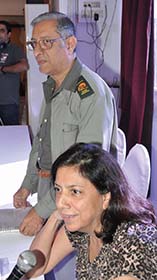 To ensure that there is no unauthorized alienation of Parsi owned property as feared in the case of "hundreds of crores of rupees at stake” with 85 acres of land in Panchgani held by the S. M. Batha School and Trust as revealed by Federation joint honorary secretary Khojeste Mistree or encroachment on defunct Parsi properties, a subcommittee has been constituted to draft a document along the lines of the Waqf Act that safeguards Muslim property. Although the Parsi laws have hitherto been based on Hindu laws, as pointed out West Zone A president and Surat Parsi Punchayet president Darayas Master, the Federation wanted to attempt to push such a legislation through Parliament with necessary help from the Minorities Commission, former DPA president Dadi Mistry and external affairs minister Salman Khurshid. "Unless we have protection under the central law, properties will not be safeguarded,” stressed Rustomji who was given the mandate to convene the subcommittee in Bombay. Nominated with him on the subcommittee are Heerjee, Sorab Katpitia who currently handles the defunct anjumans portfolio for the Federation, Mistry, Pervez Mehta, Federation joint honorary secretary, all vice presidents and Burjor Antia, partner of Mulla and Mulla for legal guidance.
 On the recommendation of North Zone vice president Tehmton Anklesaria and Mancher Mubarakai, vice president of West Zone A, it was decided to convene a quarterly meeting of the vice presidents in Bombay. "Without the BPP (Bombay Parsi Punchayet) we cannot do much. We need your legal support, wisdom, guidance,” reiterated Anklesaria. With the Parsi Zoroastrian Anjuman of Secunderabad and Hyderabad opting out of the Federation, their member Kerfegar Antia who was elected South Zone vice president vacated the post. Thus the South Zone anjumans as also the East Zone anjumans (where too the vice president’s post remains vacant) were invited to send in fresh nominations.
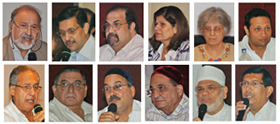
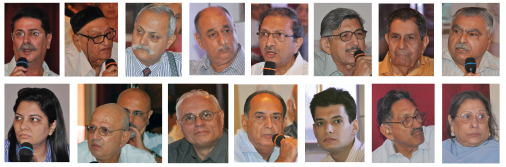
At this meeting a special welcome was accorded to Ahmedabad as the "prodigal son” had returned to the Federation fold. For years Ahmedabad had opted to remain out of the Federation to protest against the continuation of former APP president Areez Khambatta as vice president of the Federation. The soft drinks tycoon being rude and abusive to the new board of APP trustees, they refused to nominate Khambatta who then came in as representative of the Vyara-Songadh Parsi Jarthosti Anjuman.
Mehta also informed that the Udvada Sodfalia Behdin Anjuman had sent in its resignation and will be replaced by the Udvada Samast Anjuman and the Udvada Athornan Anjuman. For the second time in the FPZAI history, a high priest, Dastur Khurshed Dastoor of Udvada attended as a delegate. (In December 1986 Dastur Meherji Meherjirana represented the Navsari Samast Anjuman.) Seated alongside the other delegates initially, on the suggestion of Irani who observed that "you cannot be amongst equals,” Dastoor was requested to join the Federation office bearers and BPP trustees on the main table.
Reporting on the contentious property adjoining the Iranshah in Udvada, Dastoor mentioned that as per the settlement, Nucleus Developers would gift 20 acres nearest to the Iranshah to the Udvada anjuman. A further 10 acres would be used only for their director’s bungalow and the rest of the 168-acre property would be utilized to build farm houses on half-acre plots. Reiterating that there will be no development within one kilometer of the Iranshah, Dastoor described the proposal as "a good offer,” adding, "It would have been difficult to fight without the help of the BPP and the Federation.” He gave credit to Dinshaw Mehta, their lawyer in Ahmedabad Rustom Marshal, promoter of Aava mineral water Behram Mehta, and Jehangir Mistry of Mulla and Mulla.
A concerted effort will be made under Tehmton Anklesaria and Jehangir Anklesaria, with the assistance of BPP trustee and Federation joint honorary treasurer Yazdi Desai and Cdre Medioma Bhada representing Belgaum to induce dwindling and near defunct anjumans to sign a custodianship agreement with the Federation under which the Federation would take charge of an anjuman property after the demise of the last Parsi in that area. A letter will originally go from the Federation president and the follow-up thereafter will be done by this team. Reminded Tehmton Anklesaria, "The letter should be in meethee jabaan (sweetly worded) otherwise they will think that lootwaa aayaach (have come to usurp property).”
Neemuch Parsi Anjuman president-treasurer Noshir Jal and his wife Niloufer voiced their protest against the alleged misinformation circulated by Katpitia in connection with Neemuch anjuman property supposedly disposed of by them. Annoyed that their reputation had been besmirched by Katpitia issuing misleading advertisements in the local press, they unequivocally announced that they regretted their earlier decision to sign the custodianship agreement with the Federation. Whilst Tehmton Anklesaria apologized for the misunderstanding, Dinshaw Mehta invited them to the BPP office on January 29, to sort out the matter and insisted that their not sending the promised documents last year had resulted in this cross-communication. (Parsiana too was implicated since it had carried Katpitia’s statements made at the last Federation meeting.)
The Iranian Zoroastrian Anjuman’s (IZA) decision to sell off 963 acres of its agricultural land in Palghar was brought to the notice of the community with distribution of correspondence on this subject. IZA Pervez Irani informed the house that sale of grass from this land yields an annual income of Rs 25 lakhs that is used for the community. Having already lost 400 acres to the government earlier and surrendered 500 acres to the Bhoodan movement, once they got feelers that the government proposed to acquire the remaining IZA land for its Oil and Natural Gas Commission project, on the advice of Justice (Retd) Sam Variava the trustees unanimously decided in favor of a proposal to sell off the property for Rs 723 crores to Viva Builders and planned to use the annual income of Rs 56 crores for community purposes. This move had reportedly been approved by their general body. With the alleged "U-turn” by the IZA president and Federation joint honorary treasurer Mehrwan Irani who feared that "paisa bhi jasé and jagaa bhi jasé (the money and the land will be lost)” and insisted that "anjuman nu naam aur nishan hovu joiyé (the anjuman’s name should be retained)” he recommended that IZA accept the offer to use 300 acres for Rs 36 crore (negotiable) to build the proposed Tata University where eight percent seats would be reserved as management quota. From the balance property, 465 acres could be rented to Tatas (for future use by IZA), 100 acres could be sold to Viva Builders and 100 acres used by young Zarathushti enterprises. Co-trustee Khodadad Irani referred to the practical difficulties of saving their land from encroachment. Hoping that a legal dispute does not stall matters, Dinshaw Mehta finally announced that as per its practice, the Federation would not interfere in the internal workings of an anjuman.
The representation made by Dr Shernaz Cama, founder of Parzor, and Keki Daruwalla, Zoroastrian representative on the Minorities Commission has resulted in the Planning Commission committing a grant up to Rs 10 crores for the "regeneration of the diminishing minority community,” announced Rustomji. Since this grant is to be used primarily to increase the community numbers and improve the health and development of the girl child, for the present they plan to use the funds for the BPP’s infertility project. Since all anjumans are included in this program, those who have queries could write to shernazcama@hotmail.com
Beginning March 21, 2013 the BPP will implement its new mobed scheme under which full-time practising priests in mofussil anjumans and Bombay will be assured a minimum monthly income of Rs 25,000, announced Mehta. This scheme was originally conceived by Dastur (Dr) Firoze Kotwal and industrialist Nusli Wadia, and with the support of Mistree, and the guidance of the Council of Priests, they hope to progress on this matter.
The next executive council meeting of the Federation, to be hosted by the APP, will be held on September 8, 2013.
President’s ruling
When the minutes of the last meeting had to be passed, the trio from the executive council who expressed their dissent were Mistree, Anahita and Yazdi Desai. Apparently the two honorary secretaries, Mistree and Pervez Mehta, had different versions of the minutes, especially on the issue of accepting membership of six Gujarat anjumans. Having "suffered 16 hours of listening to the tapes,” Mistree insisted "things have to be reported accurately…History cannot be fudged…We are here today, gone tomorrow… We cannot run this organization on the whims and fancies of an individual.” BPP trustee Muncherji Cama who was set the task of being a referee by Mehta admitted that he "flatly refused” to listen to the recorded minutes and preferred to rely on "my best recollection.” Cama recommended that minutes "should only record decisions” instead of being excessively narrative. Only on monumental issues "should the rationale behind be included otherwise we are only wasting time and not doing anything constructive.”
On the subject of matters arising from the minutes, Yazdi Desai reminded the council that as per the compromise arrived at last February for the seat of vice president West Zone B, Master was to assume office for the first year and WAPIZ chairman Areez Khambatta for the second year. With the meeting this year held in January instead of February, Khambatta has been "denied the opportunity to act and fill up that responsibility. Any position has a physical manifestation. He will never be able to physically manifest the position. When we make a compromise and commitment, it must be followed otherwise we are sending a wrong signal to the community.”
Defending his stand Mehta alluded to the letter circulated by Khambatta wherein he referred to Mehta "in the vilest language…I refused to sit with him on the same dais.” Persisted Yazdi Desai, "You shouldn’t vilify a person in his absence. If there is anything personal, you should not use the office of president to get back at him.”
Parakh too had sought to express her dissent with the minutes but was silenced by Mehta on the first day as also the second even after Khergamwalla had made his exit. "He wasn’t sent out. He voluntarily went out. He made me the spokesperson. He thinks I would be more beneficial,” maintained Parakh. "You are muzzling me from speaking… Is the house going to allow that?” Speaking up in her defence was Mistree who argued that there is nothing in the Federation rules that states only a trustee can speak… It is very important to maintain a decorum of free speech…in a spirit of democracy… The chairman arbitrarily decides who should and who shouldn’t speak… Today one person has been silenced. Tomorrow it may be me.” WAPIZ CEO Anahita Desai who was representing Jabalpur at this meet and Badnera-Amravati at the last meet read out Rule 6 of the constitution and demanded, "Where is the word ‘proxy?’ Where is anything? Why are you changing rules?” Mubarakai concurred that Parakh should be permitted to speak. "Why are you scared?” he asked Mehta.
"Maintain the decorum of the meeting,” opined Tehmton Anklesaria. "There should be no abuse of each other. When the lady is talking, let her speak… against the Federation or against us.” He was supported by Baman Cama of Vadodara who pointed out, "If she speaks against, what is going to happen? Nothing will go wrong.”
"The Federation forefathers, in their wisdom,” allowed for proxies to represent anjuman members who could not be present due to physical or financial reasons. "This does not mean that the whole system should be used in a manipulative way,” stated Muncherji Cama. Having followed Federation reports in the Press he had noticed that there are some members who "now and again represent different anjumans. They are here for purposes other than the anjuman (they represent).” The morning babel convinced him "This is manipulation at its worst. It is not Zarthostipanu. Let us get on with work as our forefathers wanted; to work as a united whole and forget all this nonsense.”
According to Dastoor , Khergamwalla’s functioning indicated "dereliction of duty by a trustee.” Commenting on the collusion between Khergamwalla and Parakh, he questioned, "You mean to say he came at 10 (for the meeting) to say ‘ta-ta, bye-bye, I am going?’” On the preceding day the High Priest commented, "I am shocked… Are we going to do work for the anjumans or just go on with who is right and who is wrong? Let us use the experience…for the future of the community.”
Reminded Rustomji, "Anyone who wants to speak can only do so with the permission of the chair. You (the chair) have a right to say who can and who can’t. Everyone is talking without addressing the chair.” If a representative is not permitted to speak, "let the president of the anjuman write to the Federation.”
The next report on the Federation meeting will appear in the next issue of Parsiana.