
10WZC
Religion by rote and rituals
Well devised educational programs are required to instil true Zoroastrian values
During a recently televised public forum in Bombay a Parsi lady panellist called out: "We don’t need priests!” She was rightly giving voice to what many had retained in silent agreement. The reason was not far to seek — in the audience was a smug, self-perceived Jarthosti priest who responded with patent untruths masquerading as tenets of the Parsi community.
Nobody with even passable religious knowledge would subscribe to such noxious views as those pitched by that brazen cleric. They were as embarrassing as they were unZoroastrian.
Consider, therefore, today’s Parsi priest. What is he, other than the son of his father? From a precocious age the tyke is rote-educated in set prayers to accompany ritual gestures: he understands neither. He learns the mixed art of the nirang-i kushti bastan; later he will graduate to the mysteries of the Parsi nirang, and simultaneously learn to dissimulate. It is his all-white uniform that holds the attention; not its wearer. So much for asha (righteousness), ashavan (the righteous ones), and anticipated ashodad (gratuity)!
Nobody with even passable religious knowledge would subscribe to such noxious views as those pitched by that brazen cleric. They were as embarrassing as they were unZoroastrian.
Consider, therefore, today’s Parsi priest. What is he, other than the son of his father? From a precocious age the tyke is rote-educated in set prayers to accompany ritual gestures: he understands neither. He learns the mixed art of the nirang-i kushti bastan; later he will graduate to the mysteries of the Parsi nirang, and simultaneously learn to dissimulate. It is his all-white uniform that holds the attention; not its wearer. So much for asha (righteousness), ashavan (the righteous ones), and anticipated ashodad (gratuity)!
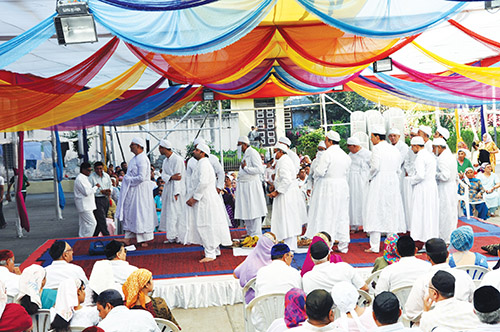
Reformation of the priesthood is required
For the initiated, the religion rests upon the conflict of truth versus the lie, of good against evil. Its theology is succinct: victory is assured to the good, but only with the participation of an enlightened, wholly committed mankind. Our neophyte prays the essential nirangs — wrapping them up in tavids (talismans) or protective mantras (chants). No longer purposeful utterances but emptily repeated spells, the infant (adolescents are disqualified for reasons of puberty onset!) babbles his way through thickets of verbiage, fumbles and stumbles with mispronounced, non-existent words.
If that’s too strong for the reader indoctrinated in "vibration theology” where tremors take priority and comprehension matters not a jot, try our Yatha Ahu Vairyo formula as registered by this horrified objector: "Yataa ow veryo, ataa aratus: ashaa tachit ashaa (instead of ashat chit hacha)...”
What followed was almost scandalous: "vangeyoosh dasdaa manangho, shotteynanaam vangeyoosh mazdai, satremchai owrai ayem dareygobyo dadad vastaarem.” When correctly pronounced it is vanhaush "good;” the other vanhaush is wrongly repeated instead of anhaush which means "life” – not that it makes sense to the reciter!
This mutilation inflicted on our most elemental prayer by an officiating priest is not an isolated instance: it frequently issues from priestly and lay lips. Is such on-going farce relevant to the 21st century? Could one reason with the high priests to repair this wantonly derailed marvel that is true Zoroastrianism?
There now are well devised education programs in the diaspora lands. They range from high grade university courses covering the spectrum from linguistics and ritual to enthusiasts expounding their individual takes on what is a very disciplined, coherent system of ethical and moral guidance. Lacking are credible explanations of what Zoroastrianism is; fresh text editions may help produce some — hopefully!
Repeatedly stressed in Parsiana’s cultural columns is that Zoroastrianism is a belief system underpinned by choice and free will. Its timeless Gathic signposts present Zarathushtra’s humanitarian motives for his profoundly healing social conscience — for all mankind, for all time: His frashokarati or "revitalization” program aimed at the elimination of evil, in whatever form and wherever found.
The first truly Zarathushtrian priests were the Sage’s contemporaries who had imbibed and transmitted the unifying essentials of his intensely practical doctrines. They were the paoiryo.tkaeshas or adherents of the primal teachings. Our spiritual guide did not utilize the Old Indic forms for "priest;” he regarded them as karpans, "charlatans.” Instead he presented his bold thesis that all men and women who right-mindedly guided seekers along the path of truth leading to Ahura Mazda were saviors. That transparent truth ensured the union of physical and mental — of body and mind — for an intellectual evolution paced alongside an individual’s developing spirituality. Certainly, that could not engage karpanic "priests.”
The problems remain of uncultured, uneducated, and irresponsibly inept Parsi priesthood, where solutions are better reached through patient guidance, not financial cajolings. Will they, with their unfounded hereditary pride and smug complacency, hearken to Zarathushtra’s timeless, universalist message or fall back on worthless claptrap? On current showing, the latter holds greater appeal for those willing to succumb to the tinsel allure of low grade productions put out by ill-conditioned persons of dubious religious allegiance.
The danger is real, and it is alarming inasmuch as no cognizance is made of it. As the French poet Charles Baudelaire wrote: "The devil’s greatest trick is to have it believed that he does not exist!” Will priests respond to their mentors who exalt Ahriman as more powerful than Mazda? Or will they dodge and duck behind irreligious socio-political issues?
Just about everybody has heard of the Bahman Yasht and, as is fashionable these days, claim on slight evidence to know everything of its contents. Let today’s priests take note of this: "Those who would be priests and disciples (herbadhan and hawishtand) will wish evil upon each other and utter falsehoods with (their) impure acts... Three out of five sins will be committed by priests and their disciples who will display enmity against good folk (wehan).” (Zand-i Wahman Yasn, IV39-40)
For this writer, following as best he can in Zarathushtra’s humanist footsteps, the way to furthering his Mazdaic teachings is along the trail the sage himself had blazed with his insightful declaration that the path to salvation lay alongside verdant fields of intellectually wrought endeavors for mankind’s emancipation from fear and ignorance.
One notes with growing distress that universalist Zoroastrianism has been confounded with racialist Parsiism.
This parlous situation can and should be remedied: learned, practising young priests being the anticipated real saviors of Zoroastrianism in the diaspora lands. Will they rise to the challenge? Cautiously optimistic is this writer that the first flush of realization has to be tempered by actualities alongside spiritual growth. Will the new guides be equipped for this momentous task? "Yes!” if they cast aside prejudices against learning, and embark upon a freshly mapped course for the betterment of Zoroastrian communities everywhere. "No!” if as pretenders and false priests (karpans) they reject the Sage’s precepts and instead take to self-interest, self-regard, and ultimate self-glorification.
The Bombay Parsi Punchayet (BPP) board’s intellect is applied solely to dividing communities everywhere, frivolous litigation, destabilizing ancient institutions, and carving out pathetic little empires. They have fouled the selection of panellists for the 10th World Zoroastrian Congress (10WZC). With rancorous and recriminatory infighting the BPP trustees have imperilled the entire concept of the quadrennial conference.
It comes as vast relief to Indian and overseas delegates that the 10WZC was placed in the remedial hands of high-minded and nobly principled patrons and activists. Number jugglers may well try to balance the cost of moribund Parsi religiosity with vivifying Zoroastrian values. The absence of the latter calls to mind the scary warning: "If you think education is expensive, try ignorance!”
This is where cliché riddled backslidings, protests and hand wringing come into their own: "washing dirty linen in public,” "divine plan,” "age-old customs and traditions,” "sugar in the milk,” and others of that ilk. For the first the answer is direct: "Well then, don’t get your linen dirty!” Next, why was the "divine plan” divulged only to those incapable of comprehending and implementing it? As for "age-old” everything, how old is "age-old?” Who generated its customs? What and whose traditions should one follow, and above all, why? The sugared milk canard has long been soured by an insidious Parsi apartheid through exclusivist pretensions.
It long became axiomatic from Gathic teachings that all societies and nationalities world-wide can only progress towards their uplift and betterment through the Spanta Principle – the very beacon of hope, action and life’s successes. The expression refers to progress and increase.
One prays that the 10WZC and others to come will not wallow in nostalgia and dwell on re-creations of obscure, faded pasts, for the future lies ahead; not in those pasts. If such Congresses are not to be mere "talking-shops,” then their organizers must surely proceed with real life, sometimes problematic, divisive issues to be brought to the fore – for discussion, effective resolution, and proactively set for implementation.
Future generations of practising Zoroastrians will not look back approvingly at the cultural flab, nor at wasteful litigations indulged by current generations, but at the moral fiber of our modern well informed youth equipped with "legal, decent, honest” attitudes and activities for well being and prosperity for evermore.
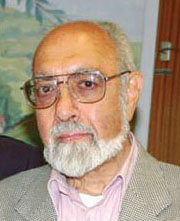
Born in Bombay into a Navsari high-priest clan, Farrokh Vajifdar enjoyed his primary and secondary education there and acquired his tertiary nurture in London, where he remained to settle, out-marry and procreate. He developed a deep and abiding interest in Indo-Iranian civilizations, with strong bias towards Zoroastrianism, its languages, literature, history and philosophy, and is a fellow of the Royal Asiatic Society. Occasional radio and TV broadcaster, lecturer, and midwife to aspiring and published authors, he, as independent researcher, continues as full-time writer and, as international consultant, has translated books and articles from French, German and Italian. He taught physical sciences at the National Association for Gifted Children.
◆ ◆ ◆
From the archive