
10WZC
“Fulfill our roles”
A stress on moral values underlines Nadir Godrej’s outlook on business and community issues
Having attended the Sixth World Zoroastrian Congress (WZC) in Houston, and having spoken at the Ninth WZC in Dubai, with his company being one of the sponsors, it was expected that the House of Godrej would participate at the 10th WZC to be held in Bombay this December end. What Nadir Godrej had not anticipated is that in addition he would have to play the role of a co-mediator to ensure the global meet was held. He and Dr Cyrus Poonawalla, the 10WZC’s sponsor, are arbitrating in the dispute between the seven warring trustees of the beleaguered Bombay Parsi Punchayet (BPP) who are hosting the once-in-four-year event. Godrej are the events sponsor. In case of any irreconcilable differences, the duo’s word is binding
"I was absolutely stunned,” confessed Godrej when he heard the Congress had been cancelled by four trustees of the BPP. "Cyrus (Poonawalla) called a meeting of both sides. I fully supported him. I don’t want to play a major role. We want to see the Congress goes on. Cyrus is committed” to the cause.
Godrej remarks that he has "always been interested in Zoroastrianism.” As a child his parents did not take him to the fire temple often but they "stressed on Zoroastrian values. (The religion) has a very high moral code which impressed me a lot. There is a special emphasis on truth.”
"I was absolutely stunned,” confessed Godrej when he heard the Congress had been cancelled by four trustees of the BPP. "Cyrus (Poonawalla) called a meeting of both sides. I fully supported him. I don’t want to play a major role. We want to see the Congress goes on. Cyrus is committed” to the cause.
Godrej remarks that he has "always been interested in Zoroastrianism.” As a child his parents did not take him to the fire temple often but they "stressed on Zoroastrian values. (The religion) has a very high moral code which impressed me a lot. There is a special emphasis on truth.”
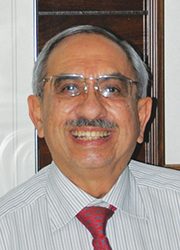
Nadir Godrej: "potential to grow"
Even though the community numbers "will go down, (Zoroastrianism’s) influence on the rest of the world and contribution to other religions will live on,” the 62-year-old believes. He terms himself a humanist, a movement he describes as "putting human beings at the center of one’s philosophy…as Zoroaster enjoined us to do. (We) should put all beliefs to an intellectual test.”
He cites the example of the Achemenian monarch Cyrus the Great, "the first person to embrace multi-culturalism…he was happy to accept the local religions” of the countries he conquered. "He was open to their ideas. Would fundamentalist Zoroastrians do that?... I do have some sympathy for fundamentalists (but) I hope all Zoroastrians take a humanistic approach, extend tolerance to different faiths.”
Godrej believes that in the 19th century there was a "Protestantization of Zoroastrianism.” Two Parsi youth had been converted to Christianity by the Rev John Wilson and in the backlash that followed efforts were made for systematic, critical and academic study of Zoroastrianism, and to disseminate this information and learning to the community. Godrej believes the scholars borrowed from non-conformist Protestant elements that were originally "very much part of Zoroastrianism.”
As he travels often, Parsiana queried if he found differences in the global community. "You get all sorts all over the world,” he said. But overseas Parsis on the whole appeared "more open to ideas.”
The humanistic approach is characterized in the company’s business philosophy. One of the reasons that prompted his grandfather Pirojsha Godrej to expand their manufacturing to Vikhroli was to provide suitable housing for the company’s workers. They were dismayed by the abysmal accommodation many of the factory employees had around the Lalbaug plant, notes Godrej.
That same philosophy of benevolence and philanthropy underlines the company’s business approach. The Godrej group is conscious of the environment and by 2020 intends to be "carbon neutral.” They would derive their energy from green, sustainable sources. By manufacturing chemicals from vegetable oils the dangers inherent in the industry are avoided. Even pesticides are being manufactured from natural ingredients. According to the Godrej Industries (GI) website, the company, a US $1.875 billion conglomerate, is the country’s leading manufacturer of oleochemicals and "makes more than a 100 chemicals for use in over two dozen industries” and exports its products to over 40 countries all over the world. The firm founded in 1897 as Godrej Soaps, changed nomenclature to GI in 2001. Godrej is managing director of GI and chairman of Godrej Agrovet (GA) that is India’s largest animal feed company. GA produces "one million tons annually of high quality feed and cutting edge nutrition products for dairy, cattle, poultry and aquaculture” with 46 manufacturing facilities across India and 2,250 employees, their website notes. The Godrej Group employs 20,000 employees, the site notes.

Nadir and Rati with sons (from left) Sohrab, Hormazd and Burjis
The Godrej companies follow "a shared values program…. One of the goals is to offer short, vocational courses to a million people over 10 years.” The training is in "subject matters related to our businesses.” Godrej partners with nongovernmental organizations (NGOs) to implement the program. The emphasis is on training appliance mechanics, beauty and hairdressing technicians, poultry farmers, and so on. These trainees could then work in establishments, maybe even became entrepreneurs and hopefully use Godrej products. "Good social policy is good business,” believes Godrej who sees a "growing business in rural India.”
He envisions Godrej’s agro and consumer products market growing at 25 percent a year. The property development business is cyclical however, and "when there is a slowdown, the property market goes down. But the potential to grow is tremendous.”
An academician at heart with a bachelor’s degree in chemical engineering from the Massachusetts Institute of Technology (MIT), a master’s degree in the same discipline from Stanford University and a master’s in Business Administration (MBA) from Harvard Business School, Godrej is most animated when talking about the developing technologies that makes him hopeful the world "will never run out of food.” He had studied bio technology at MIT and in 1973 a professor suggested he research a paper on the effects of carbon dioxide on the environment. At that time hardly anyone spoke about global warming.
High yielding hybrid seeds are being developed as also seeds with special composition like maize with high oil content, says the engineer. The advent of tall photobioreactors that effectively use sunlight to grow micro algae could result in producing much more per unit area than any field crop. Micro algae can be a substitute for oil seeds or fish and the yields can be 50 times higher than field crops, explains Godrej who was the former president of Oil Technologists’ Association of India, Indo-French Technical Association and the Compound Livestock Feed Manufacturers’ Association of India.
He feels in India the government and other bodies are "too critical of genetically modified (GM) seeds.” There may be dangers but whatever regulations are required "should be put in place fast. In Europe it takes five years” for a decision to be taken. The GM seeds would be "good if they are non-dangerous.”
Godrej is also examining promoting green energy as a business. They would act as facilitators rather than manufacturers of solar panels, wind turbines, etc. Biomass is being used to generate energy for their factories. Being an agricultural byproduct, efforts are underway to create biomass itself so it can be used as fuel. "There’s a lot of future in biomass,” opines Godrej.
For India to develop its economic potential, "all sectors must grow together,” comments Godrej. He believes manufacturing has been "neglected in the country. The gross domestic product percentage of manufacturing in India is less than any other Asian country.” One reason is lack of sufficient infrastructure — ports, airports, etc. The holdup is also due to environmental concerns "for very, very good reasons.” The Supreme Court has intervened on account of government’s laxity in framing and implementing environment guidelines. The legislation pertaining to the acquiring/purchasing of land has also become more stringent. The power situation, however has improved. "High end manufacturing is doing well,” he believes and adds "other sectors are also improving.”
Archaic labor laws can also be a hindrance to growth. While higher wages mean higher costs, Godrej recalls the visionary Henry Ford commenting that if he did not pay his workers well how could they buy his cars? He notes that Tatas and Godrej implemented labor reforms much before they were legislated by government.
Godrej’s eldest son, Burjis is a senior at Stanford University in California, majoring in earth systems. The middle son, Sohrab is a junior at Stanford , interested in green energy and engineering. The youngest, Hormazd, who is in the 12th standard at Cathedral School in Bombay is interested in bio and neuro sciences and history. He is "very spiritually” inclined and "feels very comfortable going to the fire temple. At the same time he is an extremely rational person, highly intellectual,” says the father. All three sons have had their navar and martab ceremonies performed. "My wife (Rati) encouraged them.” She comes from a more orthodox background and was born in Africa near Lake Victoria. The Godrejs went to Nairobi for their honeymoon. Her family moved to the US when she was nine or 10 years old. Originally from Navsari, her maternal and paternal family homes are situated on the same street and are still retained, says Godrej. A practicing doctor, Rati works for the US consulate and is involved with several NGOs including the Jai Vakeel School. Godrej believes his granduncle Ardeshir was an ordained priest but after that no one had undergone the ceremony. "My wife and children are more religious than I am,” admits Godrej.
President of The Alliance Francais de Bombay, Godrej who has been awarded Chevalier de Legion d’Honneur, delivers many of his speeches in English and French verse. His inclination to do so manifested in the mid-1980s when he gave the vote of thanks at the Harvard Business School awards ceremony in verse. Godrej recalls he was asked at MIT to play the role of former Chinese chairman Mao Tse-tung. When he subsequently asked the professor why he was selected, he was told: "You were the only one who spoke with an oriental accent.” But he considers himself more of a speaker than an actor.
At the felicitation by the BPP to honor his older brother Adi, chairman of the Godrej Group, on being awarded a Padma Bhushan in April, Nadir had composed a poem summing up the Group’s objective:
"Never let our values sway,
If all of us fulfill our roles
Our Group will surely reach its goals.
A billion Indians, we can say,
Will use our product every day
And everywhere it will be seen
That the Group is good and green.”
◆ ◆ ◆
From the archive