
Law
Master managers
The managing clerks of yesteryears played a vital role in law firms, primarily liaising between solicitors and their clients
When solicitors’ firms started to grow exponentially in the 19th century, they began to rely on an increasing number of law clerks for drafting and organizing documents. Some of these clerks became knowledgeable about the law, had mastery over the facts of cases and were allowed to manage their fellow clerks. Hence they came to be known as managing clerks (MC) and were an essential element of the early European firms of solicitors. The institution of Indian MCs served as indispensable intermediaries between the solicitors and their Indian clients. An MC not only introduced wealthy clients to the firm, but also frequently took care of all their legal requirements. In those days, MCs were men of integrity and ability who won the confidence of both the solicitor and the client and so the overseeing of litigation was left largely in their hands. The system of MCs was more prevalent in the Presidency High Courts of Bombay, Madras and Calcutta.
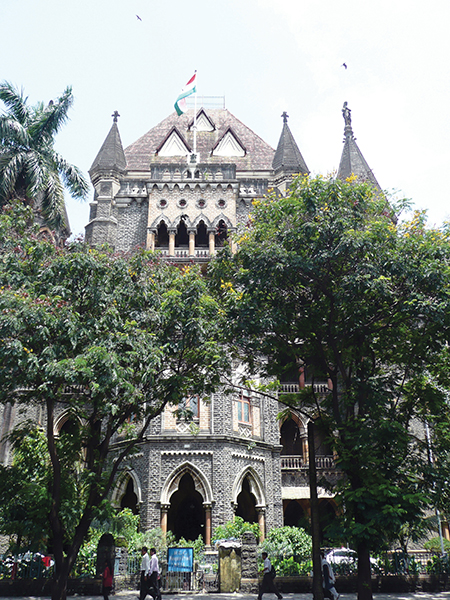
The managing clerks "were an essential element" of the early
firms of solicitors Photo: Jasmine D. Driver
Though some of these clerks were very scrupulous in advising their clients correctly, others would exploit clients who were not well versed about the law and try to extract money from them by dubious means.
If a suit was lost, they would offer solace to the clients and ask them not to worry or lose hope, as they had an alternative, the "right of appeal.”
In one instance, on obtaining a decree from the court, the clients and clerk were happy until the respondent intervened saying that he had filed an appeal against the order. The MC, equally shrewd, showed the client the draft of the decree and pointed triumphantly to the formal attestation at the end which read "Witness Sir Charles Sergeant Knight, Chief Justice of Bombay.” "We have got the Chief Justice endorsed on your decree,” said the clerk taking credit for his foresight. "Now, as the Chief Justice is to sit in the court of appeal, how can he go back on his own attestation?” When the decree was reversed in appeal, the MC shrugged his shoulders and looked evasive.
MCs were an institution in themselves. They knew the law and court procedure well. They decided and fixed the fees of counsel who would argue the matter in court.
In the past Gagrat and Company had the inimitable Wagle, Ambubhai Diwanji had Quiet Shetty, Vatchha and Company had Ramarao Morwale and one Nagarji Bhawanji Desai who was tall and always dressed in khadi clothes and wore a Gandhi cap in court. Crawford Bailey had K. P. Baxi, Craigie Blunt and Caroe had Jayantilal whose eyesight was so poor that he had to be actually led. Mulla and Mulla, Craigie Blunt and Caroe had Tehmul Gai who had a sense of humor. He wore a long black dagla (coat) and taught articled clerks appearing for solicitors’ exams or new entrants to the profession, court procedure and the procedure for obtaining probate or succession certificate from the High Court. Gai always sat in a place reserved for MCs in the High Court building.
There was an experienced clerk on the appellate side named U. V. Vora who could calculate the court fees payable by clients for different types of proceedings within a few minutes. He had the rates at the tips of his fingers. Some advocates who learnt court procedure from him and were later elevated as judges in the Bombay High Court still remember and admire him.
Solicitors also had board clerks whose work was to rush from court to court to keep track of the progress or lack of it in matters in different courts and alert the advocates concerned accordingly. They would inform them about the serial number of the case list in each courtroom.
This strenuous and exhausting work was done for many years by Mistry and Heeramaneck. Both dressed alike in long black coats and black Parsi caps and could be seen racing to and fro through the corridors of the High Court building to the High Court Library.
Today this generation of MCs has passed away and their tribe is lost forever, but they are remembered with gratitude.
 Partner of Mulla and Mulla and Craigie Blunt and Caroe, Homiar Vakil is a practicing advocate and solicitor of the Bombay High Court for the last 25 years. He has handled litigation related to Parsis and religious matters.
◆ ◆ ◆
From the archive