
Cover Story
On the mighty mountain
Cancer surgeon Dr Murad Lala successfully scales Mt Everest, reportedly the first doctor from India and the first Parsi to do so
It was a stunning skyscape as dawn broke over the wilderness of white! "You can actually see the curvature of the earth and the sun coming up below you. It is a fantastic sight, but you are so fatigued, so numbed out by the night climbing!” states Dr Murad Lala, consultant cancer surgeon from Bombay who reached the top of the world at 29,035 ft on May 19, 2013 at 9.10 a.m, a few weeks before his 50th birthday.
The final ascent to the summit of Mt Everest had begun at seven o’clock the previous evening. "We started off from Camp IV on the South Col situated at 26,300 ft (8,016 m). This is also known as the death zone. We set out at that time to reach the top of Everest by early morning which meant climbing in the dark. My headlamp packed up, probably because of the cold as it was working fine when we came down. It was very difficult without the light, particularly while clipping on the ascenders/karabiners (metal safety loops) to the fixed ropes to move forward,” he says. Braving temperatures of -20°C to -30°C, clad in his Himalayan suit of down, harness, helmet, head camera, goggles, oxygen mask, carrying his backpack and ice axe, sturdy Everest boots and crampons giving a grip on the ice, the arduous ascent had brought Lala, his co-climbers from the group Peak Freaks and personal sherpas to what is called the Balcony (27,600 ft), a small platform which can afford a brief breather. "You can change your oxygen cylinders here,” he explains. They then inched their way to the South Summit (28,500 ft). "From here you can see the main summit which is still about one-and-a-half hours away! I found the next stage known as the Hillary Step very difficult. It is a 40-ft sheer rock face! Climbers often fail here, or at the South Summit or the Balcony.”
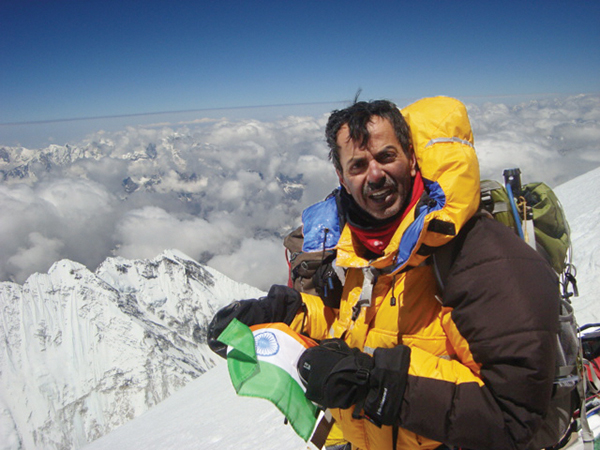
Dr Murad Lala on the summit of Mt Everest
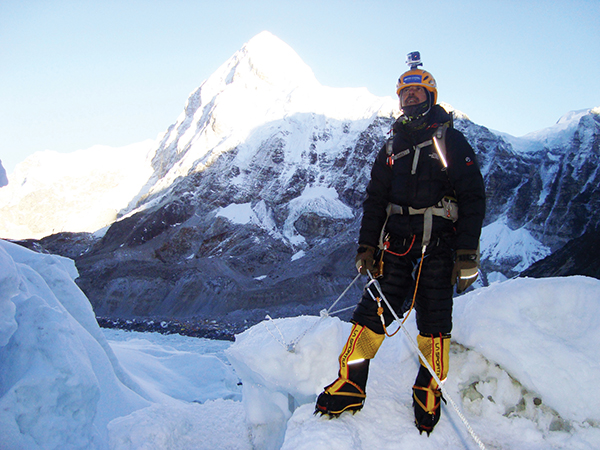
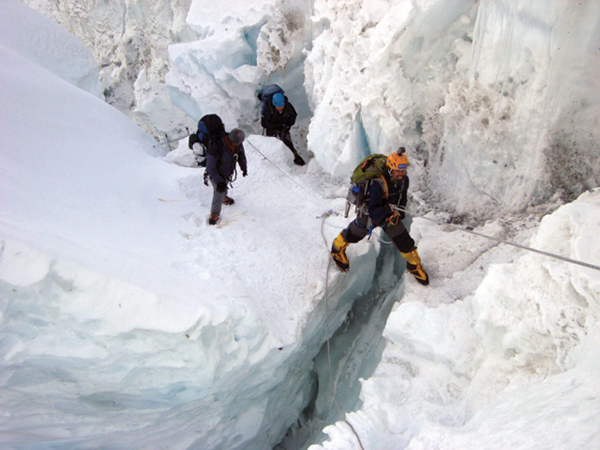
Dr Murad Lalasurveying the scene and crossing a crevasse
"Marty Schmidt, Lee Den Hond and Lala are currently climbing at the Hillary Step, there is about a 15-minute line-up, no big deal, everyone is working through it just fine… Weather is beautiful, cloudy on the north side, bluebird on the south and next to no wind. They should be on the summit in about one hour… Looking good!” noted expedition leader Tim Rippel on the Peak Freaks blog, tracking their progress from lower altitudes via satellite communication. The "commercialization of Everest” has brought in a new degree of difficulty in recent years, with hundreds of climbers attempting to scale to the top in the brief ‘weather window’ of seven to 10 days during the summer climbing season. Many of them have no mountaineering experience and, unless guided professionally, continue to make cardinal mistakes — climbing too fast or too slowly, the thin air and extreme exhaustion leading to fuzzy thinking, compounding the errors.
Reaching the top of the peak brought its own 360° panorama, sweeping over Nepal, Tibet and China. "You have to take off the oxygen mask to take photos (for summit credit),” Lala notes. Did you find it difficult to breathe without the mask, we ask. "Not really,” he replies, calmly and matter-of-factly, adding that oxygen comes into use only after you reach the 26,000 ft level (Camp IV) where you wear your mask even while sleeping. "If you need oxygen before that, you will be found not fit to make the climb and will be turned back,” he says with a small smile.
Seated at his desk in his scrubs in the OPD (outpatient department) building of the P. D. Hinduja National Hospital and Medical Research Centre at Mahim, the surgeon shows us a video of his Himalayan achievement. "The mountain is at its calmest in the early hours but you can remain on the summit for barely 10 minutes,” he tells us. As the sun comes up, the snow starts melting, thus becoming unstable and the winds start to pick up. "There are so many groups waiting to reach the top and we need to come down as soon as possible as deaths can occur even while coming down. There are some 200 bodies lying there. Sometimes you see them, sometimes you don’t. It is too dangerous to attempt to bring them down.”
The descent was no less daunting and the team reached Camp IV at six in the evening — a total of 23 hours on the move, probably the longest day of his life! What about food? we query. "Just energy bars and water!” he responds. "We are very proud of everyone, their eagerness to learn, stay motivated and be a solid team,” posted Rippel on May 19 on beckyrippel.blogspot The adventure did not end even when the mountaineers came down to base camp! "We had planned to take a chopper out to Kathmandu but en route we ran into weather we were trying to avoid! Due to dense clouds and no visibility we had to land in a field, spend the night there and leave next morning,” narrates Lala.
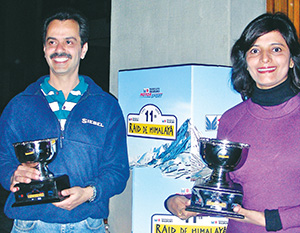
No stranger to hill and dale, Lala had taken part three times in earlier years in the Raid de Himalaya, a grueling 2,400 km, seven-day car rally. In 2009, with Murad driving and his doctor wife Mamatha navigating, they had picked up a trophy for finishing in third place. But between a four wheel drive and a two-legged trek there is an abyss of difference! Earnest preparation for climbing the world’s highest mountain started last October. "I was in Nepal for four weeks for what is called the Everest boot camp. With Peak Freaks I took part in the Triple Crown expedition, climbing three peaks — Lobuche East (6,119 m), Pokalde (5,806 m) and Island Peak (6,145 m). I chose Peak Freaks for their safety record. Rock climbing, ice climbing, rescue, the extreme cold — everything was very new to me.”
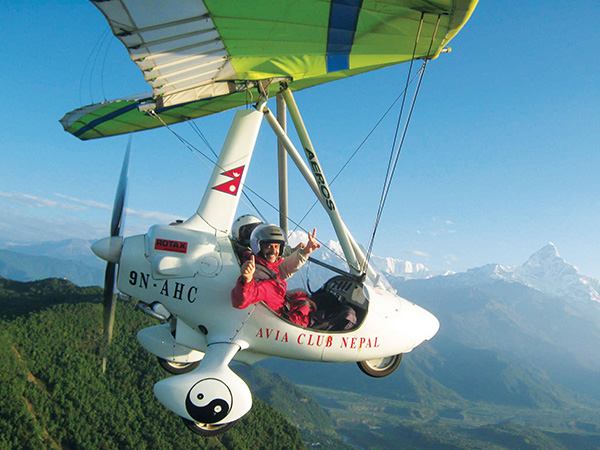
Lala on a high and (below) with wife Dr Mamatha and the Raid de Himalaya trophies
Back in Bombay, Lala trained for one month at a gym in Juhu which has a high altitude chamber, simulating the air pressure at 15,000 ft. "This helps you get acclimatized. One hour of gym here is equal to two-and-a half hours in a regular gym.” Running the half marathon at the Standard Chartered Mumbai Marathon 2013, climbing 16 floors at the Hinduja Hospital ("my junior doctors curse!”) and walking home from the Hospital at Mahim to his home at Kalina kept mind and body motivated!
The actual expedition began at the end of March from Kathmandu, with Lala the only Indian in the group. "You have to buy all your equipment there. All climbers need a permit from the Nepalese government and that is quite costly. On April 1, we flew into Lukla, one of the scariest airports in the world with an airstrip that is narrow, short and sloping, wedged between mountain and valley!” exclaims Lala who himself holds a private pilot’s licence. Boarding and disembarking from aircraft at Lukla is like jumping in and out from a train at Dadar station! "The rush is great as flights can only take off in clear weather. From there onwards, there are no roads and no vehicles. All supplies are carried on yaks and by strong sherpas.” After a 60+ km trek, they reached Everest base camp (EBC) situated at 17,600 ft on April 8, staying overnight at small tea houses, passing innumerable Buddhist prayer flags and prayer wheels. Pujas are performed by lamas to seek the mountain’s permission to climb and for blessings and safe return of the mountaineers.
At the EBC, groups have their own dining tent and kitchen. The regimen over the next few days follows the thumb rule of "climb high, sleep low.” This allows the body to adjust to the extreme conditions, he relates. If you see plumes coming off Mt Everest, it means you cannot summit. You have to wait till the jet stream moves higher, more north and away from the peak. Even at EBC the crashing/crunching cascade of avalanches is routine "but they don’t reach you.” The tents are pitched on the glacier which keeps moving! "When the wind is whipping, you are spread-eagled in the tent, holding it down with your hands!” At Camp 1 (19,500 ft) they were caught in a blizzard. "It was continuously snowing. Instead of one night we had to stay longer and were running low on food and gas. You cannot stand up in the tent, you can only sit. And of course you can’t step out till it absolutely clears. If you are low on water, you scoop up snow in a bottle and put it inside your jacket!”
Even 60 years after the first conquest of Mt Everest on May 29, 1953 by Sir Edmund Hillary and Tenzing Norgay, the mountain remains unpredictable and unforgiving, inspiring and intimidating! "The Khumbu Icefall is one of the toughest sections to negotiate because of its unstable ice blocks. You may go up one way and come back to find that part has collapsed, so you have to find another route.” Seracs, or blocks or columns of ice formed by intersecting crevasses on a glacier, may topple without warning. The Lhotse Face with its solid blue ice and 70° incline is also treacherous. Proper guidance from personal sherpas is indispensable. "Sometimes the crevasse is so deep you cannot see the drop. There may be three ladders lashed together and you have to get through as soon as possible.” And the most dangerous of all — AMS (acute mountain sickness), hypothermia, HAPE (high altitude pulmonary edema) and HACE (high altitude cerebral edema), the most common cause of death. (Ten climbers are reported to have died in April-May last year, nine this year.) "If you see a helicopter hovering above Camp 2, it means somebody is being rescued.”
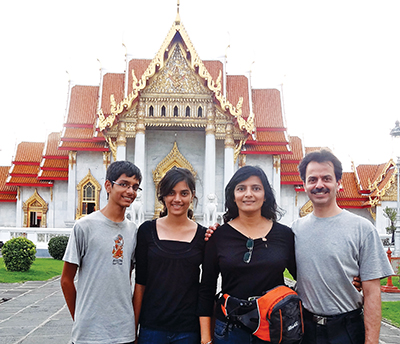
From left Minnat, Menaita, Mamatha and Murad Lala
With Everest, called Sagarmatha by the Nepalese and Chomolungma by the Tibetans, becoming more and more sought after despite the dangers and heavy expense, the Nepal government is very particular about making each team responsible for clearing all waste, including human waste which is collected in a contraption, put into a drum and brought down off the mountain. "Everything has been cleaned up significantly. I did not see litter even on the way up,” Lala adds.
Born in Secunderabad, Murad is the youngest son of Air Vice Marshal (retd) Eruch and Coomi Lala. "My father being in the Indian Air Force (IAF), it was a transferable job. In Std IV, I joined Lawrence School, Lovedale near Ooty in the Nilgiris and was there right up to Std XII. Situated amidst 750 acres of forest land, I particularly enjoyed the openness, the camping… long walks fascinated me. We played cricket, hockey and football. It was holistic development. I took part in The Duke of Edinburgh’s Award program, winning the bronze, silver and gold levels,” he describes. Murad unfurled his Lawrence School crest on Mt Everest. "The headmaster sent congratulations and has invited me to give the students a talk at Lovedale.”
Joining college in Bangalore for BSc, Lala had flying in mind and obtained his pilot’s license. A memorable moment arrived in 1982 when he won the NCC (National Cadet Corps) all-India best cadet trophy and the Prime Minister’s Gold Medal. "At the Republic Day parade in New Delhi, I was part of what was called the Karnataka group and Goa contingent. I was in the NCC air wing, but for best cadet, you have to take part in many activities, including GK (general knowledge).” The same year he joined the Government Medical College in Bellary, Karnataka, completing his MBBS including internship in five-and-a-half years. "For one year I did a house job at Hinduja Hospital in Bombay,” he adds. It was back to Bangalore for his MS (Master of Surgery) from the air force Command Hospital. "I was interested in general surgery but then decided to do my specialization (MCh) in surgical oncology from the Kidwai Memorial Institute of Oncology in Bangalore.” No, there is nobody else who is a doctor in the family, he smiles in response to our question. His two brothers, Anosh and Nitash, are both in the merchant navy.
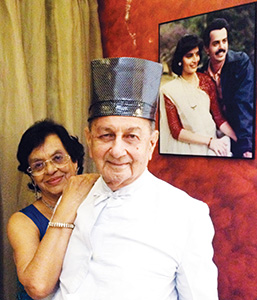
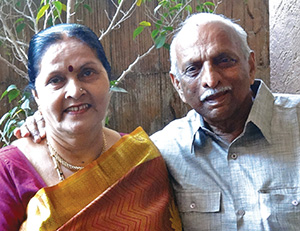
From left Coomi and Eruch Lala, Leela and Rajasekhar
Working with the Tata Memorial Hospital for five years, Lala joined Hinduja Hospital in 2001 and has done multiple fellowship programs in Germany, Amsterdam and the US, including at the Memorial Sloan-Kettering Cancer Center. "I operate on all cancers. The bulk of them are head and neck because of the prevalence of tobacco, gutka, etc. We need much more public education and awareness; laws by themselves are not enough,” he believes. The prevalence of stomach cancers may not be as high as in the West, but "we are seeing more of cervical and breast cancer due to late pregnancies, diet and so-called ‘western lifestyles.’ We are also seeing younger women getting these problems.” Hinduja Hospital supports free patients in a big way, he notes. "We empathize and give emotional as well as financial support. All facilities for cancer treatment are available in India, not just in the metros but in other towns as well. Very frankly, you don’t need to go abroad for cancer treatment.”
As we speak, the calls keep coming. "I am at the Hospital by seven in the morning. I do try to wrap up by 7 p.m. but cases get prolonged, there is an emergency to attend to… It is very difficult to have a hobby outside medicine,” he asserts. Lala expresses his appreciation for the support he received from the Hospital management, colleagues and staff, after they got over the initial shock about a "mad bawa” wanting to do something so tortuous! Though the mighty mountain had beckoned him from childhood, dreams take decades to develop. "You are initially caught up with studies, your post graduation, job, etc. You can think of these things once you are settled in your profession. The miracle is not that I summited. The miracle is that I had the courage to take the first step.”
"Hinduja Hospital has been a beacon of healthcare and Lala, apart from being an excellent cancer surgeon, has been an epitome of courage and determination. As a fellow consultant, I feel proud that he has managed to excel in his professional life and at the same time achieve his personal dream to become the first doctor from India to have scaled the Everest,” stated Dr Gustad Daver, director, professional services, Hinduja Hospital, when the institution felicitated him on his return. Adds Dr Farhad Kapadia, consultant physician who is a regular marathoner: "Lala was my school contemporary and is now a colleague. We often discuss various aspects of exercise/excursions. It is really a wonderful achievement and I’m sure he will have more and he will also inspire others.” Did your family try to dissuade you? we ask Lala. "Not at all. But I had promised I would be sensible. If at any point I felt uncomfortable I would turn back. Doing anything out of the ordinary has its own risks.”
Family enterprise
Earlier, Murad had supported and encouraged wife Mamatha in her intrepid adventure! Mamatha is a medical advisor, consultant pediatrician and pediatric HIV specialist working with several charitable hospitals and NGOs, including the Wadia Group of Hospitals in Bombay. In 2010-11, the adventure loving wife and mother of two was selected, after rigorous physical training and psychological assessment, to serve for six months as expedition medical officer for the Indian Scientific Expedition to Antartica. "It was an experience of a lifetime! We were a team of 27 Indians and I was the only woman. The temperatures were an average of -20° to -30° throughout the austral (southern) summer of six months. The sun shone brightly all through the day and night and we did not know when the previous day ended and the next one began! We got to see the night skies on only two occasions — when we were lucky to see the spectacular ‘Aurora Australis (the southern lights).’ It is a mesmerizing phenomenon that happens only in the polar regions, which truly looks like God’s own laser show in the night sky!” Mamatha describes. She was part of the scientific teams fanning out to collect ice core, rock and air samples, record glacial recession, sea sounding, GPS mappings, etc. "I used to drive the snowmobile and the snow trucks… The thrill of driving these vehicles on the frozen ocean riddled with crevasses which could suck us into the sea if we were careless, with the freezing winds numbing you, is an experience hard to describe.” Swimming in a freshly thawed lake on a sunny day with a temperature of -1°; being the only lady participant in a five km cross country race, organizing cultural interaction with the teams from the Chinese, Russian and Australian stations nearby — these will remain indelible memories, she recalls enthusiastically.
Earlier, Murad had supported and encouraged wife Mamatha in her intrepid adventure! Mamatha is a medical advisor, consultant pediatrician and pediatric HIV specialist working with several charitable hospitals and NGOs, including the Wadia Group of Hospitals in Bombay. In 2010-11, the adventure loving wife and mother of two was selected, after rigorous physical training and psychological assessment, to serve for six months as expedition medical officer for the Indian Scientific Expedition to Antartica. "It was an experience of a lifetime! We were a team of 27 Indians and I was the only woman. The temperatures were an average of -20° to -30° throughout the austral (southern) summer of six months. The sun shone brightly all through the day and night and we did not know when the previous day ended and the next one began! We got to see the night skies on only two occasions — when we were lucky to see the spectacular ‘Aurora Australis (the southern lights).’ It is a mesmerizing phenomenon that happens only in the polar regions, which truly looks like God’s own laser show in the night sky!” Mamatha describes. She was part of the scientific teams fanning out to collect ice core, rock and air samples, record glacial recession, sea sounding, GPS mappings, etc. "I used to drive the snowmobile and the snow trucks… The thrill of driving these vehicles on the frozen ocean riddled with crevasses which could suck us into the sea if we were careless, with the freezing winds numbing you, is an experience hard to describe.” Swimming in a freshly thawed lake on a sunny day with a temperature of -1°; being the only lady participant in a five km cross country race, organizing cultural interaction with the teams from the Chinese, Russian and Australian stations nearby — these will remain indelible memories, she recalls enthusiastically.
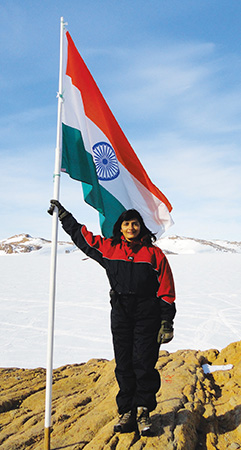
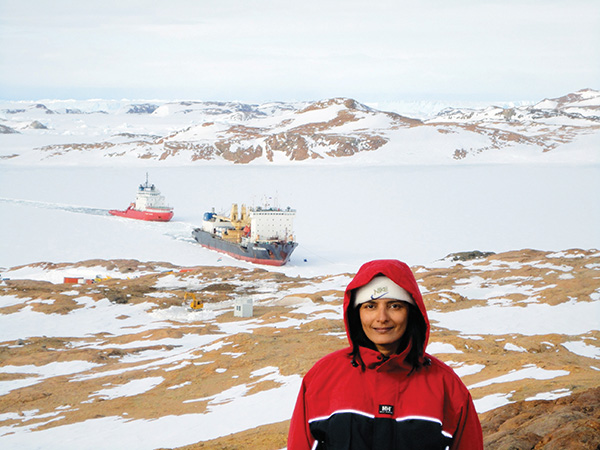
Dr Mamatha Lala in Antartica with Indian Scientific Expedition
"Being away from my family for six months in the most hostile environment on earth was indeed an ultimate mental and physical endurance test. But if you are young enough to seek adventure, but mature enough not to be foolhardy, you can enjoy the journey, no matter what!” she adds. Her father Rajasekhar and mother Leela from Mysore, and Murad’s parents Eruch and Coomi took turns to be there for their granddaughter Menaita, now 16, and grandson Minnat, 14. "My father-in-law served in the IAF with many laurels to his credit, following which he was secretary-general, Family Planning Association of India for a number of years. My mother-in-law is an epitome of fortitude and courage, always cheerful. They lead a peaceful, retired life in Secunderabad,” Mamatha remarks. Both Menaita and Minnat, whose navjotes were performed in Hyderabad, are like their parents: academic achievers and adventure seekers, having done parasailing, snorkeling, canoeing, zip lining…!
◆ ◆ ◆
From the archive