
Zoroastrians Abroad
Merchant’s memorial gift
Whilst teaching sociology and anthropology at the South Suburban College in Illinois for over 22 years, Whabiz Dinshaw Merchant had established lasting ties with the Zoroastrian Association of Metropolitan Chicago (ZAC) as proved by the memorial gift received by the Association in December 2012. Prior to her passing away on January 27, 2011 in Chimayo, New Mexico, 64-year-old Whabiz had instructed her husband David Nether to donate a sum of $ 30,000 to ZAC to be divided equally between their 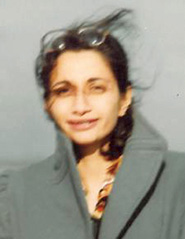 Mobed Employment Fund and the House Next Door Fund. "The donation to Mobed Employment Fund will support the perpetuation of religion and the donation to House Next Door Fund will enhance our ability to supplement the General Fund with much needed resources,” notes a write-up in the ZAC newsletter of February 2013.
The large portrait of Zarathushtra that adorns the ZAC Darbe Mehr Prayer Room was donated by Whabiz’s father Dinshaw Merchant, a Bombay resident, when he visited Chicago in the 1980s. The specially commissioned oil painting by artist Shiavax Chavda had been unveiled by Whabiz at the inauguration of the Prayer Room, recalls the newsletter.
After her graduation in Arts from Bombay’s Elphinstone College, Whabiz had chosen to leave behind her troubled family in Bombay where her parents were embroiled in a bitter divorce. Opting to make a new life in America, she did her MA in anthropology from Western Michigan University, and MA in history from Northwestern University, and MA and PhD in social sciences from the University of Chicago. For more than two decades she was in Chicago until Whabiz’s ill health forced the couple to relocate to New Mexico where she taught at the Northern New Mexico College.
Twenty years ago Whabiz had authored a book Home On The Hill: A Bombay Girlhood, offering
Mobed Employment Fund and the House Next Door Fund. "The donation to Mobed Employment Fund will support the perpetuation of religion and the donation to House Next Door Fund will enhance our ability to supplement the General Fund with much needed resources,” notes a write-up in the ZAC newsletter of February 2013. The large portrait of Zarathushtra that adorns the ZAC Darbe Mehr Prayer Room was donated by Whabiz’s father Dinshaw Merchant, a Bombay resident, when he visited Chicago in the 1980s. The specially commissioned oil painting by artist Shiavax Chavda had been unveiled by Whabiz at the inauguration of the Prayer Room, recalls the newsletter.
After her graduation in Arts from Bombay’s Elphinstone College, Whabiz had chosen to leave behind her troubled family in Bombay where her parents were embroiled in a bitter divorce. Opting to make a new life in America, she did her MA in anthropology from Western Michigan University, and MA in history from Northwestern University, and MA and PhD in social sciences from the University of Chicago. For more than two decades she was in Chicago until Whabiz’s ill health forced the couple to relocate to New Mexico where she taught at the Northern New Mexico College.
Twenty years ago Whabiz had authored a book Home On The Hill: A Bombay Girlhood, offering
"a first-person sociology treatment and a real view of life as seen through the eyes of a trained anthropologist; life as it actually was and not as it should have been.” In his review of the autobiographical account, Dr Ardeshir Damania, an associate research geneticist at the University of California, mentioned that the book highlights the advantages and disadvantages of growing up in a typical upper-middleclass post-War Parsi household in a sprawling bungalow on Pali Hill. Descriptions of Parsi mannerisms and customs, a narrative of her Parsi school, J. B. Vachha, and matrimonial courts are all woven into the book. Her observation on the language as spoken by the community was not without humor. She explained, "Parsi Gujarati is replete with obscure terms original and borrowed. Both men and women swear, but the vocabulary of abuse is different. Women tend to use the names of the lowest castes as oaths, whereas the men’s terms have to do with bodily parts and functions.”
With their Darbe Mehr building and facilities "bursting at the seams,” ZAC is currently undergoing a phased building expansion program with finance generated through donations and fund-raising events. "All planning, architectural and general contracting services are provided gratis by ZAC members. We currently pay a mortgage for the house on the property next door — an investment made by the association with long-term plans for developing a larger footprint in the Chicago area through expansion to support a number of potential goals,” states the ZAC website.
To discuss future development plans for the Chicago community, a brainstorming session was held on February 9 attended by nearly 30 members. The three major items that were deliberated were: making a bid for a FEZANA (Federation of Zoroastrian Associations of North America) Center in Chicago; converting the Prayer Room into an atash kadeh; and building retirement homes, reports their March newsletter. The thoughts that emerged will be shared with the larger community including members of the next generation and a long-term vision/master plan drawn up.
By developing the land behind the stage, they could establish facilities for the FEZANA Center’s office, a Zoroastrian shop, archives, digitizing equipment, FEZANA publications, museum, etc, it was pointed out. Further, since the current zoning ordinance requires only a 30-foot side setback as against the 50-foot setback stipulation when the Darbe Mehr was built 30 years ago, land has become available for expansion. "Maybe it is now time to think about taking it to the next level, to provide all the facilities of a traditional atash kadeh with a dadgah fire, including performance of inner liturgical ceremonies and… a resident priest. If this generation does not sow the seeds to maintain the tradition, it is likely that the next generation may take a different path.”
To reinforce ministerial services, ZAC pays a priest to visit and serve the needy and ailing elders of the community at their residence, hospital or nursing home. He prays with them, assists them in transportation and routine chores such as purchasing groceries, banking, collecting mail, taking home cooked meals, and acts as a liaison between them and the community. This program is supported by a $ 30 per month (a dollar a day) donation to the ZAC Mobed Employment Fund.
In the meanwhile, the ZAC monthly meetings that promote fraternization and end with lunch hosted by different members will now commence with sharing of religious knowledge (for up to 10 minutes) followed by personal profiles of members (five to 10 minutes). The written record will be kept in their library as a compilation of community history.
To discuss future development plans for the Chicago community, a brainstorming session was held on February 9 attended by nearly 30 members. The three major items that were deliberated were: making a bid for a FEZANA (Federation of Zoroastrian Associations of North America) Center in Chicago; converting the Prayer Room into an atash kadeh; and building retirement homes, reports their March newsletter. The thoughts that emerged will be shared with the larger community including members of the next generation and a long-term vision/master plan drawn up.
By developing the land behind the stage, they could establish facilities for the FEZANA Center’s office, a Zoroastrian shop, archives, digitizing equipment, FEZANA publications, museum, etc, it was pointed out. Further, since the current zoning ordinance requires only a 30-foot side setback as against the 50-foot setback stipulation when the Darbe Mehr was built 30 years ago, land has become available for expansion. "Maybe it is now time to think about taking it to the next level, to provide all the facilities of a traditional atash kadeh with a dadgah fire, including performance of inner liturgical ceremonies and… a resident priest. If this generation does not sow the seeds to maintain the tradition, it is likely that the next generation may take a different path.”
To reinforce ministerial services, ZAC pays a priest to visit and serve the needy and ailing elders of the community at their residence, hospital or nursing home. He prays with them, assists them in transportation and routine chores such as purchasing groceries, banking, collecting mail, taking home cooked meals, and acts as a liaison between them and the community. This program is supported by a $ 30 per month (a dollar a day) donation to the ZAC Mobed Employment Fund.
In the meanwhile, the ZAC monthly meetings that promote fraternization and end with lunch hosted by different members will now commence with sharing of religious knowledge (for up to 10 minutes) followed by personal profiles of members (five to 10 minutes). The written record will be kept in their library as a compilation of community history.
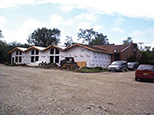
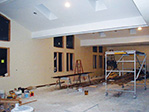
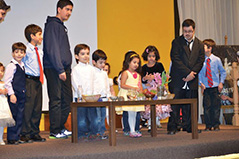
Chicago Darbe Mehr’s expansion in progress and youngsters at the Navroz celebration
◆ ◆ ◆
From the archive