
Scholarship
“Find your way in a new land” — III
With a well researched and packaged educational program, community members would be better equipped to effect positive change
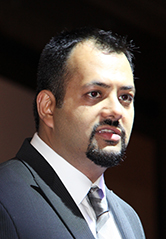 "Thinking with Zoroastrianism in the 21st Century,” was the subject of the Khorshed F. Jungalwala Lecture delivered by Dr Yuhan Sohrab-Dinshaw Vevaina at the XVI North American Zarathushti Congress in New York in August 2012. With the permission of the lecturer and FEZANA Journal that published the contents in its Fall 2012 issue, Parsiana is reprinting this paper that addresses the issues of conservatism and changes that have been embraced by modern Zoroastrians in their march forward.
To find an amicable solution to divisive socioreligious issues like interfaith marriages and disposal of the dead, members of the community need to study the past for only then would they be able to appreciate the present and prepare for the future, believes Vevaina. Till recently scholars have failed to provide the community with readable books and attractive websites, making members depend on inaccurate, misleading information in circulation, regretted Vevaina in the first instalment that was carried in our March 7 issue.
In the second instalment in our March 21 issue he cited historical instances of interfaith marriages, conversion and sharing of religious duties between males and females during different eras to show the prevalent diversity. This final instalment addresses the distinct practices amongst the Zoroastrians of India and the Zarathushtis of Iran and the different modes of disposing the dead to reinforce that Zoroastrianism is primarily a religion that has historically experienced a great deal of diversity in terms of both beliefs and practices.
This lecture series was instituted by the Federation of Zoroastrian Associations of North America (FEZANA) to honor the memory of Jungalwala who was a member of the FEZANA Historic Research and Preservation Committee, a director of the Zoroastrian Education and Research Society and the chair of the FEZANA Publication Committee. Active in organizing conferences and seminars, Khorshed and her husband Dr Firoze were founders of the Zoroastrian Association of the Greater Boston Area (ZAGBA). The Jungalwala Lecture Series is administered by the FEZANA Education, Scholarship and Conference Committee chaired by Dr Lovji Cama.
• • •
I would now like to say a bit about the often tense relationship between Iranian and Indian Zoroastrians. Nowadays, the two old world communities do not share food, clothing, language, culture, or history in common. And at first glance the differences might seem quite sharp to an outside observer. Parsis are often horrified by the fact that Iranian Zoroastrians do not wear the sudra and kusti and Zarathoshtis are equally perturbed by Parsis wearing black, red or blue caps, feeling that white should be the color used. Iranians shake their heads at Parsi New Year in August and Parsis roll their eyes at the mention of their Iranian counterparts no longer performing the daily rituals and purity laws.
While these differences seem so stark now, they occurred gradually over the last millennium. Some of the most valuable repositories for cultural exchanges between the two communities are the Persian Rivāyats or "correspondences” between the Parsi priests and their Iranian counterparts whom they looked to for religious instruction and spiritual guidance. That is, between the religious practices of the old world and the socio-religious adaptations of the new communities, much like what we in North America face when cultural adaptations here run afoul of older practices in Iran, India, Pakistan, etc. In the Rivāyats, the Parsis asked the Iranian priestly authorities if it was acceptable to cook with ghee and have non-Zoroastrians cook their food, and if it was acceptable for men to wear loincloths rather than pants:
"Kaus Mahyar asks: ‘Can ghee prepared from a gospend (animal) by a darvand (a Muslim, originally an evil person) or by one who burns the dead (a Hindu), be eaten or not?’
Answer: ‘The ghee which reaches one from the hands makes one riman (i.e. impure, polluted < Av. irimant-). (On eating it), one cannot be purified even by the bareshnum purification.’”
"Dastur Barzu states: ‘It has been repeatedly dinned into our ears that the performers of the yasna, and the devout of your quarter (i.e. of India) consume, with their food, the ghee prepared from a goat or a cow, which is supplied by juddins (non-believers); and again those who perform the function of a yoždathragar (purifier) and perform the yasna think that such ghee is pure for the reason that it is melted by fire. If it is the case as has been represented (to us), it is quite contrary to the religion and it is inconsistent with their reason and religiousness; because there is nothing more contaminated and impure than ghee (prepared in this manner) as, of all the foods, this finds a place most in the marrow of the bones. It is necessary that they employ some behdins who may prepare it so that there may be no need of the ghee prepared (by the darvands). When we were informed of your motives, it was fit and proper that (our views) should be expressed, and (we hope) nothing will thereby occur to the noble and precious minds of those dear ones, as these statements were repeatedly made by the people of the good religion who had gone to that side (i.e. India).’”
With regard to the wearing of loincloths we find it stated:
"Jasa and Maneck Changa: ‘We are informed that you put on loincloth. This is not proper according to the religion. Pants should be used, for without pants, yasna services and (other) works of religion will be defective.’”
Many of the older generation of Parsi gentlemen like my grandfather will undoubtedly be scandalized at the thought of our forefathers going "native” to that extent! Ladies’ saris of course are vouchsafed for by the agreement made with the Hindu raja in the Persian text from 1599, the Qisse-ye Sanjān: "Third, as to mode of dress, your womenfolk shall wear such garments as our women wear” (sedigar ānke az pušeš zanānhā bepušad pušeš-e hamčun zanān mā).
You might find it amusing to note that in the centuries after the Persian invasions of Greece by Darius and Xerxes (499-449 BCE) the Greek world predictably responded with a great deal of anti-Persian vitriol and propaganda. The Greeks stated so forcefully that the Persians were effeminate, pant-wearing cowards, unlike the real Greek men who wore skirts! Sometimes even the most obvious and seemingly "natural” or "common sense” values and customs were actually quite different in the past and we would do well to always be suspicious of certain ideologs who claim that the particular values they are pushing have always been around, since the time of the prophet Zarathushtra or some such.
I would now like to turn to one of the most emotional issues facing Zoroastrians today: the disposal of the dead. As many of you know, Zoroastrians in Iran have been burying their dead since the 1960s, though they line the earth with cement or stone as a barrier to prevent nasu or pollution from seeping onto Spenta Armaiti, the earth. The same principle was enforced in earlier days for menstruating women in orthodox families in rural Iran and India when they were required to sleep on iron beds and use metal utensils since it was widely believed that wood — being more porous — was a better conductor of spiritual pollution than metal.
Since the 1980s the Parsis in Bombay and Gujarat have been facing a major challenge due to increased urbanization and the negative side effects of the pharmaceutical industry. As many of you know, the use of diclofenac, an anti-inflammatory drug and analgesic given to livestock, has led to the virtual eradication of carrion-eating birds in all of western South Asia (Pakistan and India), around a 95 percent decline in 2003 and 99.9 percent by 2008 in a study on Pakistan’s vulture population, for example. Many Parsi conservatives have expressed anxiety about the fate of a person’s soul if they are buried or the inability to have their souls reunited with their bodies at the end of time if they are cremated and no physical body exists. Recall that the Vendidad condemns burial and cremation as acceptable disposal practices. Nevertheless, many in diaspora, most notably Ervad (Dr) Jehan Bagli, have responded with indignation at the idea that those who die outside of India and are forced to bury or cremate are somehow spiritually disadvantaged, second-class Zoroastrians in the afterlife.
I would like to add some pertinent historical tidbits that directly bear on this question. In Classical Greek literature we find references to some Persians wrapping corpses in wax and then burying them precisely like what the Iranian Zoroastrians do now and in seeming contradiction to the proscription found in the Vendidad. For example, Herodotus, known as the "Father of History,” states in Book I of his History (I.140):
"But there are other matters concerning the dead which are secretly and obscurely told — how the dead bodies of Persians are not buried before they have been mangled by bird or dog. That this is the way of the Magians I know for a certainty: for they do not conceal the practice. But this is certain, that before the Persians bury the body in the earth they embalm it in wax.”
Besides this concern with providing a barrier for the earth by the use of the wax, we have another Greek source that testifies to the sacredness of fire and water in Zoroastrianism. In an epigram about a Persian slave named Euphrates who speaks to his Greek master, he says:
"Do not burn me, Philonymos, and do not pollute fire by contact with me. I am a Persian, of Persian parentage, master, and the pollution of fire is more grievous to us than death.”
Euphrates goes on to add: "... do not sprinkle my body with lustral water, for I also revere streams.”
We also have Alexander’s historians mentioning that the Greek armies in the Persian empire would find exposed corpses and bury them out of a sense of propriety only to find them unburied the next day. Yet, we find the Achaemenid kings like Cyrus being buried in freestanding tombs or Darius, Xerxes and others in rock-cut tombs on the cliffs of Naqsh-e Rostam. In Central Asia, on the other hand, we find the archeological remains of ossuaries or bone boxes used to store the bones of corpses after they were picked clean by animals. What I am trying to illustrate with these contradictory facts is that Zoroastrian religious practices were far more diverse than the common perception today and perhaps we can all learn from these examples and find specifically Zoroastrian solutions to some of our intractable social situations that are now proving so emotional for community members worldwide. But, in order to do that, one has to understand the original theological rationale behind these ancient practices and that requires both responsible religious education and an open mind; both of which are, unfortunately, in exceedingly short supply these days.
As I conclude, you might be wondering what one can do with all these historical facts and where does that leave us modern people? I would like to respond by posing a paradox. It seems to me that for the older generations here in North America to have any hope of having their Zoroastrian identities actually matter to their kids and grandkids as the 21st century unfolds you must empower the younger generations to embrace radically different socioeconomic values than those you have been forced to hold as immigrants.
So what exactly am I advocating for? Observe earlier I said I would not do advocacy! Parents from the old countries stop pressuring your children and expecting them to take up "safe” — bourgeois — occupations; instead encourage and support them, if they show an interest, to reinvest in their Zoroastrian identities. We desperately need some of the best and brightest of the young generations to become anthropologists, archeologists, artists, writers, musicians, ethno-musicologists, historians, sociologists, linguists, political scientists, philologists, geneticists, demographers and scholars of religion so that future generations of young Zoroastrians going to college in North America actually have a critical mass of books, articles, blogs and websites that they can read; and classes that they can attend in a variety of universities and geographical locales both in the US and Canada where they would be able to learn about their heritage in an informed and critically sophisticated manner rather than being subjected to the same old controversies, finger pointing and demagoguery that we see so often these days. What I am proposing is not easy, it is not convenient, it is not a magic bullet or cure-all, and it fundamentally requires some material sacrifice. Yet I truly believe that if we put our money where our big Zoroastrian mouths are, the future of our identities will be shaped and determined by us on our terms.
When, as a 20-year-old, I first told my rather religious grandmother in Bombay that I was determined to study Zoroastrianism for a living she immediately started praying out loud to Zarathushtra that I would not do such a stupid and foolish thing! The irony was not lost on me. Even then I understood that knowledge is power and power can be mobilized to effect positive change in the world. Education, acquired in an informed and responsible way and presented in an attractive and accessible manner, is, in my experiences as a teacher and researcher of Zoroastrianism, the only meaningful way to break the downward spiral of apathy and anxiety about the increasingly bleak future of our collective identities. Only education will provide the power of self-definition and self-fashioning to the next generation of community leaders who are looking for a more credible, sophisticated and well-marketed view of their heritage.
Wandering aimlessly in a rapidly changing world of present and future-looking social media, globalization, and population flows telling anyone who will listen that we are the oldest and greatest religion from ancient times and spouting "good thoughts, good words, and good deeds” as a platitude with little else in the way of a cohesive worldview, belief system or moral position is not, in my personal opinion, sufficient for contemporary Zoroastrian "youth” to successfully navigate the rough seas of the modern world, even if we conservatively define the term "Zoroastrian youth” as 16 to 40 years old or liberally, as any unmarried Zoroastrian still drawing breath!
It is the young amongst us who so clearly see that the new media and technological innovations are potentially profoundly liberating and transformative for us as a community in our battle to maintain market share in the global marketplace of ideas, values and cultures. And while Marshal McLuhan, the father of media theory, wrote in 1964 that "the medium is the message,” it is patently clear that content — user-generated by community members such as yourselves or produced by experts and paid professionals such as the priests and us scholars — matters a great deal for optimizing the capabilities of the medium in question. Unless the various generations of Zoroastrians come together and make a real commitment to investing in a broad and inclusive educational program both at the institutional and the personal levels there will be little left to preserve of Zoroastrian identity in the upcoming decades and it won’t matter in the least what a typical Zoroastrian looks like, if they have a funny sounding name that doesn’t end in "walla,” or if they can’t speak Persian and Gujarati. Zoroastrianism is a religion first and foremost about choice — not just between truth and falsehood but also between knowledge and ignorance. It is time for us all to make the future we want by investing in education now, in the present, so that we can appreciate and learn from our truly remarkable collective pasts.
Concluded
Dr Yuhan Sohrab-Dinshaw Vevaina is currently a Lecturer in the Department of Religious Studies at Stanford University. He received his MA in 2003 and his PhD in 2007 from the Department of Near Eastern Languages and Civilizations at Harvard University where he served as a Postdoctoral Fellow in the Undergraduate Core Curriculum and as the Lecturer on Old Iranian from 2007-2009. He was a Fellow of the National Endowment for the Humanities from the National Council for the Humanities in 2010. He teaches a number of courses related to ancient and late antique Iran.
◆ ◆ ◆
From the archive