
Readers' Forum
Naoroji’s descendants
I am a PhD candidate in the Department of History at Harvard University. For the past 20 months I have been in Bombay and Delhi conducting archival research for my dissertation on the life and political career of Dadabhai Naoroji (1825-1917), the "Grand Old Man of India.”
Several months ago, Parsiana was kind enough to carry a letter of mine where I requested readers to contact me if (a) they were in possession of any old letters or primary sources related to Naoroji or his political associations such as Sir Pherozeshah Mehta, Sir Dinshaw Vacha, and Behramji Malabari and (b) if they had any information to provide about Naoroji’s family and descendents. Several individuals, thereafter, generously offered me material and opportunities to meet and talk about Naoroji, for which I am very grateful.
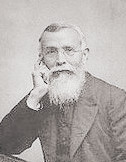
I would like to put out one more request for information related to Naoroji’s family and descendants. Naoroji, who was married to Gulbai Shroff at an early age, had three children: Ardeshir (1859-1893), who married Virbai Dadina; Shirin, who married Fram Dadina; and Manekbai or Maki (b. 1868), who married Homi Dadina. We know that Ardeshir and his wife had eight children: Perin (Captain), Nurgis (Captain), Kershasp, Jalejar or Jal, Gosi, Meherbanoo or Meher, Sarosh, and Khorshed. Sadly, none of Naoroji’s grandchildren had any children themselves, and therefore this branch of Naoroji’s family became extinct.
I do not know much about Naoroji’s descendants through his daughters, Shirin Dadina and Maki Dadina, and I would like to ask knowledgeable readers for their assistance. I know that Maki and Homi had at least two sons, one of whom was an A. H. Dadina, who was still alive in 1970 when he wrote a letter to Parsi Avaz (I thank Ervad Marzban Hathiram for bringing this to my attention). They were made navars in 1915 in memory of their grandmother, Gulbai. Unfortunately, this is all I know of any possible Naoroji grandchildren through his two daughters. Maki (who was trained in England as a doctor) and Homi lived with Naoroji at Versova until his death and Shirin and Fram spent some years in Karachi, most likely returning to Bombay thereafter.
I would greatly appreciate if anyone could supply me more information on these two branches of the Naoroji/Dadina families, as well as any other relations of Naoroji. I hope to construct a Naoroji family tree building on what R. B. Paymaster sketched in his book A Farman of Emperor Jehangir Given to Dr Dadabhai Naoroji’s Ancestors Three Centuries ago and a Short History of His Dordi Family of Navsari, published in 1925. I would also welcome any information from Dordi family members who can trace ancestry to Naoroji.
I would also like to ask readers if they have any information about the following:
?Naoroji’s, his children’s and grand-children’s residences. In the 1880s, Naoroji lived on 5th Khetwadi Lane in Bombay. I have managed to even find the floor plans of this house in the Naoroji Papers in the National Archives in Delhi. I know that this house, which probably stood somewhere close to present-day Sandhurst Road, was eventually demolished by the municipality for a civic improvement project. Naoroji’s last residence, where he spent his retirement, was The Sands, one of the original "Saat Bangla” at Versova. This house was demolished in 1986. If anyone has any stories or reminisces of this house, as well as its later inhabitants, I would be very interested to hear them. I have also heard that the Captain sisters, Naoroji’s grandchildren through his son Ardeshir, had property in Bandra.
?The Bombay Presidency Association (BPA), established in 1885, was the premier political organization of western India in the late 19th century. Its members included Naoroji, Vacha and Mehta, to name a few. It survived until the 1980s, when its last trustees, sadly, sold off its premises at Fountain and shuttered this historic organization. Although the Nehru Memorial Museum and Library of Delhi was able to make microfilms of some of its reports and proceedings, the full run of its papers, quite tragically, has since been lost. Prof S. R. Mehrotra was able to rescue some additional manuscripts in the early 1980s. The son of one of the last members of this organization, P. V. Bhende, informed me that these papers were originally deposited in the K. R. Cama Oriental Institute (KRCOI), but staff members there inform me that this is not the case. If anyone has information on their whereabouts, please do contact me, as I am interested in making sure that they are placed in a library where they will be adequately preserved and open for public use.
?The Vacha papers related to the National Liberal Federation of Western India. Vacha left the Congress after 1919 and helped found this Federation, part of the Liberal Party of India that played a role in Indian politics until independence. Two scholars, John Hinnells and Eckehard Kulke, consulted these papers in the early 1970s. Prof Hinnells remembers that they were kept in a cabinet in a law firm in Fort — he cannot recall which firm, precisely. If these papers still exist, I would be interested in making sure they reach an appropriate archive or library.
?Copies of old Parsi newspapers and journals. Parsis played a major role in both Gujarati and English language journalism in western India in the 19th and early 20th centuries. Institutes such as the KRCOI, J. N. Petit Institute, and the Native General Library in Bombay had copies of many Parsi papers until the 1970s or 1980s when, very regrettably, they were destroyed or sold off. We, as a community, need to take account of the little that remains. If you have old copies of any of the following Parsi papers, please do let me know: Jam-e-Jamshed, Kaiser-e-Hind, Navroze (Calcutta), Parsi Punch/Hindi Punch, The Parsi, Parsi Sansar (Karachi), Rast Goftar, Sanj Vartaman and Stree Bodh.
In the course of my research, I have read or come across nearly all printed, secondary sources on Naoroji, so I would not need any assistance with these items. I thank any reader who can assist me by either directing me to rare material contemporaneous with Naoroji’s life or by sharing any reminisces or family stories about Naoroji, his descendents, and the other matters that I have addressed above.
I can be contacted by e-mail or on the telephone at +91 8879600407 (number valid through mid-September).
DINYAR PATEL
Delhi
dinyar.patel@gmail.com
◆ ◆ ◆
From the archive