
Cover Story
Around the world in seven years
In the early decades of the 20th century a Parsi and an Austrian embarked on an amazing adventure – on bicycles
"When Framroze Jamshed Davar met Gustav Sztavjanik, we wonder in which language they talked. Davar knew no German and Sztavjanik no English,” said Ruth Pleyer when she began her talk on the two cyclists who rode across the world for seven years from 1924 to 1931, covering 65,000 miles, 52 countries, five continents, weathering eight sandstorms and Arctic fury.
Recreating the context, Pleyer explained, "The bicycle was the vehicle of the working class — it had liberated the working class.
Recreating the context, Pleyer explained, "The bicycle was the vehicle of the working class — it had liberated the working class.
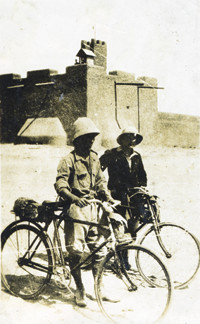
Right: Framroze Davar and Gustav Sztavjanik in North Africa with their cycles in 1926
There were cycling clubs all over. These two gentlemen went on to break records.” Davar pedaled the maximum number of kilometers covered by any cyclist, visiting the greatest number of countries on a bicycle. Sztavjanik was a Viennese of modest means in a small country rapidly losing its glamor due to the rise of the Third Reich. Europe was poor and Austria, poorer. People were inward looking and adventure was not on the radar for sponsors. Pleyer mentioned "every Parsi community member the two could get hold of was contacted on the way… and they all seem to have helped out with food, with accommodation and with funds.”
Researchers Pleyer and Dominik Hruza work as a team — the former traced the historic perspective while the latter, a web and graphic designer from Helsinki, Finland, took the audience through the actual journey of the two adventurers during a lecture at the K. R. Cama Oriental Institute (KRCOI) on February 13, 2012. Muncherji Cama, president of KRCOI, welcomed them telling the gathering that Pleyer holds a degree in Arabic and Islamic studies from Vienna and is a provenance researcher (which is giving a clear title to any work of art lost or stolen) for authenticating artworks. The audience comprised several cycling enthusiasts and adventurers as well as those in pursuit of scholarship. Bicycling champ Bapoo Malcolm, who presided over the function, regretted that Parsis no longer dominate racing cycling as before.
Bringing alive the tour by screening a rare archival find of a black and white silent movie, the researchers transported the audience to an era of solar hats and khaki shorts, where Davar and Sztavjanik worked in tandem pushing and pulling one bicycle at a time up a steep, uneven path. The researchers continue to look for any memorabilia, anecdotes, letters and artefacts that readers may have access to pertaining to either of the cyclists. They may be contacted by e-mail at ruth.pleyer@utanet.at or dominik@ hruza.co.at
Researchers Pleyer and Dominik Hruza work as a team — the former traced the historic perspective while the latter, a web and graphic designer from Helsinki, Finland, took the audience through the actual journey of the two adventurers during a lecture at the K. R. Cama Oriental Institute (KRCOI) on February 13, 2012. Muncherji Cama, president of KRCOI, welcomed them telling the gathering that Pleyer holds a degree in Arabic and Islamic studies from Vienna and is a provenance researcher (which is giving a clear title to any work of art lost or stolen) for authenticating artworks. The audience comprised several cycling enthusiasts and adventurers as well as those in pursuit of scholarship. Bicycling champ Bapoo Malcolm, who presided over the function, regretted that Parsis no longer dominate racing cycling as before.
Bringing alive the tour by screening a rare archival find of a black and white silent movie, the researchers transported the audience to an era of solar hats and khaki shorts, where Davar and Sztavjanik worked in tandem pushing and pulling one bicycle at a time up a steep, uneven path. The researchers continue to look for any memorabilia, anecdotes, letters and artefacts that readers may have access to pertaining to either of the cyclists. They may be contacted by e-mail at ruth.pleyer@utanet.at or dominik@ hruza.co.at
Paving the way on bicycles
Davar set off alone on his bicycle from Bombay, heading for Vienna through Afghanistan and Iran, where he even interviewed the Shah; through Georgia towards Baku, Azerbaijan and then onto Sofia in Bulgaria. "Others had left before him but his was a solo journey. He had the adventurous spirit but was not of sound financial background,” Pleyer stated. "His main supporters were Parsi industrialists.” Adi Hakim, Jal Bapasola and Rustam Bhamgara’s cycle journey has also been documented in their book Round the World on Bicycles. (See Parsiana May 7, 2008), covering 44,000 miles in four-and-a-half years between 1923-28. The common interest between Davar and Sztavjanik cemented a lifelong bond. In Vienna, Sztavjanik’s home town, he reportedly assisted Davar to sort out a problem he had with his bicycle. This assistance forged a lasting friendship between them and the pair set off together on Davar’s planned journey "having a good understanding between them,” Pleyer noted.
When Davar affirmed he was continuing on his trip, Sztavjanik volunteered to join him. "The two voyagers appeared an unequal pair in several ways — Davar, aged 30 was well educated, a media man who spoke several languages, an amateur biologist, a Boy Scout. Sztavjanik was a teenager of about 16 or 17 years with the spirit of youth and adventure.” This "uneven pair” as Pleyer termed them, were about to set out from Vienna when Davar’s bike was stolen. Undeterred, they managed to leave the next day, Davar riding another Raleigh bicycle, as documented.
Davar set off alone on his bicycle from Bombay, heading for Vienna through Afghanistan and Iran, where he even interviewed the Shah; through Georgia towards Baku, Azerbaijan and then onto Sofia in Bulgaria. "Others had left before him but his was a solo journey. He had the adventurous spirit but was not of sound financial background,” Pleyer stated. "His main supporters were Parsi industrialists.” Adi Hakim, Jal Bapasola and Rustam Bhamgara’s cycle journey has also been documented in their book Round the World on Bicycles. (See Parsiana May 7, 2008), covering 44,000 miles in four-and-a-half years between 1923-28. The common interest between Davar and Sztavjanik cemented a lifelong bond. In Vienna, Sztavjanik’s home town, he reportedly assisted Davar to sort out a problem he had with his bicycle. This assistance forged a lasting friendship between them and the pair set off together on Davar’s planned journey "having a good understanding between them,” Pleyer noted.
When Davar affirmed he was continuing on his trip, Sztavjanik volunteered to join him. "The two voyagers appeared an unequal pair in several ways — Davar, aged 30 was well educated, a media man who spoke several languages, an amateur biologist, a Boy Scout. Sztavjanik was a teenager of about 16 or 17 years with the spirit of youth and adventure.” This "uneven pair” as Pleyer termed them, were about to set out from Vienna when Davar’s bike was stolen. Undeterred, they managed to leave the next day, Davar riding another Raleigh bicycle, as documented.
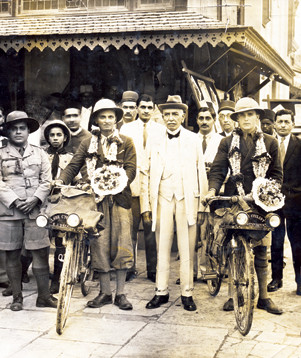
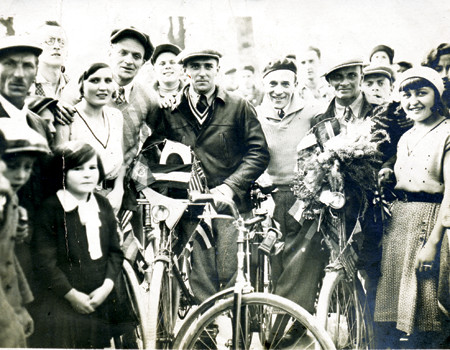
Left: The cyclists are welcomed in Bombay, 1931 and (right) back in Vienna
Prague, Berne all created an impression on the cyclists. They even cycled through Lapland to Finland. Christmas one year was celebrated at Mont Blanc in Switzerland. As they went over the battlefields of World War I, the destruction affected their sensitive spirits as they wended their way through Belgium and Denmark. Hailing from land-locked Austria, Sztavjanik was thrilled to see the sea for the first time ever in Bremen, Germany and then along the coasts of Sweden and Norway. For their journey to London, the duo hit a roadblock as the authorities thought Sztavjanik "might be a working migrant and was denied a visa.” Tracing their voyage from Russia to the Baltic Republics to Poland, to Marseilles, France to Algiers they at last entered the African continent.
"Great desert, so easy to access” was the response of the two travelers on reaching the Algerian Desert in Africa. The two had to change vehicles and joined a caravan comprising three camels, three Arab soldiers and water to last for a week. This early euphoria seems to have evaporated rapidly as temperatures hit 50° Celsius. They soon adapted to the heat by cycling at night and resting by day. They weathered sandstorms, counted skeletons, encountered a lion and giraffes. They shot one of the latter, only to find out that these were innocent and harmless creatures. Sztavjanik, unable to withstand the heat, fainted and was put on a diet of wine and champagne — a remarkable remedy! Experiencing malaria and resting at an oasis were some of the bitter-sweet memories of this escapade.
Their journey continued with the Christmas of 1926 spent in Lagos, Nigeria and pedaling their way to Dakar, Senegal. After five months in the Sahara and a little over a year in Africa it was time to board ship for South America. April 1927 saw them in Montevideo, Uruguay and Buenos Aires in Argentina. Scaling the South American Andes, they followed the rail tracks up to 14,000 feet to avoid getting lost and then descended to Santiago in Chile. Sztavjanik broke a record by doing 702 kilometers in a 24 hours race on this southern continent.
From Lima in Peru they crossed the continent from coast to coast with a letter of recommendation from none other than the president of Peru. More adventure was in store, as they pedaled their way through the toughest part of their journey — the Amazon. Hruza quoted them: "Photography is almost impossible as it is hard to know whether it is day or night; it is always dark,” was their lament. Sztavjanik narrates how friendly the locals were and how warmly they were "welcomed into their homes, trashing the stereotype of the wild and dangerous ‘primitive’.” Davar’s skill at pitching tents and other Boy Scout abilities were not needed here as "local hospitality took over.” And so they sailed their way into the New World. There seems to be a break of six months in logging their journey to New York, a hiatus which has not yet been filled.
Sztavjanik was armed with a letter from the embassy of Austria and as Pleyer declared "every letter of recommendation gets you the next...” These and subsequent letters earned them entry to visiting kings, presidents, sport enthusiasts and politicians. One such letter of recommendation spelt trouble in Georgia, where Davar was thought to be a spy and his camera and pistol were taken away but he was let off as the Soviets had no evidence. The duo met the Belgian King Albert I, aviator Charles Lindbergh and US President Hoover at the White House. On their return to India they met Mahatma Gandhi, Jawaharlal Nehru and the sports enthusiast Sir Dorab Tata who sponsored Davar. During these encounters with renowned persons, they collected autographs of the famous for their personal memorabilia.
"After a short visit to Hawaii, they gave lectures at cycling clubs in San Francisco from where they took a boat to Yokohama, Japan. Here they witnessed damages of an earthquake that had just hit the island.” Cycling through the main island, they reached Kobe where Sztavjanik described "the permanent presence of the secret police… as soon as they reached a city or small town, someone came to ‘protect’ them.” Japan had occupied parts of China where they travelled next. However, due to the Sino-Japanese war, they were unable to go to Peking (Beijing) and went to Hong Kong instead. The wheels of success were leading them to Singapore, onto Sumatra and finally Rangoon.
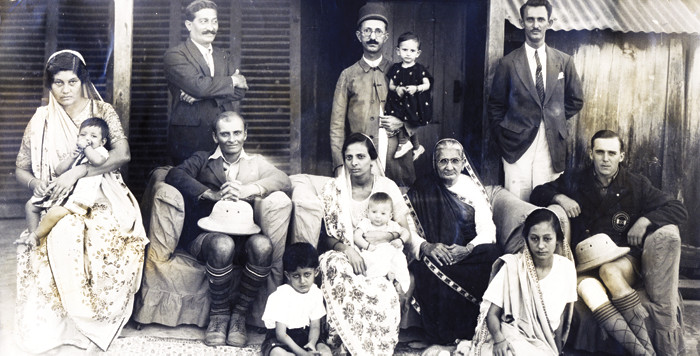
Right: Davar and Sztavjanik (seated on upholstered chairs) with the Davar family
Turning the wheels of The Journey
The journey was well covered globally by the media, in big towns and small, thanks to Davar using his Boy Scout contacts. The biographic historians Pleyer and Hruzaa have traced four books of news clippings — one even from China. They have also documented Davar having sold or donated a piece of Latin American pottery of ethnic value he had acquired to the Museum of Natural History, New York. He is also said to have sold a "flying snake” from the Amazon and a fossil from the Sahara to the Prince of Wales Museum in Bombay. Both cyclists are said to have displayed artefacts from their peregrinations in glass cases. The most sensational of these was a skull from the head hunters of the Amazon, shrunk to the size of a tennis ball in Davar’s home in Bombay.
The journey was well covered globally by the media, in big towns and small, thanks to Davar using his Boy Scout contacts. The biographic historians Pleyer and Hruzaa have traced four books of news clippings — one even from China. They have also documented Davar having sold or donated a piece of Latin American pottery of ethnic value he had acquired to the Museum of Natural History, New York. He is also said to have sold a "flying snake” from the Amazon and a fossil from the Sahara to the Prince of Wales Museum in Bombay. Both cyclists are said to have displayed artefacts from their peregrinations in glass cases. The most sensational of these was a skull from the head hunters of the Amazon, shrunk to the size of a tennis ball in Davar’s home in Bombay.
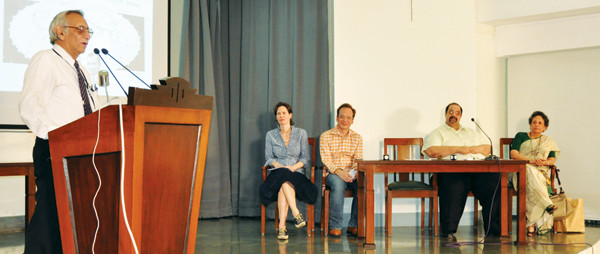
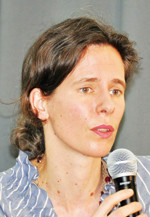
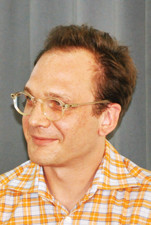
Above: Researchers Ruth Pleyer (left) and Dominik Hruza Top: Bapoo Malcolm presiding over the talk with Pleyer, Hruza, Muncherji Cama and Dr Nawaz Mody Photos: Sarosh Daruwalla
As their adventure was reaching its culmination, Davar was contending with failing eyesight which led to ultimate blindness (his neighbors in Jer Baug, Bombay believed this was the curse of the shrunken skull). On his return to Austria, Sztavjanik took up a clerical job with the Ministry of Justice. Though the Austrian counted his blessings at having a job at all during the war years, routine made this enterprising man sad and angry. The redeeming feature was that he met his future wife. Sztavjanik also worked in prison to support his family, we learn. Davar and he soon found themselves members of two enemy states — Austria and British India — during the war. Communication becoming more and more restricted, the two friends kept in touch sporadically via letters. Ultimately, Sztavjanik was drafted in 1944 and allegedly killed in Poland while riding a German motor cycle. His widow never remarried after "the fabulous man and fabulous adventure” that she had known.
Davar lived in Jer Baug at Byculla with his sister, spending his time writing. Three books seem to be the outcome of his labors — Crossing the Sahara, Cameos of Sport and one on his escapades on traversing the Amazon. The last, which saw the light of day in 1966 published both in paperback and in hard copy, was dedicated to J. R. D. Tata and narrates 11 months on a raft. Davar seems to have learnt of the death of his co-traveler but seemed unable to find out the details. We know that he wrote an account of his exploits in the Jam-e-Jamshed. At a felicitation for Davar in Calcutta, a speaker elaborated on his ‘fairy tale life.’ Welcome songs were sung by the ladies of Calcutta, showering praises on the duo. The Bombay Chronicle reported that Sir Rustom Vakil spoke of the importance of fitness and education and lauded both the travelers — even changing Gustav’s name to the Parsi-fied Gustasp! Davar ultimately succeeded in proving that "Indians can hold their own anywhere. He wanted to be a Parsi who broke every record and seems to have achieved his ambition,” stated the chroniclers.
◆ ◆ ◆
From the archive