
Zoroastrians Abroad
Heart to heart
"It starts off being a lot of hard work and effort but when you see something like that work, it’s truly miraculous. It’s something that is very gratifying.” Dr Minoo Kavarana’s efforts were relayed on YouTube soon after he successfully performed the heart transplant on a three-year-old cheerful girl on January 26, 2012. This is the third pediatric heart transplant involving the Berlin Heart that he has done and he referred to the tremendous interdisciplinary team effort that is required to make it a success.
Normally wait time is a month to 75 days for a heart transplant but this patient had to spend close to six months at the pediatric intensive care unit at the Medical University of South Carolina (MUSC) where Kavarana is assistant professor of surgery and pediatrics. As detailed in the Charleston Post and Courier of December 15, 2011, it was in early August that the little girl whose heart was not pumping properly had to be fitted with a Berlin Heart for which special approval was sought from the US government. This German invention that substitutes for a person’s failing heart until an organ donor is found was used to keep the little girl alive. It has been described as a ventricular assist device that uses external pumps to take blood directly from the atria and pump it to the lungs and the body. Closely monitored, she was tethered to two tubes that were connected to an open laptop whose screen continuously flashed squiggling lines. Even when she was walking around the laptop trailed her in a cart.
Since the Berlin Heart had been in use for close to six months, removing it was more difficult than usual because the antibodies had caused the formation of substantial scar tissue, it was detailed in a post operation story on January 26, carried in the Charleston Post and Courier. As timing is crucial in such operations, the donor and recipient teams stayed in constant contact to synchronize their movements. The surgery commenced at 10.30 p.m. and Kavarana was able to walk out only at around 7 the next morning. Whilst the defective heart is removed and until the new heart was implanted the patient was put on a heart-lung machine. The donor heart (from a child with head injury) that was flown in had been preserved in ice for four hours. Once a heart is out of the body for more than six hours it is at risk of failing, explained Kavarana. After the donor heart was placed in the patient’s chest cavity the clamp was loosened to allow blood to flow into it and circulate throughout the body. Even after the heart had been placed the doctors had to control bleeding for several hours. The chest cavity was closed after 48 hours and the important thing was to keep her germ-free to minimize any risk of infection. "Luckily the heart is a very good match. She is doing well,” commented a relieved Kavarana.
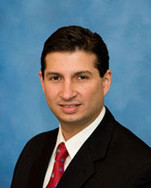
Dr Minoo Kavarana: successful surgeon
According to the federal Organ Procurement and Transplant Network, heart transplants for little children are rare. From 1988-2011, 457 heart transplants had been performed, only 27 of which were on children younger than five.
The 41-year-old surgeon was born in Scotland when his father, Dr Naozer Kavarana, was working in a hospital there. When Minoo was two years old, the family relocated to Bombay. Whilst Naozer was a plastic and reconstructive surgeon at Tata Memorial, Breach Candy and several other hospitals in Bombay, Minoo’s mother Dr Perviz was a general practitioner in Bombay. After completing his early education from The Cathedral and John Connon School, followed by two years of studies at Jai Hind College, Minoo pursued his medical training at the M. P. Shah Medical College in Jamnagar, Gujarat, keen to "follow his father’s footsteps.” Choosing a career in surgery, Minoo did his residency from the New York Medical College. Besides earning his fellowship from the University of Michigan he was admitted to the American Board of General Surgery in 2003 and two years later was a certified cardiothoracic surgeon, according to his curriculum vitae. Since the last two years he has been with the division of cardiothoracic surgery at MUSC. A member of the Society of Thoracic Surgeons and the American Society of Artificial Internal Organs, Kavarana’s clinical interests include neonatal and infant heart surgery, adult congenital heart surgery, heart and lung transplant and mechanical circulatory support.
Married for the last 14 years to Zarin (née Dhabhar), the couple has three children, 11-year-old Sam, 10-year-old Simone and five-year-old Natasha. The successful surgeon views himself as "a liberal Zoroastrian who has a holistic approach to religion.” When asked whether he had time for any community activities, Parsiana was informed, "Unfortunately we are the only Parsis in Charleston so there are no activities here for the kids or us. However the older kids had their navjote done in 2010 and are faithfully saying their prayers every day!”
◆ ◆ ◆
From the archive