
Books
Collection of counsels
Javedan Xrad. Some Fragments of the Eternal Wisdom of Aošnara the Wise which are extant in Parsig (Pahlavi), Arabic and Persian by Raham Asha. Published in 2011 by The K. R. Cama Oriental Institute, 136, Bombay Samachar Marg, Fort, Bombay 400023. Pp: 137. Price: Rs 500.
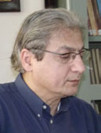
Dr Raham Asha: scholar on Iranology
The France-based author Dr Raham Asha is an authority on Pahlavi, Persian and other related languages. He has several other publications to his name in the field of Iranology.
Among the present Pahlavi literature, there is a group of texts collectively known as the ‘Handarz’ literature. ‘Handarz’ means ‘admonitions’ or ‘counsels.’
In the book under review, according to the author, Urvakhshaya and Aoshnara are names mentioned in the Avesta of visionary sages in the period before Zarathustra in Iran. Urvakhshaya was the brother of the legendary warrior-hero Keresaspa, whereas Aoshnara was chancellor in the court of Kayanian king Kay Kaus, and became administrator of the seven continents. He revealed and taught the "science of definitions” for the benefit and education of many people. He provided the Aryan lands with the best counsels.
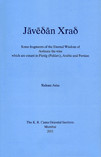
The author contends that there are two parallel traditions regarding the oldest book of the wisdom literature of the Parsis: one attributes it to the counsellor of a king, the wise Aoshnara — a fragmentary treatise ascribed to him survives in Parsig (Pahlavi) under the title of Handarz-i-oshnar-i-dânâg; the other tradition attributes it to the king Haoshyangha.
The name of the book, Javedan Xrad (to be read as ‘khrad’), has been preserved in Arabic, and a few fragments of the work are to be found in Arabic and Persian. The author suggests that the confusion of the name of Aoshnara (Persian ‘Hoshnar’) with that of Haoshyangha (Persian ‘Hoshang’) has created these two different traditions. The Javedan Xrad was in fact the Parsig Sophia collected under the name of Aoshnara.
This book by Asha is therefore a collection of all sayings attributed to Aoshnara or quoted from the Javedan Xrad. The entire Pahlavi text of the Handarz-i-oshnar-i-dânâg is given along with its transcription and translation in English; then follows the Arabic version of the Javedan Xrad with translation in English, along with the text of the Persian version as well.
The reader is therefore able to access all available material on this treatise in one volume.
Ervad ROOYINTON PESHOTAN PEER
◆ ◆ ◆
From the archive