
Zoroastrians Abroad
Generosity of gahanbars
The five-day gahanbars are the only festivals mentioned in the Avesta. These joyous occasions were meant to strengthen the community by bringing together the rich and the poor, forging new friendships and resolving old disputes. As per the custom, participants in a gahanbar are expected to contribute according to their ability, with some donating in cash or kind, others volunteering to prepare and serve the food, and the rest joining in praise and thanksgiving to Ahura Mazda for his creations.
While the Shahenshahis (whose New Year falls on August 19) will be celebrating the Hamaspath-maidyem gahanbar devoted to remembering the fravashis of the departed during the muktad days in August (14-18), the Iranians who follow the Fasli calendar (observing March 21 — the spring equinox — as the New Year) look forward to the Paitishem (or harvest time) gahanbar from September 12 to 16.
A report in Amordad magazine, "the only licensed Zarathushti publication in Iran,” carries a photo feature of how Zoroastrians celebrate a gahanbar in Iran. It starts with experienced volunteers preparing sirok (a kind of oily bread). For gahanbars, they don’t buy the bread made by Muslim bakers as the stress on purity requires that it be made by Zoroastrians and that too only in copper dishes. Most Yazd homes use copper dishes and with copper being expensive they find it attracts thieves.
Whilst praying the Afrin of Gahanbar, when the mobed says "afrinami” the people present there raise the index finger; when he says "vispo khaatrem” they raise the middle finger alongside and later when the Ashem Vohu is prayed they kiss these two fingers, take them over the forehead and move them towards the back of the head, as notes Amordad. At the end everyone joins in the Beresaad before partaking of lork (a mixture of seven dried fruits).
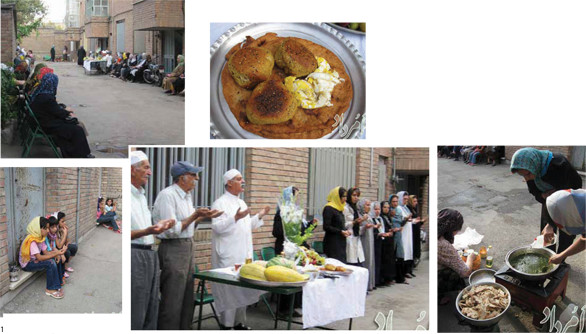
(clockwise from top left): Gahanbar in Rustam Bagh, Iran; sirok made by experienced ladies; elders and youngsters offer prayers with symbolic hand gestures
The four words used in the Afrin of Gahanbar are yazad, sizad, khurad, dehad that mean pray, perform, eat, give. Gahanbars are seen as a manifestation of seven acts of piety: generosity of spirit, material generosity, selfless help (without desire for recognition), community participation, honesty, piety, remembrance of the souls of the righteous and one’s ancestors.
In Iran, the observance of the six gahanbars is a meaningful effort as Maidyozarem (meaning mid-spring) is celebrated between April 30-May 4, Maidyoshem (mid-summer) June 29-July 3, Paitishem in September, Ayathrem (herding time) October 12-October 16, Maidyarem (mid-winter) December 31-January 4, Hamaspathmaidyem March 16-20. Observance of the Shahenshahi and Kadmi (whose New Year fell on July 20) calendars though defeats the relevance of the gahanbars. Ironically to participate in a gahanbar is akin to disciplining one’s self that there is law and order in the universe and everything needs to be done at its proper, opportune time.
Additionally, the Kermanis of Iran celebrate Tuji gahanbar on March 5. It originated at the end of World War II to inculcate the spirit of sharing.
◆ ◆ ◆
From the archive