
Politics and Policy
Missing the minutes
Bombay Parsi Punchayet trustee Noshir Dadrawala battles for his right to information from the premier trust
"If information related to the trust is not shown to the trustees how can we function?” asked advocate Sagheer Khan arguing on behalf of his client Bombay Parsi Punchayet (BPP) trustee Noshir Dadrawala before the Assistant Charity Commissioner (ACC) A. E. Shingre on July 8, 2010. "I am only asking for the minutes. I am not asking them to give something from their pockets… Something is there they do not want to disclose. This shows their complete mala-fides. It goes against the principles of good governance.”
The six other trustees of the BPP have systematically denied Dadrawala access to the minutes and other material pertaining to the trust on the grounds that they have lost confidence in him. "Who are you to lack confidence” in my client? queried Khan. "You are nobody. You don’t possess any other qualities than I.” Dadrawala "is not an adversary of the trust. (If he is) establish it, which you have not… If I am denied information the entire purpose of the Bombay Public Trust (BPT) Act (1950) will be (vitiated).”
Khan explained that as the BPP had been instructed by the Bombay High Court to furnish information regarding the availability of vacant flats in their jurisdiction, Dadrawala wanted to ensure "the information provided is authentic. That is why he is interested in seeing” the papers. Noting that the definition of a trustee is "a person in whom trust property is vested,” Khan noted, "decisions are being taken in respect of properties vested in (my client).”
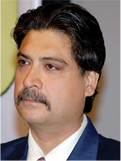
Noshir Dadrawala: denied access
BPP counsel Percy Ghandy said that as the matter of allocation of flats was before the Bombay High Court, Dadra-wala’s "complaint should be made in the High Court… Does the CC have jurisdiction to hear the matter when it is before the High Court?… How can the CC” hear proceedings under section 41A of the BPT Act? Noting that "Dadrawala is party to the proceedings” in the High Court, Ghandy stated, "If he has any grievances he should take them before the High Court.”
Khan cited various Supreme Court and other rulings pertaining to the right of the CC to hear the matter under section 41A. The section streng-thens the powers of the CC to effectively supervise the affairs of public trusts registered with it under the provisions of the BPT Act to ensure their proper functioning. The next date of the hearing when the BPP will argue their case has been set for the afternoon of July 19, 2010. Shingre is expected to give his decision on the same day.
Dadrawala is also aggrieved that he is not privy to the minutes of the Wadia Committee (WC). In an e-mail dated June 1, 2010 to BPP chairman Dinshaw Mehta, Dadrawala noted, "In spite of several requests and reminders I have not been given the minutes of the meetings of the WC.” In an e-mail to the Parsi Press Dadrawala stated, "At a recent meeting of the WC chaired by the BPP president Dinshaw Mehta and where both Nusli and Ness Wadia were present, I was informed that the minutes of the meeting are not circulated to any of the BPP trustees except the chairman himself. The chairman could not provide any sound, cogent or reasonable argument for this policy/practice. On the other hand one could legitimately question the legal validity of all resolutions passed at meetings where minutes have not been circulated for approval of the trustees.”
Dadrawala’s views were endorsed by former BPP trustee Jamsheed Kanga who recalled, "When I was a trustee Justice Jal Vimadalal had objected to the automatic ratification of the minutes as he felt that all trustees should apply their minds, and not delegate it to a few. For some time the trustees used to discuss the minutes, but later on this ceased. But all the same the minutes were put up to all the trustees, and sometimes we used to question the decisions and refer back to the Committee… The procedure adopted by Dinshaw is totally irregular and can be challenged… I also hope some of the other trustees have the guts to question this illegal procedure. They must realize that they are committing breach of trust, and can be held responsible.”
Dadrawala and Kanga’s e-mails appeared in the Jam-e-Jamshed Weekly of June 6, 2010 along with a rejoinder from Mehta. Noting that Dadrawala had absented himself from the WC meetings from June 25, 2009 to May 25, 2010 Mehta accused Dadrawala of "dereliction of duty and a callous disregard for the good functioning of the trust.” Even though the reason was not cited, the chairman further stated that the WC minutes of the meeting prior to May 26 had "not been circulated to any of the BPP trustees, including myself.”
He referred however to a procedure "for submission of the minutes” stating the minutes "are sent to each attending trustee for review and they are personally and individually signed by all the trustees attending the WC meeting.” Hence trustees who do not attend the meetings do not appear to be privy to the minutes.
Responding to Kanga’s allegations Mehta stated that during Kanga’s "tenure as BPP trustee, only three senior-most trustees were allowed on the WC board and hence the minutes had to be taken on the agenda of the BPP and ratified by all the trustees at their board meeting. Subsequently, (the) late Rustom Tirandaz and I enlarged the WC to include all the seven trustees, who individually had to sign the minutes as to their correctness and hence there was no need of any further ratification.”
In an e-mail dated June 11, Dadrawala said he discussed the matter with the former BPP chairman Minoo Shroff who informed him "that during his tenure as chairman, the draft minutes of the WC meetings used to be sent to him and he in turn used to circulate all the draft minutes to all the trustees of the BPP irrespective of whether they were present at the WC meetings or not.”
Dadrawala also noted that he had stopped attending "even the BPP meetings looking to the atmosphere of total hostility and lack of cooperation from all my colleagues.” He added however that "thanks to the intervention of (US based businessman formerly from Iran) Taham-tan Aresh, I was persuaded to exercise patience and I started attending the meetings.”
Regarding attendance Dadrawala stated, "If Mehta considers attendance at meetings to be so important then he should also insist that a couple of trustees who are in the habit of arriving at board meetings only after 8.30 p.m. should not be marked as present.”
In his website dinshawmehta.com under the heading "Vision and the road ahead,” Mehta states, "The BPP will function in open and transparent manner with every member of the community having a right to information.” Dadra-wala however points out "forget every member of the community having (the) right to information; Mehta is denying information to a duly elected and sitting trustee of the BPP.”
◆ ◆ ◆
From the archive